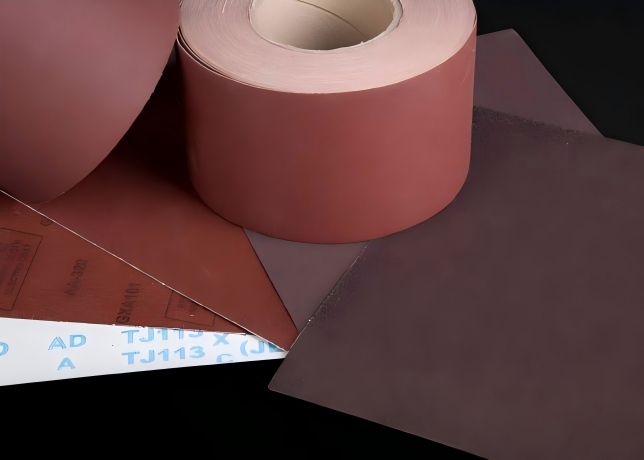
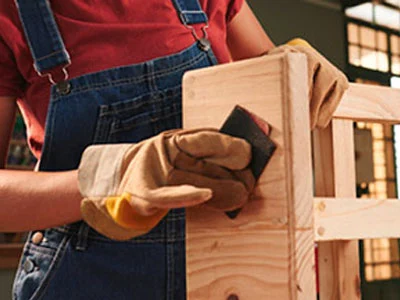
For tool distributors, the challenge with automotive sanding blocks is not convincing body shops that they need them — it is deciding which models to stock. Without a clear assortment strategy, distributors end up with slow-moving SKUs tying up warehouse space and cash, while still missing the specific abrasive block types that shops actually request. The result is a lose-lose: overstock on shapes that do not sell and stockouts on the ones that do.
The solution is not stocking every variation available — it is building a standardized assortment that mirrors real shop workflows. When the lineup covers leveling, contour work, and spot repair with a small number of proven SKUs, sell-through improves, reorder patterns become predictable, and the distributor becomes the reliable supplier shops call first.
Body shops buy sanding blocks because finger sanding fails at a specific task: distributing pressure evenly across an abrasive surface. Fingers concentrate force into small contact patches, cutting aggressively at pressure points while leaving adjacent areas barely touched. The result is waviness and orange peel texture that appears after paint — a rework event that costs more in labor and materials than the entire sanding consumables budget for the repair.
An automotive sanding block spreads the applied force across a controlled footprint, keeping abrasive contact uniform and producing a predictable scratch pattern that the next grit step can reliably remove. Different panel geometries require different block footprints and stiffness levels to maintain this uniform contact — which is why the assortment needs to cover multiple shapes, not just one universal block.
Stocking decisions should mirror shop workflows, not the full catalog of available shapes. A body shop's sanding workflow has three primary stages — primer leveling on large panels, contour sanding on curved surfaces, and finish refinement on clear coat — and each stage has a defined block requirement. An assortment built around these three stages covers the majority of real purchase decisions with a manageable SKU count.
View the full Fuji Star sanding blocks assortment
This is the core SKU list that balances sell-through with workflow coverage:
| Block Type | Primary Application | Panel Geometry | Stiffness | Sell-Through Driver |
|---|---|---|---|---|
| Longboard (long flat block) | Large-area primer leveling | Doors, hoods, quarter panels | Medium to hard | Universal need for flatness on big panels |
| Round block (radius block) | Wheel arches, fenders, rounded contours | Convex curves | Medium | Common geometry across all vehicle models |
| Flexible block | Modern streamlined body lines, bumpers | Subtle curves and flowing transitions | Soft to medium | Fits today's vehicle designs; prevents flat spots |
| Small spot block | Local repairs, edges, blend areas | Tight transitions and small surfaces | Medium | High replacement frequency; daily-use tool |
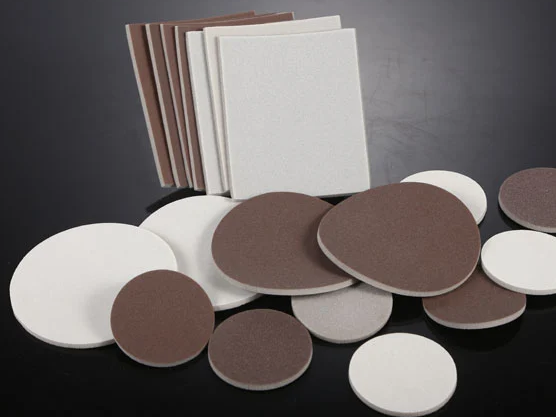
| Interface pad / soft layer | Clear coat refinement, scratch pattern control | All geometries at finish stage | Soft | High attach rate when sold alongside blocks |
Longboards are the highest-volume block type in most body shop environments because large-panel leveling is the most time-consuming sanding task in a standard repair. A longboard's extended footprint bridges low spots and cuts high spots more effectively than a short block — the longer the contact area, the more accurately it reads and corrects the panel's true shape. Stock at least two lengths (medium and long) and two stiffness levels (medium for general use, hard for aggressive leveling) to cover the range of panel sizes and repair depths in your accounts.
Wheel arches and fender curves are present on every vehicle, and they require a block that maintains consistent contact on a convex surface without creating flat spots or edge cuts. Round blocks with a radius matched to common automotive curves solve this problem — they are not a specialty item but a standard requirement for any shop doing full-panel work. This is a reliable sell-through SKU that replenishes regularly.
Contemporary vehicle design has moved away from flat panels toward flowing, compound curves that a rigid block cannot follow without creating pressure concentration at the block's edges. Flexible blocks conform to these subtle curves while still providing more pressure control than finger sanding. For distributors serving shops that work on newer vehicle models, flexible blocks are increasingly a standard stocking item rather than a specialty request.
Small spot blocks are the daily-use consumable of the sanding block category. Every repair involves at least some spot work — blending edges, sanding tight transitions, correcting local defects — and small blocks are used and replaced more frequently than any other block type. High replacement frequency means predictable reorder patterns, which makes this the most reliable inventory investment in the assortment.
For automotive-specific block configurations and hardness options: Automotive Sanding Block — Technical Specifications
The primer stage is where the panel's final shape is established. Longboards with medium to hard stiffness are the primary tool — the long footprint corrects high and low spots across the full panel width, and the firm stiffness prevents the block from conforming to existing waves rather than cutting them down. This is the stage where the investment in a quality abrasive block pays back most directly: correct leveling at the primer stage eliminates the waviness that would otherwise appear after paint.
Round blocks handle convex curves like wheel arches and fenders. Flexible blocks handle the flowing, subtle curves of modern bumpers and door transitions. Using a flat rigid block in these areas creates flat spots — areas where the block's edge contacts the surface at an angle and cuts more aggressively than the center — which require additional correction. The right contour block maintains uniform contact across the curve and produces a consistent scratch pattern through the transition.
At the clear coat stage, the goal shifts from aggressive leveling to controlled refinement: removing orange peel texture, dust nibs, and blend transitions without cutting through the clear coat. Smaller blocks with softer interfaces provide the pressure control needed for this stage — the reduced contact area allows the technician to work precisely within the repair boundary, and the softer interface distributes pressure more evenly on subtle surface variations.
Selling blocks as workflow-matched kits improves both sell-through and average order value:
Panel leveling kit: longboard (medium) + longboard (hard) + matching abrasive sheets
Contour kit: round block + flexible block + matching abrasive sheets
Spot repair kit: small spot block + interface pad + fine grit abrasive sheets
Shops that buy kits repurchase kits — the bundle creates a defined replenishment unit that simplifies the shop's purchasing decision and the distributor's forecasting.
Phase 1 — Core kit only (weeks 1 to 4): Stock the five block types in the standardized assortment at conservative quantities. Focus on the two or three grits and sizes that account for the majority of volume in your target accounts. Avoid stocking specialty shapes or sizes until demand is confirmed.
Phase 2 — Sell-through tracking (weeks 5 to 8): Track sell-through by SKU and customer type. Identify which block types are moving fastest and which accounts are reordering. Use this data to adjust stock levels before the first reorder cycle.
Phase 3 — Targeted expansion (week 9 onward): Expand only where usage proves demand. If a specific account segment — fleet shops, dealership body shops, or chain accounts — shows consistent demand for a specialty block type, add it to the assortment for that segment. Do not expand the general assortment based on catalog availability alone.
| Standardization Decision | Options to Choose Between | Recommendation |
|---|---|---|
| Attachment style | Hook and loop vs PSA | Choose one primary standard per account segment; avoid mixing |
| Block lengths | Short / medium / long | Stock medium and long as core; short on demand |
| Stiffness levels | Soft / medium / hard | Stock medium as universal; add soft and hard for specific stages |
| Hole pattern | With holes vs without | Match to dust extraction setup of target accounts |
| TCO Component | Unplanned Assortment | Standardized Assortment |
|---|---|---|
| Inventory turns | Low — slow movers tie up cash | Higher — core SKUs sell predictably |
| Return rate | Higher — wrong selection creates complaints | Lower — workflow-matched blocks reduce mis-picks |
| Attach rate (blocks + abrasives) | Lower — blocks sold without abrasive pairing | Higher — kit bundles drive combined purchases |
| Reorder frequency | Irregular — demand is unpredictable | Regular — standardized kits create predictable cycles |
| Dead stock write-downs | Higher — specialty shapes accumulate | Lower — focused assortment reduces excess |
For body shops, the TCO argument for a proper abrasive block kit is straightforward: fewer rework cycles. A single rework event — resanding and repainting a panel because waviness or orange peel appeared after paint — costs more in labor and materials than the entire block and abrasive spend for the original repair. Shops that standardize on the right block for each stage reduce their rework rate, which reduces their total consumables spend per repair even if the block cost is slightly higher than a generic alternative.
Quality blocks should maintain their flatness and attachment surface performance across extended use. Blocks that warp or lose their hook-and-loop surface integrity create the same pressure inconsistency as finger sanding — defeating the purpose of using a block at all. Specify blocks with stable backing materials and confirmed flatness retention, and advise shops to inspect blocks periodically for warping or attachment surface wear.
Distributors do not need to stock every sanding block variation to win body shop customers. A standardized assortment — longboards for panel leveling, round blocks for wheel arches, flexible blocks for modern curved panels, and small spot blocks for daily repair tasks — covers the majority of real shop use cases with a manageable SKU count. When the automotive sanding blocks lineup is built around workflow and replenishment patterns rather than catalog completeness, inventory turns improve, dead stock decreases, and the distributor becomes the reliable supplier shops reorder from without shopping around.
Sanding Blocks — Get Distributor Pricing and Assortment Plan
To receive a recommended SKU list and pricing matched to your accounts and stocking capacity, provide the following:
Work conditions: Customer types (independent body shops, chain accounts, or dealerships), typical repair mix (primer leveling versus finish sanding), and wet or dry sanding preference.
Quantity: Target initial stock level, monthly forecast, and number of branches or warehouses.
Size and spec: Preferred block lengths, stiffness mix (soft, medium, or hard), hook-and-loop or PSA attachment preference, and hole pattern requirements.
Target metrics: Inventory turnover goal, maximum acceptable slow-moving SKU count, target bundle or kit strategy, and margin targets.
Current problem: Uncertain demand by model, existing dead stock, too many similar SKUs, or customer complaints about waviness and orange peel from current block selection.
1. What are automotive sanding blocks?
Automotive sanding blocks are tools that hold abrasive sheets or discs and distribute sanding pressure evenly across a controlled contact area during body repair and paint refinishing. Unlike finger sanding, which concentrates force at irregular pressure points, a sanding block maintains consistent abrasive contact across its full face — producing a more uniform scratch pattern and more effective leveling of high and low spots on the panel surface. They are available in multiple shapes, sizes, and stiffness levels to suit different panel geometries and repair stages, from primer leveling through clear coat refinement.
2. How does an abrasive block kit compare with DA sanders or hand sanding?
DA sanders are fast and efficient on open panel areas but can follow existing surface waves rather than correcting them, and they are difficult to control near edges and body lines. Hand sanding without a block is flexible but produces inconsistent pressure distribution that creates waviness and uneven scratch patterns. Automotive sanding blocks are the best choice when true leveling, surface straightness, and controlled contour sanding are required — particularly at the primer stage where the panel's final shape is established. The three tools are complementary rather than competitive: DA sanders for speed on open areas, blocks for leveling and contour control, and hand sanding for the tightest access areas.
3. How can distributors estimate ROI for stocking a standardized sanding block assortment?
Calculate the current cost of your abrasive block inventory: purchase cost plus carrying cost for slow-moving SKUs plus return and credit cost for wrong-selection complaints. Compare this against the projected cost of a standardized assortment with higher inventory turns and lower return rates. Additionally, model the attach rate improvement from selling blocks and abrasives as kits — combined purchases increase average order value and create more predictable reorder cycles. Most distributors find that a focused assortment with higher turns delivers better return on inventory investment than a broad assortment with significant dead stock.
4. Do body shops need to change their process to adopt these blocks?
Usually no major process changes are required. The primary adjustment is standardizing block selection by repair stage and panel geometry — replacing improvised tool selection with a defined block for each scenario. A short reference guide that maps block type to repair stage (longboard for primer leveling, round block for arches, flexible block for curves, spot block for local repairs) is typically sufficient to improve results immediately. Shops that implement this standardization consistently report reduced rework rates and more predictable cycle times.
5. What parameters should distributors provide for the best assortment recommendation?
Provide the following: your target customer segment (independent shops, chain accounts, or dealerships), the top repair scenarios in your accounts (large panel leveling, contour work, spot repairs), preferred attachment type (hook-and-loop or PSA), common abrasive sizes used by your accounts, initial stocking budget and monthly forecast volume, number of stocking locations, and the SKUs you currently overstock or receive complaints about. This information allows the supplier to recommend a core assortment matched to your actual demand profile and to identify bundle opportunities that improve sell-through and attach rate.