In 2026, dust control in sanding operations is no longer a secondary consideration. Finish quality audits, operator health regulations, and coating cleanliness standards have made effective dust extraction a process requirement rather than a convenience. Yet a significant number of finishing operations are still losing disc life, surface quality, and productive time to a problem that is straightforward to fix: hole patterns on the sanding disc do not match the extraction channels on the backing pad, airflow is restricted, and dust accumulates at the sanding interface. The consequences of that mismatch are predictable and cumulative. Dust that cannot escape through the extraction system packs between the abrasive grains, reducing cut rate and generating heat. Fine dust particles mixed with paint and resin residue roll into small balls on the abrasive surface — a phenomenon called pilling — that drags across the workpiece and produces random deep scratches. The disc is changed not because the grain is worn out but because the surface is contaminated. The workpiece carries dust residue into the coating step, where it shows up as fisheyes, contamination spots, and surface defects that require rework. A velcro sanding disc — also called a hook-and-loop abrasive disc — has a practical advantage that addresses this problem directly: because the disc attaches and detaches quickly from the backing pad, it can be repositioned to align the holes correctly with the pad's extraction channels. That alignment is the difference between an extraction system that works and one that is partially blocked. This guide explains how hole pattern selection and alignment affect dust extraction performance, how to choose between 5-hole, 8-hole, 15-hole, and multi-hole systems, and how correct hole matching extends disc life and protects surface cleanliness before coating.
The dust extraction system in a random orbital or DA sander works by drawing air through the holes in the sanding disc, through matching channels in the backing pad, and into the vacuum extraction path. The efficiency of that system depends entirely on how well the holes in the disc align with the channels in the pad.
When the holes in a velcro sanding disc are misaligned with the extraction channels in the backing pad, the airflow path is partially or fully blocked. The vacuum system is still running, but the air it draws is coming from around the edges of the disc rather than through the holes at the sanding interface. The dust generated at the cutting zone has no direct path into the extraction system — it accumulates between the disc face and the workpiece surface. That accumulated dust does not simply sit passively at the interface. It is drawn into the spaces between abrasive grains by the mechanical action of the sanding disc. As the grains cut the workpiece surface, the dust fills the spaces between them, reducing the effective cutting depth and increasing the contact area between the disc and the workpiece. The result is higher friction, more heat, and a declining cut rate that operators typically compensate for by pressing harder — which generates more heat, accelerates loading further, and shortens the disc's effective life.
PSA (pressure-sensitive adhesive) discs are difficult to reposition once they are placed on the pad. The adhesive bonds on contact, and removing a PSA disc to reposition it typically damages either the disc or the pad surface. In practice, operators using PSA discs rarely reposition for hole alignment — they place the disc and sand, regardless of whether the holes are aligned. A velcro sanding disc can be removed and repositioned in seconds without damaging the disc or the pad. That ease of repositioning makes hole alignment a practical step rather than a theoretical one. An operator who can feel that the extraction is not working correctly can remove the disc, rotate it to align the holes, and reinstall it in the time it takes to make a few sanding passes. The hook-and-loop attachment system is what makes correct hole alignment achievable in a production environment.
Pilling is the specific failure mode that results from dust accumulation at the sanding interface. When fine dust particles — particularly from soft materials like primer, filler, and paint — mix with resin and binder residue at the abrasive surface, they agglomerate into small balls that adhere to the abrasive grain. These balls are harder than the dust particles that formed them, and they drag across the workpiece surface during sanding, producing random deep scratches that are inconsistent with the scratch pattern produced by the abrasive grain itself. Pilling is the most common cause of random deep scratches in finishing operations that use power sanders on coated or primed surfaces. It is frequently misdiagnosed as a disc quality problem — the disc is changed, the new disc produces the same scratches within a few passes, and the operator concludes that the disc specification is wrong. The actual cause is dust accumulation from inadequate extraction, and the solution is correct hole alignment and adequate vacuum flow rather than a different disc specification.
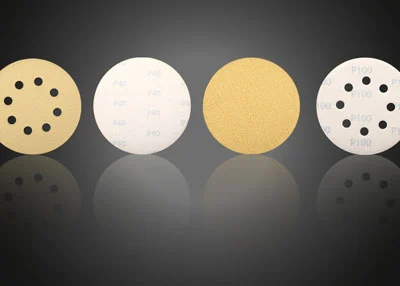
The hole pattern on a velcro abrasive disc determines how much of the disc face is covered by extraction channels and how uniformly dust is removed from the cutting zone. Different hole patterns are appropriate for different applications and tool configurations.
Five-hole systems are found on many older tool configurations and remain in use in shops that have not updated their pad inventory. The five holes provide basic extraction coverage, but the limited number of extraction points means that significant areas of the disc face are not directly served by the extraction path. On materials that generate moderate dust volumes — bare wood, metal, and hard plastics — a 5-hole system with correct alignment provides adequate extraction for most applications. On high-dust materials — primer, filler, drywall compound, and MDF — the limited extraction coverage of a 5-hole system is often insufficient to prevent loading. Dust accumulates in the areas between the extraction holes, and pilling develops in those areas before the grain in the extraction zones is worn out. The disc is changed prematurely because of localized loading rather than overall grain wear.
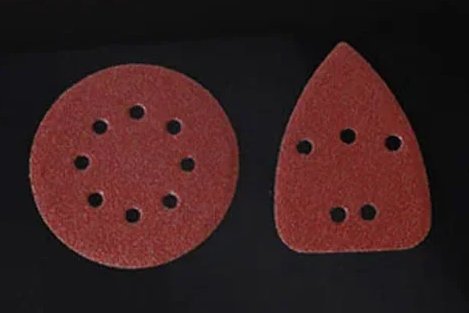
Eight-hole systems provide improved extraction coverage compared to 5-hole configurations, with better distribution of airflow across the disc face. The additional holes reduce the maximum distance between any point on the disc face and the nearest extraction channel, which means dust has a shorter path to travel before it is captured by the airflow. For general-purpose finishing applications — pre-paint preparation on wood and metal, between-coat sanding, and light filler leveling — an 8-hole system with correct alignment provides a good balance between extraction coverage and abrasive surface area. It is the most widely used hole pattern in automotive refinishing and furniture finishing operations, and it is compatible with the majority of current backing pad configurations.
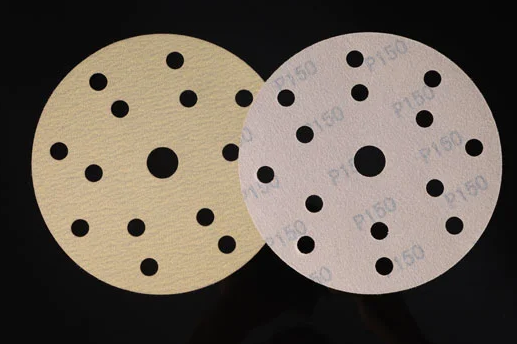
Fifteen-hole systems provide higher extraction coverage across the disc face, with more extraction points distributed more evenly across the abrasive surface. The increased number of holes reduces the accumulation of dust in the areas between extraction channels, which is particularly valuable on materials that generate fine, adhesive dust — automotive body filler, high-build primer, and soft wood species. For operations where loading and pilling are recurring problems with 8-hole systems, upgrading to a 15-hole configuration — with matching pads — often resolves the issue without requiring a change in disc specification or grit. The improvement in extraction coverage keeps the abrasive surface cleaner throughout the disc's life, extending effective disc life and reducing the random deep scratches that pilling causes.
Multi-hole systems use a large number of small holes distributed across the full disc face to provide the most uniform dust evacuation of any hole pattern configuration. The small holes are spaced closely enough that no significant area of the disc face is more than a few millimeters from an extraction point. Dust generated at any point on the cutting zone has a short path to the nearest extraction channel. Multi-hole systems are most valuable on the materials and applications where loading and pilling are most severe — automotive filler sanding, primer leveling, and any application where the workpiece material generates fine, adhesive dust that packs abrasive surfaces quickly. They are also valuable in high-gloss finishing workflows where surface cleanliness before coating is critical and where random deep scratches from pilling are the primary cause of rework. The limitation of multi-hole systems is that they require matching pads with the same hole configuration to realize their extraction advantage. A multi-hole disc on a 5-hole or 8-hole pad provides no more extraction than the pad's hole pattern allows. Upgrading to multi-hole requires confirming that the pad inventory is compatible or upgrading pads at the same time.
Selecting the right velcro sanding disc configuration for a finishing application requires matching several specification variables to the tool, the extraction system, and the surface quality requirement.
The disc diameter must match the backing pad exactly. A disc that is larger than the pad overhangs the pad edge, which creates a zone of unsupported abrasive that flexes under pressure and produces an inconsistent scratch pattern at the disc perimeter. A disc that is smaller than the pad leaves the pad edge exposed, which can damage the pad and reduces the effective sanding area. Confirming disc diameter compatibility with the backing pad before purchasing is a basic specification check that prevents the most common source of disc-to-pad mismatch.
The hole pattern on the disc must match the hole pattern on the pad for the extraction system to function correctly. This is the specification variable that most directly affects dust extraction performance and disc life. The best hole pattern for a specific application is the one that matches the existing pad configuration — not the pattern with the most holes in isolation. If the goal is to upgrade from a 5-hole or 8-hole system to a 15-hole or multi-hole system for better extraction, the pad must be upgraded at the same time. A multi-hole disc on a 5-hole pad provides no extraction benefit from the additional holes because the pad's channels only connect to five extraction points.
The abrasive mineral and coating on the disc face affect how quickly the disc loads on specific materials. Anti-loading coatings — stearate treatments applied over the abrasive surface — reduce the adhesion of soft material residue to the grain, slowing the accumulation of loading material between grains. For applications on primer, filler, and paint, an anti-loading coating extends the effective cutting life of the disc by reducing the rate of loading between extraction events. Anti-loading coatings reduce loading but do not eliminate it. Adequate dust extraction through correct hole alignment is still required to remove the dust that the coating releases from the grain surface. The two mechanisms work together — the coating reduces adhesion, and the extraction removes the released material from the cutting zone.
The hook-and-loop interface between the disc and the pad determines how securely the disc is held during sanding and how consistently it can be repositioned for hole alignment. A worn or low-quality hook-and-loop interface allows the disc to slip on the pad during sanding, which produces pigtail scratches and uneven wear patterns. It also makes hole alignment less stable — a disc that slips during sanding will drift out of alignment, reducing extraction efficiency as the sanding pass progresses. Replacing worn pads before they cause disc slippage is a maintenance step that protects both finish quality and disc life. A pad that has lost significant hook engagement should be replaced rather than continued in service, because the disc slippage it causes produces defects that are more expensive to correct than the cost of a new pad.
The applications where correct hole pattern selection and alignment create the most significant performance difference are those where dust loading is the primary cause of disc failure and surface defects.
Sanding between primer coats and before topcoat application is the step where surface cleanliness has the most direct effect on coating quality. Dust residue on the surface from inadequate extraction redeposits on the workpiece as the disc passes over it, creating contamination that shows up after painting as fisheyes, contamination spots, and surface texture variation. Correct hole alignment in this step keeps the sanding interface clean, reducing the dust residue that remains on the surface after sanding. The result is a cleaner surface going into the coating step, which reduces the contamination-related defects that require rework after painting.
These materials generate fine, adhesive dust that loads abrasive surfaces faster than almost any other material category. On these substrates, hole pattern selection and extraction efficiency are the primary variables that determine disc life. A disc on a correctly matched pad with adequate vacuum flow will last significantly longer on filler and primer than the same disc on a mismatched pad with restricted airflow, because the extraction keeps the grain exposed and the cutting action consistent. For operations that sand significant volumes of filler and primer, upgrading from a 5-hole or 8-hole system to a 15-hole or multi-hole system — with matching pads and adequate vacuum capacity — is often the single most effective change for reducing disc consumption and improving finish consistency.
In high-gloss finishing, random deep scratches from pilling are the defect type that most frequently requires rework. A scratch that is deeper than the surrounding scratch pattern from the abrasive grain requires additional polishing passes to remove, and if it is deep enough, it may require re-sanding before polishing. Each additional correction step adds labor time and increases the risk of cut-through on edges and high spots. Preventing pilling through correct hole alignment and adequate extraction is the upstream intervention that reduces the frequency of these deep scratch defects. Fewer pilling-related scratches means fewer additional polishing passes, lower rework rate, and more predictable cycle time through the finishing workflow.
The performance advantage of correct hole pattern selection is only fully realized when the installation and maintenance practices support consistent extraction efficiency throughout the disc's life.
Before installing a velcro sanding disc, identify the hole pattern on the backing pad. Confirm that the disc hole pattern matches the pad pattern. Place the disc on the pad and rotate it until the holes align visually with the pad's extraction channels. Confirm vacuum flow by feeling suction through the aligned holes with the vacuum running — if suction is weak or absent, check the vacuum filter and hose connections before sanding. Use correct pressure during sanding. Excessive pressure compresses the disc against the pad, partially blocking the extraction channels even when the holes are correctly aligned. The correct pressure for most finishing applications is light to moderate — enough to maintain consistent abrasive contact without compressing the pad structure.
Clean the backing pad regularly to keep the extraction channels open. Dust and abrasive residue accumulate in the pad's channels over time, reducing airflow even when the disc holes are correctly aligned. A compressed air blow-off between disc changes removes the accumulated material and restores extraction efficiency. Replace worn pads before they cause disc slippage or extraction loss. A pad that has lost significant hook engagement or whose extraction channels are permanently compressed by wear should be replaced. The cost of a replacement pad is small relative to the disc consumption and rework cost that a worn pad causes. Keep vacuum filters clean and check vacuum capacity regularly. A vacuum system with a clogged filter or a worn motor provides insufficient airflow to evacuate dust effectively regardless of how well the disc holes are aligned. Vacuum maintenance is part of the extraction system maintenance, not separate from it.
Track discs consumed per part or per shift before and after correcting hole pattern alignment and upgrading to a higher-coverage hole pattern if applicable. Track time lost to disc changes and surface cleanup from pilling-related defects. Track rework rate from random deep scratches and dust contamination before coating. These three metrics, measured over one to two weeks, give a clear picture of the cost saving from correct hole pattern selection and alignment. The cost-per-finished-part calculation — total disc spend plus changeover labor plus rework cost, divided by good parts produced — is the metric that makes the hole pattern upgrade decision defensible in a procurement review. For operations where pilling and loading are recurring problems, the improvement in disc life and rework rate from correct hole alignment typically produces a cost-per-part saving that is large relative to the cost of upgrading pads to match a higher-coverage hole pattern.
The fastest improvement in sanding performance for many finishing operations is not a more expensive disc — it is making sure the dust has a clear path out of the cutting zone. Hole pattern alignment is the practical advantage that makes a velcro sanding disc the right choice for dust-controlled finishing: the hook-and-loop attachment allows quick repositioning to align holes correctly, and correct alignment is what makes the extraction system work as designed. Choosing the right hole pattern — 5-hole