In 2026, precision manufacturers are operating under a new level of scrutiny. Surface specifications are tighter, cosmetic standards are more demanding, and QA documentation requirements have expanded across automotive, tooling, and coated component sectors. Finishing lines that once tolerated a degree of variability are now being held to measurable Ra targets and zero-rework expectations — often within compressed lead times.
The problem that keeps surfacing in these environments is not a new one, but its consequences are more expensive than they used to be. Dry sanding generates heat that can distort sensitive parts, soften coatings, and alter the dimensional integrity of precision surfaces. At the same time, the fine dust produced by dry sanding loads the abrasive rapidly, turning what should be a controlled cutting process into a source of random deep scratches and inconsistent surface texture. When that happens on a mold cavity or a clearcoat repair panel, the rework cost is significant.
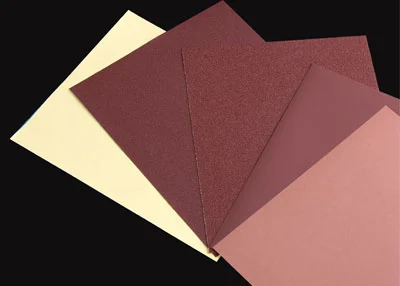
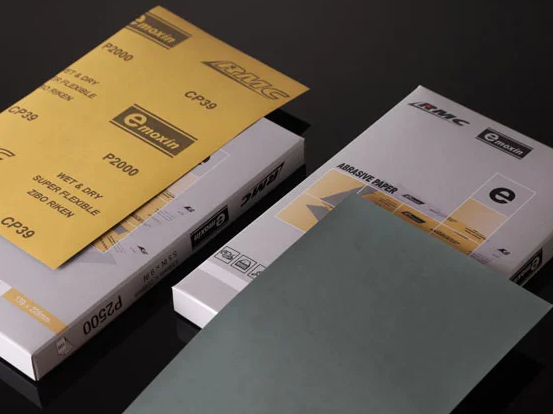
That is why more finishing engineers and process managers are standardizing on wet dry sandpaper and wet and dry abrasive paper workflows. Water is not just a convenience in these processes — it is a functional process input that controls temperature, manages debris, and stabilizes the cutting interface in ways that dry sanding cannot replicate. The CP39 series is designed specifically for these precision wet sanding applications, and this guide explains why the approach works and how to implement it effectively.
Understanding why wet sanding outperforms dry sanding in precision applications starts with understanding what water actually does at the cutting interface. It performs three distinct functions simultaneously, and each one addresses a specific failure mode in dry sanding.
Friction between an abrasive grain and a workpiece surface generates heat. In dry sanding, that heat has nowhere to go except into the part and the abrasive. On heat-sensitive materials — tool steels near a polished surface, aluminum components with tight dimensional tolerances, plastic substrates, or cured clearcoat — that heat accumulation creates real risk. Thermal softening can alter the surface being finished. In extreme cases, it causes visible distortion or changes the hardness profile of a near-surface layer.
Water absorbs and carries away that heat continuously. The result is a cooler cutting interface that reduces thermal risk on sensitive materials and allows the operator to maintain consistent pressure and speed without managing heat buildup as a variable. Water also acts as a lubricant, reducing the friction coefficient at the abrasive-workpiece interface and creating a more stable cutting condition. Less friction means less chatter, fewer inconsistent cutting events, and a more predictable scratch pattern across the surface.
In dry sanding, the swarf — the fine particles removed from the workpiece — has to go somewhere. Some is captured by dust extraction. The rest accumulates on the abrasive surface, packing into the spaces between grains and reducing the effective cutting area. This is loading, and it is the primary cause of the random deep scratches that make dry sanding unreliable on precision surfaces. A loaded abrasive does not cut uniformly. It cuts where the grains are still exposed and drags where they are packed with debris, creating an inconsistent scratch depth that is difficult to remove in subsequent steps.
Water flushes swarf away from the cutting zone continuously. The debris is carried off the abrasive surface and away from the workpiece, keeping the grain exposed and the cutting action consistent. The abrasive stays cleaner for longer, which means the cut rate remains stable and the scratch pattern remains predictable throughout the life of the sheet.
The combination of a cooler surface and a cleaner abrasive produces a more controlled scratch pattern. In precision finishing, surface roughness (Ra) is the measurable outcome of that scratch pattern. When the abrasive is loading and the surface is heating, Ra values become inconsistent — some areas are cut deeper than intended, others are barely touched. Achieving a target Ra of 0.1 µm or lower, as required in mold polishing and high-gloss automotive finishing, requires the kind of process stability that wet sanding provides and dry sanding cannot reliably deliver.
The performance of a wet sanding process depends on the abrasive sheet holding up under wet conditions and delivering consistent cutting behavior across the full grit range. Not all wet and dry abrasive paper is built to the same standard. Here are the specification areas that matter most for precision applications.
A waterproof backing is the foundation of any wet sanding sheet. The backing must maintain its structural integrity under continuous soaking or spray application without curling, delaminating, or breaking down at the edges. Edge breakdown is a common failure mode in wet sanding — the sheet starts to fray or tear at the corners, which creates uncontrolled abrasive contact and potential scratch defects on the workpiece. CP39 uses a backing construction designed for stability under wet conditions, maintaining flat, consistent contact with the surface throughout the sheet's useful life.
Uniform abrasive grain distribution is critical for predictable scratch depth. Inconsistent grain density creates areas of heavier and lighter cutting within a single pass, which produces surface texture variation that is difficult to remove in subsequent steps. For precision finishing — particularly in the fine grit ranges used for pre-polish preparation — grain consistency directly determines whether the downstream polishing step is fast and straightforward or slow and unpredictable.
A well-designed grit progression is as important as the abrasive itself. The goal is to remove the defect or texture from the previous step with the minimum number of passes at each grit, then move to the next finer grit without leaving scratches that are too deep for the following step to remove efficiently. A typical precision wet sanding sequence moves from defect removal at a coarser grit, through refinement at intermediate grits, to pre-polish preparation at the finest grit. Skipping steps to save time typically creates more work downstream, not less.
Sheet size and cut-to-fit flexibility affect how efficiently the abrasive is used across different part geometries. For hand sanding and block sanding on flat or gently curved surfaces, a standard sheet format works well. For complex geometries or small detail areas, the ability to cut the sheet to a precise size reduces waste and improves control. Confirm that the sheet format is compatible with your workholding fixtures and sanding blocks before ordering in volume.
The process advantages of wet sanding translate into measurable outcomes in specific application categories. These are the areas where CP39 wet and dry abrasive paper creates the most significant performance difference compared to dry sanding alternatives.
Mold cavities and tooling surfaces require some of the most demanding surface finishing work in precision manufacturing. The target Ra values are often in the sub-0.1 µm range, and the surfaces must be free of any scratch pattern that would transfer to the molded part. Heat is a particular concern in mold polishing — tool steels can be sensitive to thermal input near a finished surface, and the risk of altering the surface hardness or geometry through heat accumulation is real.
Wet sanding with CP39 controls that heat input while maintaining a consistent cutting action across the cavity surface. The water film keeps the abrasive cutting cleanly, reduces the risk of loading-induced scratch events, and supports the progressive refinement of surface texture that mold polishing requires. The result is a smoother surface prior to final polishing, which reduces the time and effort required in the polishing stage and improves the consistency of the final gloss and release performance.
Clearcoat sanding is one of the most loading-prone applications in finishing. The cured clearcoat generates a fine, soft dust that packs abrasive surfaces rapidly in dry sanding conditions. The result is a loaded abrasive that cuts inconsistently, leaving a mix of deep and shallow scratches that require additional compounding and polishing to remove — adding time and risk to the repair process.
Wet sanding with CP39 addresses this directly. The water flushes clearcoat dust away from the abrasive surface continuously, keeping the grain cutting cleanly through dust nibs, orange peel texture, and surface imperfections. The scratch pattern produced is more uniform in depth, which means the compounding and polishing steps that follow are faster and more predictable. Fewer rework loops, more consistent panel appearance, and lower labor cost per repair are the practical outcomes.
The same principles apply to coated metal components, painted plastic panels, and any substrate where heat sensitivity or dust loading creates risk in dry sanding. Cosmetic panels requiring consistent appearance across a batch, plastic components prone to heat marking, and primer surfaces requiring uniform texture before topcoat application are all candidates for wet sanding with CP39.
Specifying the right sheet is the first step. Setting up the process correctly is what determines whether the performance advantage of wet sanding is actually captured in practice.
Before ordering, confirm the following for each application:
First, identify the material and coating type. Tool steel, aluminum, plastic, clearcoat, and primer each have different cutting characteristics and different sensitivity to heat and scratch depth. The grit range and step-down plan should be calibrated to the specific material.
Second, define the target Ra or cosmetic standard and the allowable scratch visibility at each stage. This determines how fine the final grit needs to be and how many intermediate steps are required.
Third, assess the starting defect size. Deep scratch removal requires a coarser starting grit and more passes. Light texture leveling can start at a finer grit and reach the target faster. Mismatching the starting grit to the defect size is one of the most common causes of excessive cycle time in wet sanding.
Fourth, plan the grit sequence and estimate the time per step. A realistic time estimate per step helps identify where the process can be optimized and where additional steps might be needed.
Fifth, choose the water delivery method. Dipping the sheet and workpiece works well for small parts and hand sanding. A spray bottle provides controlled water delivery for larger surfaces. Drip feed or continuous flow systems are appropriate for machine sanding or high-volume applications.
Use a sanding block wherever surface flatness is critical. Finger pressure creates uneven contact that produces inconsistent scratch depth and can leave visible high and low areas on flat surfaces.
Keep the surface uniformly wet throughout each pass. Running the abrasive dry mid-pass — even briefly — removes the lubrication and cooling that wet sanding depends on and can cause a sudden deep scratch event. If the surface starts to dry, add water before continuing.
Rinse the sheet and wipe the workpiece between grit changes. Cross-contamination — a coarse grain from the previous step carried into the next finer grit stage — is a common cause of unexpected deep scratches that require going back to an earlier grit to remove. A clean rinse between steps eliminates this risk.
The decision to standardize on wet sanding is ultimately a cost decision, and the cost argument is strongest when it is framed around total cost per finished part rather than abrasive sheet price.
Heat-related part distortion and loading-related scratch defects are the two primary cost drivers that wet sanding addresses. On heat-sensitive parts, a single distortion event can scrap a component that represents significant machining or coating investment. On precision surfaces, a random deep scratch from a loaded abrasive can require going back two or three grit steps to remove — multiplying the time and abrasive cost for that part.
Wet sanding reduces the frequency of both failure modes. The result is a lower rework rate, a lower scrap risk on high-value parts, and a more predictable cycle time per part. In high-volume finishing operations, those reductions compound into meaningful annual savings.
Track sheets consumed per part or per square meter of finished surface. Track rework rate due to scratch defects separately from rework due to other causes — this isolates the abrasive contribution to rework cost. Track time-to-finish to the target Ra or appearance grade, and track scrap events on heat-sensitive parts or coatings. These four metrics give you a clear picture of where wet sanding is delivering value and where process adjustments might improve results further.
The two most predictable failure modes in dry sanding — heat-related distortion and loading-induced scratch defects — are both addressable through a controlled wet sanding workflow. Water is not an optional addition to the process. It is the mechanism that keeps the abrasive cutting cleanly, protects the workpiece from thermal damage, and makes ultra-fine Ra targets achievable in production conditions.
CP39 wet and dry abrasive paper is designed to perform in these conditions, with waterproof backing stability, consistent grain distribution, and a grit range that supports the full progression from defect removal to pre-polish preparation. For mold manufacturing, automotive clearcoat repair, and any precision finishing application where surface quality is non-negotiable, it provides the process stability that dry sanding cannot reliably deliver.
To receive a recommended grit sequence, sheet specification, and quotation, visit the CP39 product page and submit the following details:
Operating conditions: material and coating type (tool steel, clearcoat, plastic, primer, etc.), water delivery method (dip, spray, drip feed, continuous flow), sanding method (hand, block, or machine)
Quantity: monthly usage or per-project demand, trial order versus bulk order
Size and specs: sheet size, cut size required, grit range and number of grit steps
Target metrics: target Ra or appearance grade, defect removal target, cycle time target per part
Current problems: part deformation or heat marks, clogging and scratch defects, inconsistent finish across a batch, high rework rate
For related waterproof paper options, the aluminum oxide waterproof paper page provides additional specifications for comparable applications.
Q1: What is wet dry sandpaper?
Wet dry sandpaper is an abrasive sheet designed to be used either wet or dry, with a waterproof backing that maintains its integrity under water exposure. In wet use, water acts as a coolant and lubricant at the cutting interface, carries away debris to prevent loading, and helps maintain a consistent scratch pattern. It is used across precision manufacturing, automotive finishing, mold polishing, and any application where heat sensitivity or dust loading creates risk in dry sanding.
Q2: What is the main difference between wet sanding and dry sanding?
Dry sanding is simpler to set up but generates heat at the cutting interface and allows dust to accumulate on the abrasive surface. Heat buildup can distort sensitive parts or soften coatings. Dust loading causes the abrasive to cut inconsistently, producing random deep scratches that require additional work to remove. Wet sanding uses water to carry away heat continuously and flush debris from the abrasive surface, keeping the cutting action stable and the scratch pattern predictable. For precision finishing applications with tight Ra targets or cosmetic requirements, wet sanding produces more consistent and controllable results.
Q3: What is the ROI of switching to wet sanding for precision finishing?
The return on investment comes primarily from three sources: reduced rework due to fewer scratch defects, lower scrap risk on heat-sensitive parts and coatings, and faster downstream polishing because the scratch pattern left by wet sanding is more uniform in depth. In mold manufacturing, where a single rework event on a cavity surface can represent hours of additional polishing time, the cost avoidance from more consistent wet sanding is significant. In automotive clearcoat repair, fewer rework loops per panel directly reduce labor cost per repair. The abrasive sheet cost is typically a small fraction of the total cost reduction.
Q4: Do we need to modify equipment to adopt wet sanding?
For hand sanding and block sanding, no significant equipment changes are required. Water delivery can be as simple as a spray bottle or a dip container. The main process adjustments are procedural: maintaining consistent water coverage, rinsing between grit changes, and using a sanding block where flatness is critical. For machine sanding applications, additional considerations include splash control, drainage management, and corrosion protection for machine components exposed to water. These are typically straightforward to address and do not require major capital investment.
Q5: What parameters should we provide for accurate sheet selection and quoting?
For the most useful recommendation, provide the substrate and coating type, the starting surface condition and defect size, the target finish expressed as an Ra value or cosmetic grade, the sanding method (hand, block, or machine), the preferred or required water delivery method, the grit range and number of steps in your current or planned sequence, the sheet size and any cut size requirements, and your expected usage volume. If you have a current rework rate or cycle time target, including those figures helps calibrate the recommendation to your specific process goals.