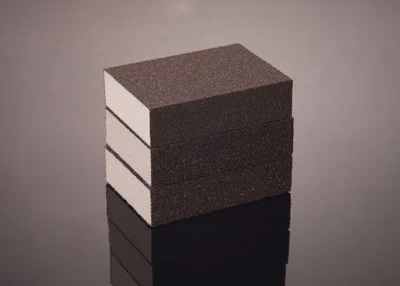
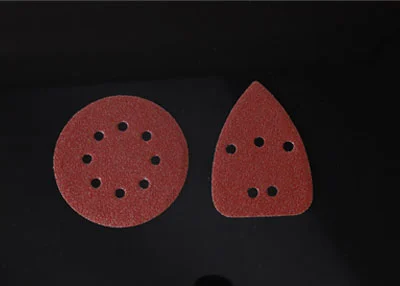
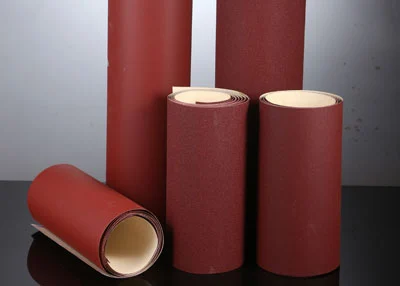
In 2026, cabinet and millwork shops are operating under a familiar set of pressures: shorter lead times, tighter coating specifications, and finishing quality standards that leave little room for touch-up cycles after painting. Yet one problem keeps appearing at the inspection stage, on cabinet doors, drawer interiors, and European-profile details — inside corners that were not fully sanded before primer or topcoat went on.
The issue is not operator error. It is geometry. A standard square sanding block cannot sit flat in a 90-degree inside corner. The block bridges across the corner, leaving the deepest point untouched — a dead zone where mill glaze, dust, or surface contamination remains. When primer or paint goes over that area, the result is thin coverage, poor adhesion, or a visible texture difference that requires rework at the most expensive point in the finishing process.
An angled sanding sponge solves this with a tapered edge that is designed to reach into inside corners and negative profiles where flat blocks physically cannot make contact. For shops running cabinet doors, drawer boxes, and decorative molding details, it is the difference between one-pass corner sanding and a second round of touch-ups after the coating line.
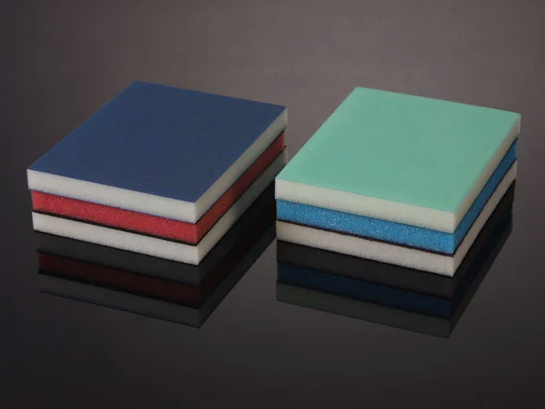
Understanding why the angled sanding sponge works requires understanding exactly why standard blocks fail in inside corner applications — and why the common workarounds create their own problems.
A flat sanding block makes contact across its full face when used on a flat surface. That is its strength in open-panel sanding. But in a 90-degree inside corner — the intersection of a rail and stile on a cabinet door, the interior corner of a drawer box, the base of a routed profile — the flat face of the block cannot reach the deepest point of the corner simultaneously on both walls.
The block bridges. It contacts the two flat surfaces on either side of the corner but leaves a zone at the deepest point where no abrasive contact occurs. Operators who recognize this problem typically respond in one of two ways: they fold a piece of sandpaper and try to work it into the corner by hand, or they press harder with the block in an attempt to force contact. Folded paper slips, tears, and applies uneven pressure that rounds the corner edge rather than sanding it cleanly. Pressing harder with a flat block does not solve the bridging problem — it just increases pressure on the areas that are already making contact while the dead zone remains.
The result in both cases is an inconsistent scratch profile in and around the corner. Some areas are over-sanded, some are under-sanded, and the deepest point may not be sanded at all. When primer goes on, that inconsistency shows up as uneven sheen, thin spots, or adhesion failures that require the door or drawer to come off the line for rework.
The tapered edge of an angled sanding sponge is designed to address the bridging problem directly. The edge geometry allows the sponge to be oriented so that the tapered point enters the corner and makes contact at the deepest point — the exact location where a flat block cannot reach.
The foam substrate beneath the abrasive surface plays an important supporting role. Unlike a rigid block, the foam has controlled compliance that allows the abrasive surface to conform slightly to the corner geometry without losing the edge definition that makes the tapered contact possible. The result is consistent abrasive contact along the full depth of the corner, from the deepest point outward to the flat surfaces on either side.
The practical outcome is a uniform scratch pattern across the entire corner area — including the point that standard blocks miss. A uniform scratch pattern means consistent primer and paint wetting, consistent film build, and consistent adhesion across the corner. The defects that show up after coating — thin spots, holidays, adhesion failures at the corner line — are directly traceable to inconsistent surface preparation, and the tapered edge addresses that at the source.
Not all angled sanding sponges are built to the same standard. The taper geometry, foam density, and abrasive specification each affect whether the product delivers the corner contact performance it is designed for.
The taper angle determines how deep into an inside corner the sponge can reach and how precisely it can follow the corner line. A sharper, more defined taper reaches deeper into tight 90-degree corners and narrow profile valleys. Edge stability — the ability of the taper to maintain its geometry under hand pressure — determines whether that reach is consistent across a sanding pass or whether the edge deforms and loses contact at the deepest point.
An edge that collapses under normal hand pressure defeats the purpose of the tapered geometry. The foam construction needs to be firm enough to hold the taper shape through a full sanding stroke while still providing enough compliance to conform to minor surface variations along the corner line.
Foam density is the variable that balances two competing requirements: conformability to profiles and edge retention on flat surfaces. Softer foam conforms more readily to curved profiles and decorative molding details, maintaining abrasive contact across complex geometries. Higher-density foam holds its shape better on flat rails and stiles, providing a more consistent cutting surface where flatness matters.
For shops running a mix of flat panel work and profile sanding, the foam density selection should reflect which requirement is more critical for the specific application. If the primary use is inside corner sanding on straight 90-degree joints, a medium-to-firm density that holds the taper geometry is the right choice. If the sponge will also be used on decorative profiles and curved details, a softer density that conforms to the profile shape is more appropriate.
The abrasive on the sponge surface determines the scratch pattern left in the corner and how that scratch pattern interacts with the coating system. Coarser grits are appropriate for leveling mill marks, removing surface contamination, and initial surface preparation before primer. Finer grits are used for between-coat sanding, de-nibbing, and final surface prep before topcoat.
Consistency of grit distribution across the sponge surface is particularly important for corner sanding. An inconsistent abrasive surface produces variable scratch depth across the corner area, which creates the same adhesion and appearance problems that the tapered edge is designed to prevent. The abrasive specification should deliver a uniform scratch pattern from the deepest point of the corner to the flat surfaces on either side.
The angled sanding sponge is not a general-purpose replacement for flat sanding blocks. It is a targeted solution for the specific geometries where flat blocks fail. The applications below are where the tapered edge creates the most significant performance difference.
The intersection of a rail and stile on a cabinet door frame creates a 90-degree inside corner that runs the full depth of the frame. On a painted cabinet door, this corner is highly visible and is one of the first places where coating defects show up under inspection lighting. The dead zone left by a flat block at this intersection is a consistent source of adhesion failures and thin-paint defects that require touch-up after the door comes off the coating line.
The tapered edge of an angled sanding sponge follows the corner line from one end to the other, maintaining contact at the deepest point throughout the stroke. The result is a uniformly prepared corner surface that accepts primer and topcoat consistently, reducing the touch-up rate on finished doors.
Drawer box interiors present the same geometry problem as cabinet door corners, with the added challenge that the interior space limits the range of motion available for sanding. Folded sandpaper is the typical workaround, but it is difficult to maintain consistent pressure and orientation in a confined interior space, and the paper tends to slip or tear before the corner is fully sanded.
An angled sanding sponge with a defined taper can be oriented to reach the interior corners of a drawer box with controlled, consistent strokes. The foam backing provides enough grip and stability to maintain the tapered edge contact through the stroke without the slipping and tearing that folded paper is prone to.
European-style cabinet profiles and decorative molding details include negative corners — profile valleys and recesses where the surface turns inward — that are inaccessible to flat sanding blocks. These areas are particularly problematic because they are often visually prominent and because the coating tends to pool in recesses, making surface preparation quality directly visible in the finished result.
The tapered edge of an angled sanding sponge, combined with the foam's conformability, allows it to follow the profile geometry into negative corners and recesses that flat blocks cannot reach. The result is more uniform surface preparation across the full profile, which supports consistent coating application and appearance.
Specifying the right angled sanding sponge configuration for a production environment requires matching the product to the substrate, the corner geometry, and the finishing objective.
Start by identifying the substrate. Hardwood, MDF, primed surfaces, and previously coated surfaces each have different surface hardness and different sensitivity to scratch depth. The grit selection should be calibrated to the substrate — a grit that is appropriate for bare hardwood may be too aggressive for a primed surface.
Define the sanding objective for each stage. Shape correction and mill mark removal require a coarser grit with more cutting action. Scratch refinement before primer and de-nibbing between coats require a finer grit that leaves a shallow, consistent scratch pattern. Trying to cover both objectives with a single grit typically means compromising on one or the other.
Choose a grit plan with no more than two steps for corner sanding — one leveling grit and one finishing grit if needed. More steps add time without proportional quality improvement in most cabinet finishing workflows.
Select foam density based on the primary application. For straight 90-degree inside corners on rails and stiles, a medium-to-firm density that holds the taper geometry is appropriate. For profile and molding work, a softer density that conforms to the profile shape is more effective.
Test on a representative corner before committing to a production run. Inspect the scratch pattern under raking light to confirm that the corner is uniformly sanded from the deepest point to the flat surfaces on either side. Adjust grit or technique if the inspection reveals uneven coverage.
Use light to moderate pressure and let the tapered edge do the work. The geometry of the taper is what creates corner contact — additional pressure does not improve contact at the deepest point and increases the risk of rounding the corner edge.
Sand along the corner line with controlled, consistent strokes rather than across it. Strokes along the corner line maintain the taper orientation and produce a consistent scratch pattern. Cross-corner strokes tend to round the edge and produce an inconsistent scratch depth.
Avoid over-sanding corners. The goal is a uniform scratch pattern that keys the surface for coating — not maximum material removal. Over-sanding rounds the corner geometry and weakens the visual line that defines the cabinet profile.
The cost argument for angled sanding sponges is built on rework avoidance rather than abrasive unit price. The relevant comparison is not the cost of a sponge versus a sheet of sandpaper — it is the cost of touch-up labor and rework after coating versus the cost of getting the corner right before the door goes to the coating line.
Touch-up after priming or painting is the most expensive point in the finishing process to address corner defects. The door or drawer has to come off the line, the defect has to be identified and corrected, and the part has to go back through the coating process. Each of those steps involves labor time, material cost, and schedule disruption. In a shop running volume production, the cumulative cost of corner-related touch-ups across a week or a month is a meaningful number.
Adhesion failures at inside corners — caused by un-sanded or inconsistently sanded surfaces — are a specific failure mode that generates warranty callbacks and customer complaints in addition to in-house rework cost. Preventing those failures through consistent corner surface preparation is a quality investment with a direct cost return.
Faster cycle time through consistent one-pass corner sanding is the third source of ROI. When operators can sand inside corners completely in a single pass without needing to go back for touch-up sanding before coating, the time per door or drawer decreases. Across a production run, that time saving compounds into meaningful throughput improvement.
Track touch-up minutes per door or drawer before and after introducing angled sanding sponges into the corner sanding step. Track rework rate from corner-related coating defects — thin paint, adhesion failures, holidays at the corner line — separately from other defect types. Track sponge consumption per batch and average usable life per sponge to establish a cost-per-part figure for the abrasive. These three metrics give a clear picture of the ROI that the product delivers in your specific production environment.
Inside corners and negative profiles are where finishing quality breaks down most predictably in cabinet and millwork production — not because operators are careless, but because standard flat blocks cannot physically reach the deepest point of a 90-degree corner. The dead zone that results is a direct cause of coating adhesion failures, thin-paint defects, and touch-up labor that adds cost at the most expensive point in the finishing process.
An angled sanding sponge with a tapered edge solves that geometry problem. The taper reaches into inside corners where flat blocks bridge over, the foam compliance maintains contact along the corner line, and the result is a uniform scratch pattern that supports consistent primer and topcoat adhesion across the full corner area. For cabinet doors, drawer interiors, and European-profile details, it is the tool that makes one-pass corner sanding achievable in production conditions.
To receive a recommended grit and density configuration along with pricing, visit the angled sanding block product page and submit the following details:
Operating conditions: substrate type (hardwood, MDF, primed, coated), hand sanding steps in your current process, corner depth and profile style
Quantity: monthly consumption volume, per-project batch size, trial versus bulk order
Size and specs: block dimensions, taper preference, foam density requirement, grit range or ranges needed
Target metrics: touch-up reduction goal, finish standard, cycle time target per door or drawer, defect rate target
Current problems: dead zones in inside corners, uneven sanding across corner areas, adhesion failures after coating, rounded edges from over-sanding, high rework rate after painting
Q1: What is an angled sanding sponge?
An angled sanding sponge is a foam-backed abrasive block with a tapered or angled edge profile designed to reach inside corners, negative profiles, and shaped details that standard flat sanding blocks cannot access. The tapered edge concentrates abrasive contact at the deepest point of an inside corner, while the foam backing provides controlled compliance that maintains contact along the corner line without gouging or rounding the edge geometry. It is used primarily in cabinet making, millwork, and furniture finishing for corner sanding on doors, drawer boxes, and decorative profiles.
Q2: How does an angled sanding sponge differ from a standard sanding block?
A standard sanding block has a flat face that bridges across inside corners, leaving the deepest point of the corner unsanded. Operators typically compensate by folding sandpaper or pressing harder, both of which produce inconsistent results and can round the corner edge. An angled sanding sponge uses a tapered edge to make contact at the deepest point of the corner, producing a uniform scratch pattern across the full corner area including the point that flat blocks miss. The practical difference shows up after coating — fewer adhesion failures, fewer thin-paint defects at the corner line, and less touch-up labor.
Q3: What is the ROI of switching to angled sanding sponges for corner work?
The return on investment comes primarily from reduced touch-up labor and rework after coating. Corner-related coating defects — adhesion failures, thin paint, holidays at the corner line — are expensive to address after the door or drawer has gone through the coating process. Preventing those defects through consistent corner surface preparation before coating saves labor time, material cost, and schedule disruption. In volume production environments, the cumulative saving across a week or month of production typically outweighs the consumable cost difference between angled sponges and standard blocks by a significant margin.
Q4: Do we need to change tools or fixtures to use angled sanding sponges?
No equipment changes are required. Angled sanding sponges are designed for hand sanding and fit into existing finishing workflows without modification. The process changes that matter are procedural: standardizing the grit sequence for corner sanding, training operators on the correct stroke direction and pressure for tapered-edge contact, and establishing an inspection step to confirm corner coverage before the part moves to the coating line. These adjustments can be incorporated into standard work instructions without capital investment.
Q5: What parameters should we provide for accurate selection and quoting?
For the most useful recommendation, provide the substrate type (hardwood, MDF, primed surface, or previously coated surface), the corner geometry including depth and angle, the profile type (straight 90-degree joint versus decorative or European-style profile), the required finish level before coating, the preferred grit range for each sanding stage, the block size preference, the expected usage volume per month or per project, and a description of the current defect or touch-up problems you are trying to solve. The more specific the inputs, the more accurate the grit and density configuration recommendation.