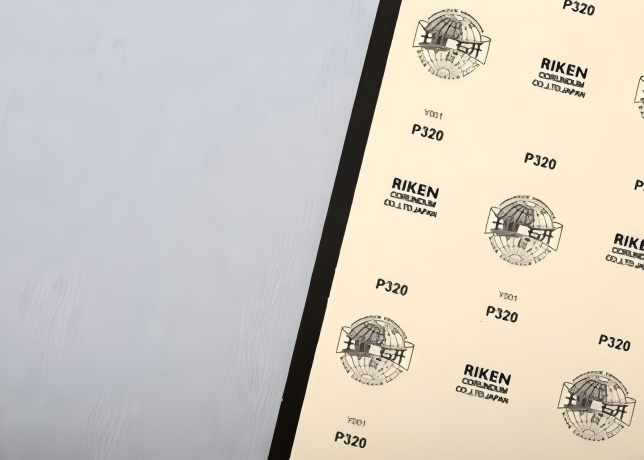
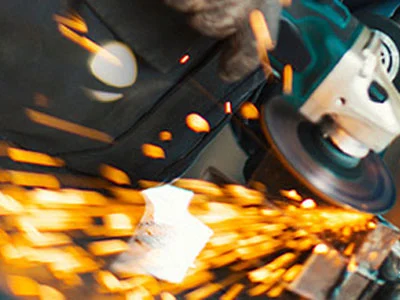
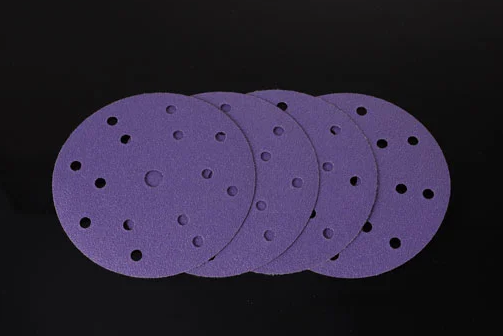
In stainless steel finishing operations, low-end abrasive cloth creates a compounding cost problem that rarely appears on a single line item. The abrasive overheats, leaving burn marks on the workpiece surface that require rework or generate scrap. Grain detaches from the backing faster than it should, forcing changeovers that consume labor time and create production interruptions. The result is a cost-per-piece that is driven not by the price of the abrasive itself, but by the downstream consequences of using the wrong one.
For production engineers and procurement managers evaluating sanding cloth for metal in 2026, the question is not which product is cheapest per roll — it is which product delivers the lowest cost per finished, defect-free piece. That calculation changes the answer significantly, and it is why premium abrasive cloth with heat-resistant coating and strong grain adhesion consistently outperforms budget alternatives in stainless finishing environments.
Burn marks on stainless steel are not caused by excessive belt speed alone — they are caused by a failure chain that begins with abrasive surface degradation. When abrasive grains dull or detach from the backing, the cutting action transitions from sharp grain engagement to friction-dominated rubbing. Friction generates heat. Heat softens the resin bond, accelerating further grain loss. The clogged surface — loaded with stainless swarf and detached grain fragments — acts as a heat-concentrating layer between the belt and the workpiece.
This is why a belt that starts cutting cleanly can produce burn marks within the same