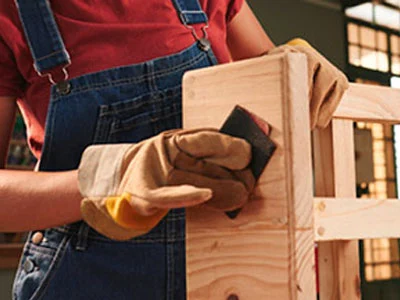
Finger sanding feels intuitive — it is fast to set up and requires no additional tooling. But in automotive paint refinishing, the physics work against it. Fingers concentrate sanding force into small, irregular contact patches that cut aggressively at pressure points while barely touching the surrounding surface. The result is a panel that feels smooth to the touch but shows waviness or orange peel texture after paint — a defect that requires additional correction cycles and consumes labor and materials that a proper automotive sanding block system would have prevented.
For body shops and refinishing suppliers standardizing their processes in 2026, car body repair sanding blocks are not an optional upgrade — they are the foundation of consistent leveling. The key is matching block hardness, flatness, and shape to each repair stage, from primer build and shape correction through clear coat denibbing and orange peel removal.
When a technician presses sandpaper with fingers, the contact area is determined by finger width and the gaps between fingers. Force concentrates at the fingertip contact points — typically three to five small patches — while the areas between fingers receive little or no abrasive contact. On a panel with minor high and low spots, this means the high spots may be cut correctly while the low spots are untouched, or the fingertip areas are cut too aggressively while the surrounding surface is left high.
An automotive sanding block spreads the applied force across a controlled, flat footprint. The abrasive contacts the surface uniformly across the block's full face, which means high spots are cut down consistently and low spots are not artificially deepened. This is the mechanical basis of true panel leveling — and it cannot be replicated by hand pressure alone.
Block flatness does more than improve leveling — it produces a consistent scratch pattern across the repair area. A consistent scratch pattern means the next grit step removes the previous scratches uniformly, without leaving isolated deep marks that require additional passes. This is the difference between a repair workflow that progresses efficiently through the grit sequence and one that involves repeated "scratch chasing" — sanding to remove scratches that should have been eliminated in the previous stage.
View Fuji Star automotive sanding block options and hardness configurations
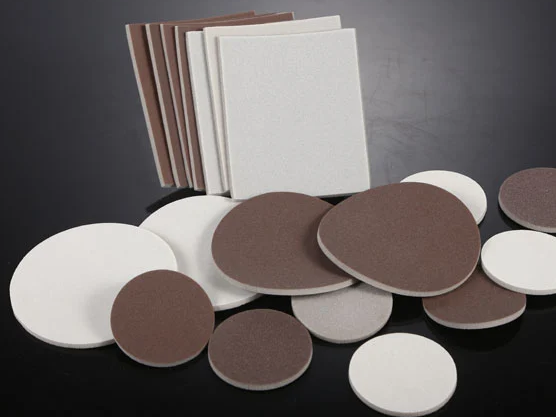
Block hardness determines how the tool interacts with the panel surface. The relationship between hardness and leveling performance is direct:
| Hardness Level | Leveling Performance | Surface Conformity | Best Application |
|---|---|---|---|
| Hard | Maximum — cuts high spots aggressively | Low — does not follow curves | Flat panels, primer leveling, orange peel removal on flat areas |
| Medium | Good — effective leveling with some conformity | Moderate | General panel work, mild curves, most primer stages |
| Soft | Lower — follows existing surface more closely | High — conforms to curves | Curved panels, clear coat refinement, blend transitions |
A one-block-fits-all approach is the most common mistake in sanding block procurement. A soft block used for primer leveling follows the existing waves rather than cutting them down — the technician sands for longer but achieves less correction. A hard block used on a curved panel creates flat spots and edge cuts that require additional correction. The correct system provides multiple hardnesses matched to the specific repair scenario.
Flatness tolerance and stability: blocks must resist warping over time to maintain true leveling performance — a warped block introduces the same pressure inconsistency as finger sanding
Edge design: square edges are appropriate for flat areas; radiused edges prevent the "tramline" cuts that occur when a sharp block edge contacts the panel at an angle
Abrasive attachment: hook-and-loop compatibility allows fast abrasive changes; PSA (pressure-sensitive adhesive) provides a more secure bond for aggressive cutting — confirm compatibility with your abrasive format
Dust extraction holes: hole patterns aligned with vacuum extraction reduce loading and improve surface visibility during sanding
For the S550 auto body block range and detailed hardness specifications: S550 Auto Body Blocks — Technical Reference
The primer stage is where the panel's final shape is established. The goal is true leveling — cutting down high spots and creating a flat, uniform surface that will not show waviness after base coat and clear coat are applied.
Recommended block configuration for primer:
Longer, flatter blocks (typically 70mm x 198mm or larger) for panel-wide leveling — the longer footprint bridges low spots and cuts high spots more effectively than a short block
Firm to hard hardness for effective leveling without the block conforming to existing waves
Square or slightly radiused edges depending on whether the work is on open panel or near a body line
The most common primer-stage mistake is using a block that is too short or too soft — the block follows the panel's existing shape rather than correcting it, and the waviness survives into the paint stages.
The clear coat stage requires a different approach. The goal shifts from aggressive leveling to controlled refinement: removing orange peel texture, dust nibs, and blend transitions without cutting through the clear coat or creating deep scratches that require additional correction.
Recommended block configuration for clear coat:
Smaller blocks for localized control — a large block on a clear coat stage can remove too much material across a wide area
Softer interface on curved or subtly contoured areas to avoid cut-through at high points
Fine grit abrasives (P1000 to P2000 range) with consistent scratch pattern to allow polishing to remove the sanding marks cleanly
Body lines, edges, and recessed areas require dedicated small or contoured blocks that maintain uniform contact within the geometry. Using a standard flat block in these areas creates uneven pressure that either oversands the edge or leaves the recessed area untouched. A contoured block matched to the specific geometry maintains consistent abrasive contact and produces a uniform scratch pattern through the transition.
| Panel Area | Recommended Block Size | Hardness | Stage |
|---|---|---|---|
| Hood, door skin, quarter panel (flat) | Long flat block (198mm+) | Hard to medium | Primer leveling |
| Bumper, fender (mild curve) | Medium block (70mm x 125mm) | Medium | Primer and clear |
| Body lines and edges | Small block (30mm x 70mm) | Medium | All stages |
| Clear coat orange peel (flat) | Medium flat block | Medium to soft | Clear coat |
| Blend transitions and spot repairs | Small contoured block | Soft | Clear coat |
Consistent step-down between grits is as important as block selection. Skipping grit steps to save time leaves scratches that are too deep for the next stage to remove — the technician then spends more time at the next stage than the skipped step would have required. A standard progression for primer-to-clear work might run P180 for shape correction, P240 for primer surface preparation, P320 to P400 for final primer sanding, and P800 to P1500 for clear coat refinement, depending on the specific repair.
Step 1 — Identify the top five repair scenarios in your shop: bumper corner, door skin, hood, quarter panel, and spot blend are typical.
Step 2 — Assign block hardness and shape to each scenario based on the panel geometry and repair stage.
Step 3 — Build a standardized kit that covers all five scenarios with a defined block for each, and issue the same kit to every technician. This reduces outcome variability that comes from individual technicians improvising their tool selection.
A single rework cycle — resanding and repainting a panel because waviness or orange peel appeared after the initial paint application — typically costs more in labor and materials than the entire consumables spend for the original repair. The automotive sanding block system's TCO advantage comes from preventing these rework cycles, not from reducing the cost of the blocks themselves.
| TCO Component | Finger Sanding | Block System |
|---|---|---|
| Rework rate | Higher — pressure inconsistency creates waves | Lower — uniform contact reduces waviness |
| Sanding passes per stage | More — inconsistent scratch pattern requires correction | Fewer — consistent scratch pattern progresses efficiently |
| Paint material per repair | Higher — rework consumes additional material | Lower — fewer correction cycles |
| Technician variability | High — outcome depends on individual technique | Lower — standardized kit reduces variability |
| Training requirement | Higher — technique is harder to teach | Lower — block system is more systematic |
Re-sand time per repair type — measure before and after block standardization
Cut-through incidents per month — a direct measure of block hardness and pressure control
Paint material usage per repair — tracks the material cost of rework cycles
Customer comeback rate attributable to sanding defects — the ultimate quality metric
Finger sanding can be quick, but it is rarely consistent. An automotive sanding block improves leveling by controlling pressure distribution and keeping the abrasive in uniform contact with the surface — reducing waviness and orange peel risk at every stage of the repair. Using different block hardnesses and shapes at the primer and clear coat stages is the simplest way to achieve repeatable, showroom-flat results with less rework and more predictable cycle time. The investment in a standardized block kit pays back through fewer rework cycles, lower paint material consumption, and more consistent outcomes across every technician in the shop.
Fuji Star automotive sanding blocks are available in multiple hardnesses, sizes, and edge configurations to cover every stage from primer leveling to clear coat denibbing. Share your workflow details and receive a specific kit recommendation and pricing:
Automotive Sanding Block — View Options and Request a Kit Quote
To receive the right block hardness, shapes, and grit plan for your shop, provide the following:
Work conditions: Repair stage focus (primer leveling, clear coat denib, orange peel removal), wet or dry sanding preference, and dust extraction setup.
Quantity: Number of technicians and bays, monthly consumption plan, and trial kit quantity.
Size and spec: Preferred block sizes, hook-and-loop or PSA attachment preference, hole pattern requirements, and contoured versus flat block mix.
Target metrics: Rework rate target, finish standard (showroom or production), cycle-time target, and cut-through tolerance.
Current problem: Waviness after paint, orange peel texture, deep scratches from inconsistent pressure, variable results between technicians, or high rework and material usage per repair.
1. What is an automotive sanding block?
An automotive sanding block is a leveling tool used in body and paint refinishing to hold abrasive sheets or discs and distribute sanding pressure evenly across a controlled contact area. Unlike finger sanding, which concentrates force at irregular pressure points, a sanding block maintains consistent abrasive contact across its full face — producing a more uniform scratch pattern and more effective leveling of high and low spots on the panel surface. Blocks are available in multiple hardnesses, sizes, and shapes to suit different panel geometries and repair stages.
2. How do sanding blocks compare with hand sanding, DA sanders, or sanding sponges?
Hand sanding without a block is flexible but produces inconsistent pressure distribution that creates waviness and uneven scratch patterns. DA (dual-action) sanders are fast on open panel areas but can follow existing waves rather than correcting them, and they are difficult to control near edges and body lines. Sanding sponges conform well to curved surfaces but do not provide the leveling force needed to cut down high spots effectively. Automotive sanding blocks are the best choice when true leveling and surface straightness are the priority — particularly at the primer stage where the panel's final shape is established.
3. What is the ROI of upgrading to professional car body repair sanding blocks?
ROI comes primarily from reduced rework cycles. A single rework event — resanding and repainting a panel because waviness or orange peel appeared after paint — typically costs more in labor and materials than the entire consumables spend for the original repair. Shops that standardize on a block system with matched hardnesses for each repair stage typically see measurable reductions in re-sand time per job, cut-through incidents, and paint material usage per repair. The payback period for a standardized block kit is typically within the first month for shops with significant rework problems.
4. Do we need to change our workflow to adopt sanding blocks?
Usually no major workflow changes are required. The primary adjustments are standardizing block selection by repair stage and panel geometry, aligning the grit progression to the block system, and training technicians on flat pressure application and edge control. The most important behavioral change is replacing improvised tool selection — where each technician chooses whatever is available — with a standardized kit that assigns specific blocks to specific scenarios. This standardization reduces outcome variability and makes training more systematic.
5. What parameters should we provide for correct block selection?
Provide the following: the most common repair types in your shop (bumper, door skin, hood, spot blend), the panel geometries involved (flat, mildly curved, body lines), the repair stages you are targeting (primer leveling, clear coat denib, orange peel removal), wet or dry sanding preference, abrasive attachment type (hook-and-loop or PSA), dust extraction requirements, technician count, and the specific defects you are trying to eliminate (waviness, orange peel, cut-through, or inconsistent technician results). This information allows the supplier to recommend the correct hardness, size, and shape combination for each scenario in your standard repair workflow.