Whether you are finishing a hardwood cabinet, prepping an automotive clear coat, or deburring fabricated metal, the quality of your final surface depends entirely on the tools you use. Selecting the correct abrasive is not a guessing game; it requires a deep understanding of materials, backings, and coatings.
Using the wrong product can lead to deep scratches, clogged paper, or premature tool wear, ultimately costing your business time and money. In this guide, we will break down the most common abrasive paper types available on the market and help you identify the perfect sanding solution for your specific industrial application.
The cutting power of any sandpaper comes from its abrasive grains. The three most common grain materials used in industrial manufacturing include:
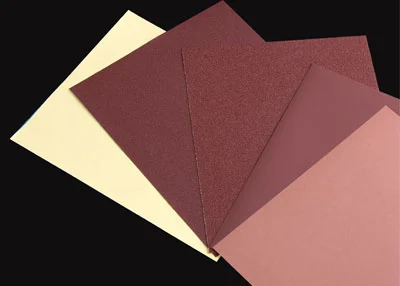
Aluminum Oxide: The most versatile and widely used abrasive. It features a friable grain that self-sharpens as it breaks down, making it highly durable. It is ideal for bare wood, painted surfaces, and most metal fabrication tasks.
Silicon Carbide: Harder and sharper than aluminum oxide, but more brittle. Silicon carbide excels at cutting fast under light pressure. It is the standard choice for wet sanding, automotive finishing, polishing glass, and sanding plastics.
Ceramic: Known for its aggressive cutting action and exceptional longevity. Engineered ceramic grains micro-fracture during use to constantly expose sharp edges. These are typically reserved for heavy-duty metal removal and hard alloys.
The backing supports the abrasive grain and dictates the flexibility, durability, and water resistance of the product. Fujistar offers several specialized abrasive paper types based on backing:
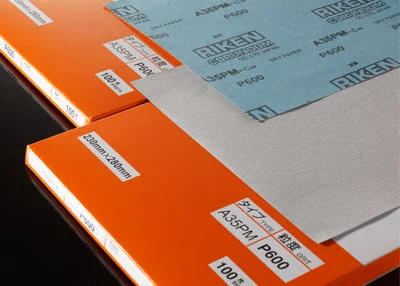
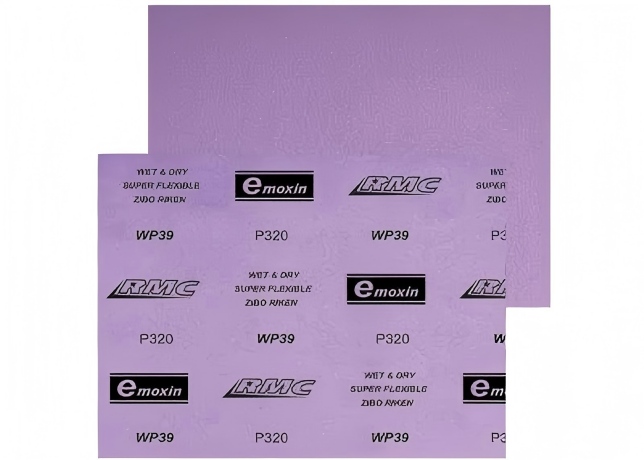
Waterproof Paper Backing: Essential for wet sanding applications, particularly in the automotive and precision polishing industries. Wet sanding prevents dust buildup and keeps the abrasive cool. (e.g., Fujistar Silicon Carbide Water Proof Paper).
Abrasive Film: Constructed with a polyester film backing rather than paper, film abrasives are highly resistant to tearing and provide a perfectly flat surface. This ensures an incredibly uniform scratch pattern, making it ideal for microfinishing and clear coat preparation.
Abrasive Net (Mesh): Designed with an open-weave structure, net abrasives are the ultimate solution for dust-free sanding. When paired with a vacuum system, the dust is pulled directly through the mesh, protecting worker health and extending the life of the abrasive by preventing clogging.
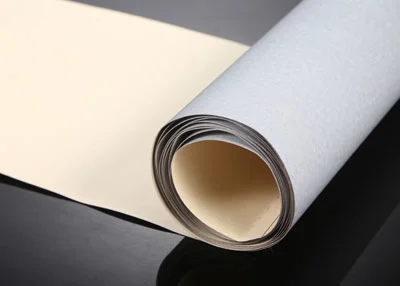
Abrasive Cloth: Much stronger than paper, cloth backings are designed for heavy stock removal and machine sanding (such as sanding belts or flap wheels). They are highly resistant to tearing and ideal for demanding woodworking and metalworking tasks.
Beyond the grain and backing, professional-grade sandpapers often feature specialized topcoats. Stearate-coated sandpaper utilizes a chemical layer (often zinc or calcium stearate) that acts as a lubricant. This coating sheds dust and prevents "loading" or clogging, which is especially important when sanding soft materials like primer, paint, and softwoods.
When sourcing wholesale abrasives for your production lines or distribution network, quality consistency is paramount.
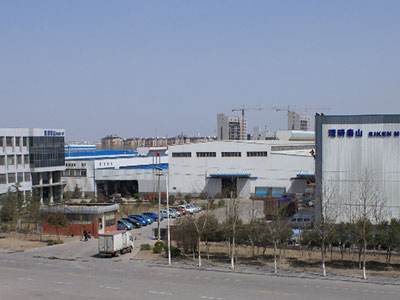
As a wholly Japanese-owned enterprise of SANKYO RIKAGAKU CO., LTD. (established in 1930), Fujistar Abrasives brings nearly a century of coating technology to the global market. Operating out of state-of-the-art facilities in China, we offer:
Advanced R&D: In-house laboratories equipped with electron microscopes and abrasive graphic analyzers to ensure strict quality control.
Comprehensive Solutions: From traditional jumbo rolls to high-tech Grinding Cubes (3D micro-replicated structures) and ceramic mesh.
OEM & Customization: We supply a vast array of converted products, including velcro discs, wide belts, and sanding sponges tailored to your specifications.
Understanding the specific abrasive paper types and their unique properties allows you to optimize your production efficiency, reduce material waste, and achieve a flawless finish every time.
Ready to upgrade your surface preparation process? VisitFujistar Abrasivesto browse our full catalog of professional sanding solutions or contact our team for expert recommendations and wholesale pricing.