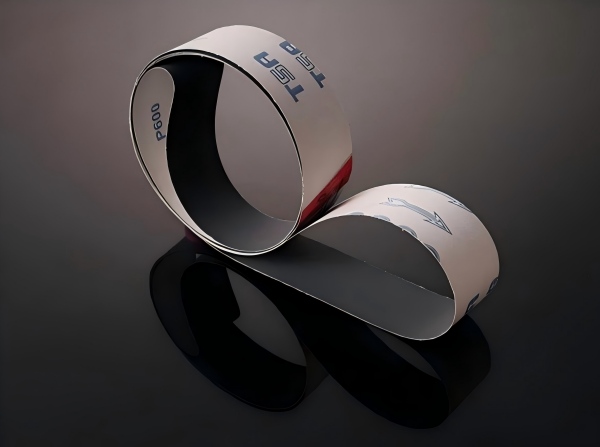
In 2026, metalworking shops are navigating a familiar set of pressures: labor costs are higher, delivery windows are tighter, and weld quality inspections have become more rigorous. In that environment, every unplanned stop on the finishing floor has a real cost — and one of the most predictable sources of unplanned stops is an abrasive that tears.
The decision to use paper-backed abrasives on metal finishing work is usually made at the procurement stage, where the lower unit price looks like straightforward cost control. The problem surfaces on the shop floor, where weld beads, burrs, laser-cut edges, and sharp flanges create point loads that paper backing cannot handle. The sheet tears within the first few passes. The operator stops, cuts a new piece, repositions, and resumes — losing minutes that accumulate across a shift into significant throughput loss. The finish quality is inconsistent because pressure varies every time a new piece is started. And the rework rate climbs because inconsistent sanding before coating means inconsistent coating adhesion.
Aluminum oxide cloth addresses that failure mode at the source. The cloth backing — available in X-weight for high-tensile strength and J-weight for contour flexibility — distributes stress across the fabric structure rather than concentrating it at a single point. The result is an abrasive that survives the sharp edges and aggressive hand pressure of metalwork finishing, delivers consistent sanding performance across a full working session, and produces a lower total cost per finished part despite a higher unit price than paper.
The performance difference between aluminum oxide cloth and paper-backed abrasives on metal surfaces is not a matter of grain quality. It is a structural difference in how the backing handles mechanical stress.
Paper backing is manufactured for applications where the abrasive surface contacts relatively smooth, flat workpieces under moderate, evenly distributed pressure. Wood sanding, primer leveling, and flat panel finishing are the conditions paper backing is designed for. On those surfaces, paper performs adequately and its lower cost is a genuine advantage.
Metal finishing presents a fundamentally different set of mechanical conditions. Weld beads create raised geometry with sharp transitions at the weld toe. Burrs from cutting, punching, and machining create localized high points that concentrate pressure on a small area of the abrasive. Laser-cut edges, sharp flanges, and bracket corners create line contacts that apply the full force of the operator's hand pressure to a narrow strip of backing material. Paper cannot distribute that stress. It tears at the point of highest concentration, and on metal surfaces, that point appears within the first few passes.
The consequence is not just the cost of the torn sheet. It is the interruption to the sanding pass, the inconsistency in pressure and scratch pattern that results from starting a new piece mid-operation, and the cumulative downtime across a shift of repeated tear-outs.
Aluminum oxide is one of the most widely used abrasive materials for metal finishing because its toughness and wear characteristics are well matched to the mechanical demands of deburring, weld blending, and surface preparation. The grain resists fracture under the pressure and vibration of hand sanding, maintains its cutting geometry through a working session, and produces a predictable scratch pattern that supports consistent coating adhesion.
The self-sharpening behavior of aluminum oxide — controlled micro-fracturing that exposes fresh cutting edges as the grain wears — helps maintain cut rate across a long sanding pass without the rapid glazing that causes operators to press harder and generate heat. For manual metalwork finishing where operator technique varies, that predictability in grain behavior reduces the variability in surface quality that drives rework.
The fabric structure of cloth backing distributes mechanical stress across the weave of the material rather than concentrating it at a single point. When the abrasive contacts a sharp edge or weld toe, the load is spread across multiple fibers rather than applied to a single layer of paper. The result is a backing that flexes and conforms to the geometry of the contact point without tearing.
This stress distribution is the fundamental reason aluminum oxide cloth outlasts paper on metal surfaces. It is not that cloth is marginally more durable — it is that cloth handles the specific failure mode that destroys paper on metal finishing work. On a weld seam or a laser-cut edge, paper tears in seconds. Cloth survives the same contact and continues to cut.
Aluminum oxide cloth is not a single product. The backing weight, bonding system, grit range, and format each affect how the product performs in a specific metalworking application. Specifying the right configuration is what determines whether the cloth backing advantage is fully captured in practice.
Cloth weight is the most important specification variable for metalworking applications because it determines the balance between tensile strength and conformability.
X-weight cloth is a heavier, stiffer fabric with higher tensile strength. It is designed for applications where the primary requirement is resistance to tearing under high pressure and aggressive contact with sharp edges. Weld seam blending, heavy deburring, and edge breaking on structural components are X-weight applications. The stiffness of X-weight cloth provides a firm cutting surface that transfers hand pressure efficiently to the abrasive grain, which is an advantage in stock removal operations where cut rate matters.
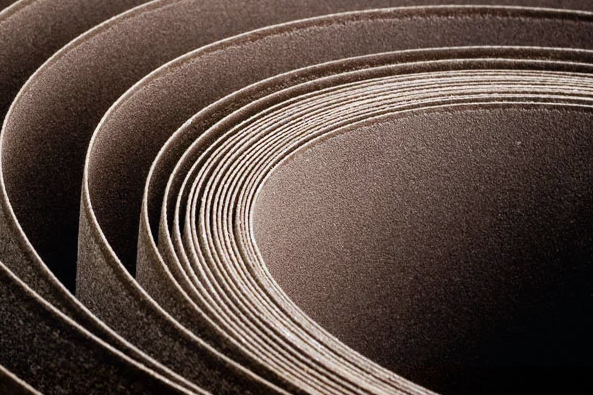
J-weight cloth is a lighter, more flexible fabric that conforms to curved surfaces, radii, and complex profiles. It is designed for contour sanding applications where the abrasive needs to follow the geometry of the workpiece rather than bridge across it. Tube and pipe joints, curved brackets, castings with complex parting lines, and any application where the workpiece surface changes direction frequently are J-weight applications. The flexibility of J-weight cloth allows it to maintain consistent contact across the full profile of the workpiece, which produces a more uniform scratch pattern on contoured surfaces than a stiffer backing can achieve.
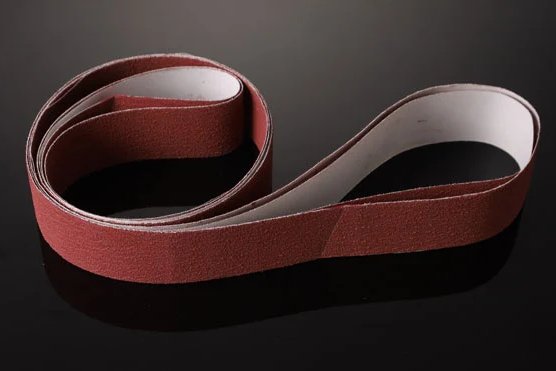
The selection between X-weight and J-weight is not always binary. Some operations use X-weight for the initial stock removal pass on flat or near-flat surfaces and J-weight for the blending and finishing passes on contoured areas of the same part.
The resin bonding system that attaches abrasive grain to the cloth backing determines how well the grain is retained under sustained pressure and heat. Weak bonding leads to grain shedding — grains detach from the backing before they are worn out, reducing the effective cutting surface and potentially contaminating the workpiece or the operator's hands. Strong resin bonding keeps grains in place through their useful cutting life, which is particularly important in aggressive hand sanding where the abrasive is under high load continuously.
Backing treatments affect the flexibility, edge wear resistance, and resistance to cracking of the cloth. A backing that cracks at the fold lines when the cloth is wrapped around a contour or a backing pad loses its structural integrity and tears more readily. Specifying a backing treatment appropriate for the bending and flexing demands of the application is part of ensuring that the cloth backing advantage is maintained throughout the abrasive's usable life.
The grit selection determines the balance between material removal rate and surface finish quality at each stage of the metalworking process. Coarse grits — typically 40 to 80 — are appropriate for weld knockdown, heavy burr removal, and initial surface leveling. Medium grits — 100 to 150 — are used for blending and transitioning from the coarse scratch pattern to a finer surface texture. Fine grits — 180 and above — prepare the surface for coating, inspection, or polishing.
The goal in specifying a grit sequence is to use the fewest steps that achieve the required surface condition. Each additional step adds time and abrasive cost. For most weld blending and deburring workflows, a two-step sequence — removal and blend — covers the full range. A three-step sequence is appropriate when the starting surface is rough and the finish requirement is tight.
For softer non-ferrous metals that smear under sanding — aluminum and copper alloys — an anti-loading coating on the abrasive surface reduces the accumulation of soft metal swarf between grains, extending effective cutting life and reducing the heat generated by a loaded abrasive.
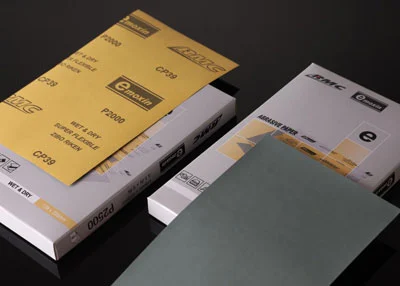
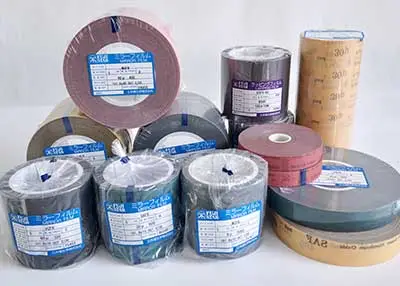
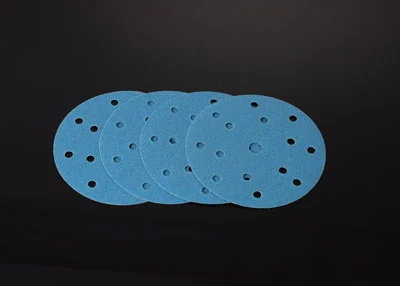
The format — roll, sheet, belt, or disc — should match the process and the tool. Hand sanding operations typically use strips cut from a roll or pre-cut sheets. Backstand and bench grinder applications use belts. Portable angle grinder and DA sander applications use discs. Specifying the correct format reduces waste from cutting and trimming, improves tool compatibility, and ensures that the cloth backing is oriented correctly for the mechanical demands of the application.
For high-volume operations, specifying roll width and cut length as part of the work instruction standardizes the piece size that operators use, which reduces waste and makes consumption tracking meaningful for procurement planning.
The applications where aluminum oxide cloth creates the most significant performance difference are those where sharp edges, complex geometry, or aggressive hand pressure make paper backing impractical.
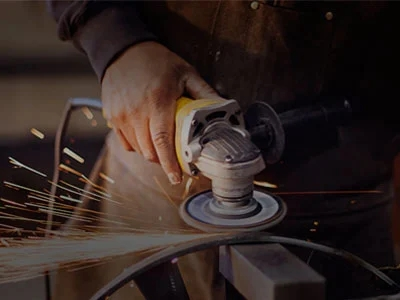
Weld seam blending is the application where the difference between cloth and paper is most immediately visible. The weld bead creates a raised profile with sharp transitions at the weld toe — exactly the geometry that tears paper backing within the first few passes. Cloth backing distributes the stress at the weld toe across the fabric structure, allowing the operator to maintain consistent pressure and stroke direction throughout the blending pass.
Consistent pressure produces a consistent scratch pattern across the weld area, which is the prerequisite for consistent coating adhesion. Weld areas that are sanded inconsistently — because the operator is stopping to replace torn paper — show up after coating as adhesion failures, thin spots, and visible texture variation that require rework.
Edge breaking on structural components — removing the sharp arris from laser-cut, punched, or machined edges — creates similar point load conditions. Cloth backing handles the edge contact without tearing, allowing the operator to work along the edge continuously rather than stopping to replace torn paper.
J-weight cloth is specifically designed for the contour sanding applications that paper cannot handle. Tube and pipe joints, curved brackets, castings with parting lines, and components with multiple radii and transitions require an abrasive that conforms to the surface geometry rather than bridging across it.
Paper backing on a contoured surface makes contact only at the high points of the geometry, leaving the recesses and transitions unsanded. The result is an inconsistent surface condition that shows up as uneven coating coverage and adhesion variation after painting. J-weight cloth conforms to the contour, maintaining abrasive contact across the full surface profile and producing a uniform scratch pattern that supports consistent coating performance.
Beyond weld seams and contour work, there is a broad category of metalworking applications where the combination of sharp edges, irregular geometry, and aggressive hand pressure makes paper backing impractical. Brackets with laser-cut edges, castings with parting lines and flash, tube joints with sharp weld toes, and flanged components with multiple sharp transitions all fall into this category.
In these applications, paper is not just less efficient than cloth — it is functionally unsuitable. The tear rate is high enough that operators spend a significant fraction of their time cutting and replacing paper rather than sanding. Switching to aluminum oxide cloth on these applications eliminates the tear-out problem and restores the throughput that paper's failure mode was consuming.
Specifying aluminum oxide cloth correctly for a metalworking operation requires a structured approach that matches the backing weight, grit, and format to the specific demands of the application.
Start by assessing the tear risk in the current operation. Identify the sharpest edges, the highest burrs, and the most aggressive contact geometry that the abrasive will encounter. If the answer involves weld toes, laser-cut edges, or sharp flanges under high hand pressure, X-weight cloth is the appropriate backing. If the answer involves curved surfaces, radii, and complex profiles where conformability matters more than tensile strength, J-weight is the right choice.
Set the grit sequence based on the starting surface condition and the required finish. For weld blending, start with a coarse grit that removes the weld bead efficiently and move to a medium grit for blending. For deburring and edge breaking, a single coarse grit is often sufficient. For pre-coating preparation on a surface that is already relatively smooth, start at medium grit and finish at fine.
Choose the format based on the tool and the operation. Hand sanding strips cut from a roll are appropriate for manual weld blending and edge work. Belts are appropriate for backstand and bench grinder applications. Discs are appropriate for angle grinder and DA sander applications.
Run a one-shift trial before committing to production volume. Record tear-outs per shift, time-to-finish per weld meter or part, and rework incidents attributable to inconsistent sanding. Compare against the same metrics from the current paper abrasive. The trial data gives procurement a cost-per-finished-part figure that is specific to the operation.
Use a backing pad or block for flat area sanding to distribute pressure evenly across the abrasive surface. Concentrated finger pressure on a flat surface creates uneven scratch depth and accelerates localized wear.
Break sharp burrs with the correct coarse grit before moving to finer grits. Forcing a fine grit to do heavy removal work shortens its effective life and produces an inconsistent surface because the grain is working outside its designed cutting range.
Maintain a consistent stroke direction to avoid localized overheating and premature wear. Changing stroke direction frequently concentrates heat in the same area and can cause the bonding system to soften, accelerating grain shedding.
The total cost argument for aluminum oxide cloth is built on the cost-per-finished-part calculation, not the unit price comparison. Making that argument requires measuring the variables that paper's failure mode affects.
Paper abrasives appear cheaper on the purchase order. The hidden costs appear on the shop floor. Each tear-out stops the sanding pass, requires the operator to cut a new piece, and restarts the operation with a fresh abrasive that may be a different grit or size than the piece it replaced. The time cost of each tear-out is small in isolation — perhaps two to three minutes. Across a shift with multiple tear-outs per part, the cumulative downtime is significant.
Inconsistent sanding pressure — because the operator is working with a new piece of abrasive every few passes — produces inconsistent surface quality. Inconsistent surface quality before coating means inconsistent coating adhesion, which means rework after painting. Rework at the coating stage is expensive: the part has to come off the line, the defect has to be identified and corrected, and the part has to go back through the coating process.
More pieces of paper are also wasted due to tearing during cutting and handling, before the abrasive even reaches the workpiece. On a roll of paper abrasive, the waste from torn pieces during cutting and setup adds to the effective cost per usable piece.
Track pieces of abrasive used per finished part or per meter of weld. Track tear-outs per shift before and after switching to aluminum oxide cloth. Track minutes to reach the finish specification per part. Track rework hours related to inconsistent blending or surface preparation. These four metrics, measured in a structured one-shift trial, give procurement a complete cost-per-finished-part comparison that accounts for the variables that unit price comparisons miss.
The typical outcome of that comparison on metalworking applications with sharp edges and weld geometry is that aluminum oxide cloth delivers a lower total cost per finished part despite its higher unit price, because the tear-out rate is dramatically lower and the throughput and rework savings outweigh the unit price difference.
Paper abrasives look cheaper on the purchase order, but on metal welds and sharp edges they fail in a way that is predictable, measurable, and expensive. The tear-out rate on paper in metalworking applications is not a minor inconvenience — it is a throughput problem, a surface quality problem, and a rework risk that accumulates into significant cost across a production shift.
Aluminum oxide cloth eliminates that failure mode. X-weight cloth provides the tensile strength to survive high-pressure contact with weld toes, burrs, and sharp edges without tearing. J-weight cloth provides the flexibility to conform to contoured surfaces and complex profiles without cracking or losing contact. The aluminum oxide grain delivers consistent cutting performance and predictable wear behavior across the full range of metalworking finishing applications. The result is fewer tear-outs, steadier throughput, more consistent surface quality, and a lower total cost per finished part.
To receive a recommended cloth weight, grit plan, and quotation, visit the aluminum oxide abrasive cloth product page and submit the following details:
Operating conditions: metal type, weld and burr condition, dry sanding versus lubricant use, hand sanding or tool-assisted, pressure level
Quantity: monthly usage volume, per-shift consumption, trial versus bulk order
Size and specs: roll width and length or sheet size, cut strip dimensions, backing weight preference (X or J if known), grit range
Target metrics: tear-out reduction target, time-to-finish target, finish requirement expressed as appearance grade or Ra, cost-per-part goal
Current problems: paper tearing on edges or welds, slow weld blending, inconsistent finish quality, high changeover time, excessive rework after coating
Q1: What is aluminum oxide cloth?
Aluminum oxide cloth is an abrasive product where aluminum oxide grain is bonded onto a fabric backing rather than a paper backing. The cloth structure provides significantly higher tensile strength and tear resistance than paper, making it suitable for demanding metalworking applications where sharp edges, weld geometry, and aggressive hand pressure would destroy paper-backed abrasives quickly. It is available in different cloth weights — X-weight for high-strength applications and J-weight for flexible contour work — and in roll, sheet, belt, and disc formats to match different tools and processes.
Q2: What is the difference between aluminum oxide cloth and paper sandpaper for metalworking?
Paper sandpaper tears when it contacts sharp edges, weld toes, and burrs under hand pressure. The tear-out rate on metal surfaces is high enough that operators spend a significant fraction of their time replacing torn paper rather than sanding. Aluminum oxide cloth uses a fabric backing that distributes stress across the weave structure rather than concentrating it at a single point, allowing it to survive the same contact conditions that destroy paper. The practical difference is a dramatically lower tear-out rate, more consistent sanding pressure across a working session, and a lower total cost per finished part despite the higher unit price.
Q3: What is the ROI of switching from paper to aluminum oxide cloth in metalworking?
The return on investment comes from three sources: fewer tear-outs and the downtime they cause, more consistent surface quality and the rework reduction that follows, and lower waste from abrasive pieces torn during cutting and handling. The best metric for the ROI calculation is cost per finished part — total abrasive spend plus changeover downtime plus rework cost, divided by parts finished. A one-shift trial measuring tear-outs per shift, time-to-finish per part, and rework incidents before and after switching provides the data needed to calculate that figure for a specific operation.
Q4: Do we need to modify tools or processes to switch to aluminum oxide cloth?
No major equipment changes are required. The transition from paper to cloth abrasive typically involves selecting the correct backing weight for the application, standardizing the cut strip or sheet size for hand sanding operations, and adjusting the grit sequence so that coarse grits handle stock removal and finer grits handle blending. These are procedural changes that can be incorporated into work instructions without capital investment. For tool-mounted applications, confirming that the disc or belt format is compatible with the existing tool and pad is the main setup requirement.
Q5: What parameters should we provide for accurate selection and quoting?
For the most useful recommendation, provide the metal type and the specific application — weld blending, deburring, contour sanding, or edge breaking — along with the severity of the sharp edges or weld geometry involved. Include the sanding method (hand sanding or tool-assisted), the preferred format (roll, sheet, belt, or disc), the required dimensions, the grit range needed for each stage of the process, the monthly usage volume, and the primary failure mode currently being experienced — tearing, short abrasive life, slow blending, inconsistent finish, or high rework rate after coating.