In 2026, maintenance teams and QC departments are working under conditions that leave very little room for error. Uptime targets are tighter, tolerance requirements have narrowed, and traceability expectations mean that every cleaning and finishing operation on a critical component needs to produce a documented, repeatable outcome. In motors, automation systems, and precision instruments, the surfaces that matter most — commutator segments, bearing journals, electrical contact faces — are also the surfaces most vulnerable to damage from the wrong abrasive choice.
The problem that comes up repeatedly in these environments is straightforward but costly. When a technician reaches for ordinary sandpaper to clean oxidation or contamination off a sensitive metal surface, the abrasive does not distinguish between the oxide layer it is supposed to remove and the base metal underneath. The result can be dimensional change on a commutator that disrupts brush contact, a bearing journal that is now out of tolerance, or a contact face with scratch marks deep enough to increase resistance and cause intermittent signal failures. The cleaning operation that was supposed to restore function ends up creating a new problem.
Crocus cloth exists specifically to solve this. As a fine metal sanding cloth based on low-hardness iron oxide abrasive, it is designed to lift rust, tarnish, oxide films, and surface contamination while minimizing the cutting action on the base metal beneath. For precision cleaning applications where the goal is maximum cleanliness with minimum material removal, it is a fundamentally different tool from conventional sandpaper — and in 2026, that difference has measurable consequences for rework rates and component life.
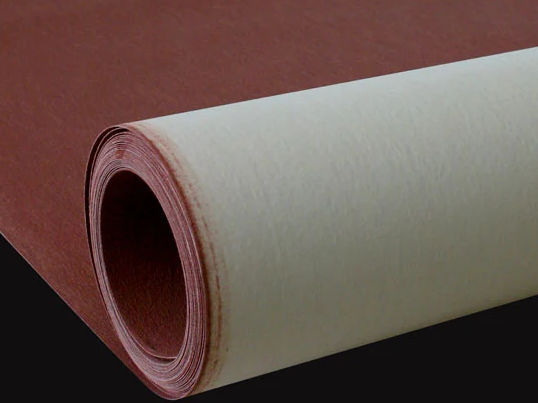
The distinction between crocus cloth and ordinary sandpaper starts at the abrasive grain level. Most common abrasives — aluminum oxide, silicon carbide, zirconia — are hard enough to cut efficiently into metal substrates. That hardness is an advantage in stock removal and surface preparation applications. It is a liability when the task is cleaning a surface that must retain its geometry and functional properties after the operation.
Crocus cloth uses iron oxide as its abrasive. Iron oxide sits at a significantly lower position on the hardness scale than the abrasives used in conventional sandpaper. That lower hardness means the grain can engage with and remove the softer oxide layer, rust film, and surface contamination on a metal part without generating the cutting force needed to remove base metal at a meaningful rate.
The practical effect is a controlled surface action. The abrasive lifts what needs to come off — the oxidation, the tarnish, the grime — while the underlying metal surface remains largely intact. This is not a passive or ineffective process. Iron oxide abrasive is genuinely effective at removing surface contamination. The difference is that it does so without the aggressive substrate cutting that makes ordinary sandpaper dangerous on precision components.
The consequences of over-abrasion on sensitive metal surfaces are specific and well understood in maintenance and repair environments.
On a motor commutator, removing too much copper from one or more segments changes the geometry of the commutator surface. The brushes, which are designed to maintain consistent contact across a specific profile, begin to ride unevenly. The result is increased arcing, accelerated brush wear, and eventually commutator damage that requires machining or replacement rather than simple cleaning.
On precision bearing journals and shafts, even a small dimensional change from aggressive abrasion can alter the interference or clearance fit that the bearing depends on. A fit that is now slightly looser than specification generates noise, heat, and accelerated wear. A fit that is tighter creates assembly problems and stress concentrations.
On electrical contact faces and instrument terminals, deep scratches from hard abrasives increase the effective contact resistance by reducing the true contact area and creating peaks and valleys that trap contaminants. The surface looks clean but performs worse than before the cleaning operation.
Crocus cloth addresses all three failure modes by keeping the abrasive action at the surface contamination level rather than the base metal level.
Crocus cloth is not a single product — it is a category with meaningful variation in grade, backing construction, and format. Specifying the right configuration for your application determines whether the non-destructive cleaning performance is actually achieved in practice.
The grade of crocus cloth determines how aggressively it engages with the surface. For most precision cleaning applications — commutator maintenance, bearing surface cleaning, contact face restoration — a fine grade is appropriate. The objective is to remove oxidation efficiently without introducing scratch marks that are deeper than the original contamination layer. A grade that is too coarse for the application defeats the purpose of using crocus cloth in the first place.
If you are unsure of the right grade, start with the finest option available for your contamination type and assess the result after a controlled trial. Moving to a slightly coarser grade is straightforward if the cleaning rate is insufficient. Recovering from over-abrasion on a precision component is not.
The cloth backing on crocus cloth serves two functions. It provides the mechanical support needed to apply consistent pressure across the abrasive surface, and it conforms to the curved geometries common in precision maintenance work — commutator surfaces, shaft journals, and cylindrical contact areas. A backing that is too stiff will not conform properly, leading to uneven contact and inconsistent cleaning results. A backing that tears easily under normal maintenance use creates contamination risk and inconsistent abrasive delivery.
For MRO applications where the cloth is being used by hand or with simple fixtures, a backing that balances flexibility with tear resistance is the practical requirement.
For production cells and maintenance departments with consistent usage, specifying a standard sheet size or roll width with defined cut lengths reduces waste and simplifies inventory management. Operators who cut their own lengths from a roll without guidance tend to use more material than necessary and produce inconsistent piece sizes that affect how the cloth is held and applied. Standardizing cut length as part of the work instruction is a small process change that improves both cost control and cleaning consistency.
The applications where crocus cloth creates the most significant performance advantage are those where the cost of over-abrasion is highest — either because the component is expensive to replace, because dimensional tolerance is critical to function, or because electrical performance depends on surface condition.
Commutator maintenance is one of the most established applications for crocus cloth in industrial settings. The copper segments of a commutator develop oxide films and glazing during normal operation, and periodic cleaning is part of standard motor maintenance practice. The challenge is that copper is a relatively soft metal, and the segments are machined to tight dimensional tolerances. Ordinary sandpaper removes copper along with the oxide, and repeated cleaning cycles with an aggressive abrasive gradually alter the commutator profile.
Crocus cloth removes the oxide and glazing while minimizing copper removal, supporting the maintenance objective without the cumulative dimensional risk. As with all commutator work, following the motor OEM's recommended maintenance procedures is important — crocus cloth is a tool that supports those procedures, not a substitute for them.
Before assembly or inspection, bearing journals and shaft surfaces sometimes require light cleaning to remove surface oxidation or handling contamination that accumulated during storage or transit. The requirement is to restore surface cleanliness without altering the dimensions that determine the bearing fit.
Crocus cloth is well suited to this task. The low-hardness abrasive removes surface contamination without the cutting action that would change the journal diameter or surface finish beyond the tolerance band. For components where the fit specification is tight, this distinction between cleaning and cutting is the difference between a usable part and a scrapped one.
Electrical contact surfaces oxidize over time, and that oxidation increases contact resistance. In instrument and control applications, higher contact resistance means signal degradation, intermittent connections, and measurement errors. Cleaning the contact surface restores conductivity — but only if the cleaning method does not introduce new problems.
Deep scratches from hard abrasives increase surface roughness, reduce true contact area, and create sites where contaminants accumulate more readily. Crocus cloth removes the oxide film while leaving a surface condition that supports reliable electrical contact rather than compromising it.
Selecting crocus cloth correctly and using it with appropriate technique are both necessary to achieve the non-destructive cleaning outcome it is designed for.
Start by identifying the metal and its function. Copper commutator segments, stainless steel shafts, plated contact surfaces, and aluminum instrument housings each have different hardness, different contamination profiles, and different tolerance requirements. The selection should be calibrated to the specific metal and function, not applied generically.
Define the contamination type. A thin oxide film requires less abrasive action than heavy rust or embedded grime. Matching the grade to the contamination level avoids unnecessary abrasion on surfaces that could be cleaned with a finer approach.
Set a clear criterion for what the cleaning operation must not do. This might be expressed as a dimensional tolerance limit, a maximum allowable surface roughness, or a contact resistance target. Having a defined stopping criterion prevents the common tendency to keep abrading until the surface looks perfect by eye — which often means abrading past the point where the functional requirement was already met.
Run a short controlled trial on a representative part before committing to a grade and process. Measure the outcome against your criterion. Adjust grade or technique if needed, then standardize the process.
Apply light, uniform pressure. The iron oxide abrasive in crocus cloth does not need heavy pressure to engage with surface contamination. Pressing harder does not clean faster — it increases the risk of base metal removal and uneven surface action.
Clean the surface between passes. Debris from the contamination layer, if dragged across the surface repeatedly, can act as a harder abrasive than the crocus cloth itself. A clean wipe between passes removes that risk.
Inspect before stepping to a coarser abrasive. If crocus cloth is not removing the contamination at the rate needed, the first response should be to check technique and pressure, not to reach for a harder abrasive. Moving to a more aggressive abrasive on a precision surface should be a deliberate decision based on inspection criteria, not a default response to slow progress.
The unit price of crocus cloth is typically higher than ordinary sandpaper. The total cost comparison, when measured correctly, usually runs in the opposite direction.
A commutator that is cleaned with ordinary sandpaper and ends up out of tolerance does not just require rework — it may require machining, which takes the component out of service and adds significant cost. A bearing journal that is abraded past its fit tolerance requires replacement of the shaft or the bearing housing, depending on which dimension has changed. An electrical contact that is scratched deeply enough to increase resistance causes intermittent faults that are time-consuming to diagnose and may result in unnecessary replacement of other components in the circuit.
None of these costs appear in the abrasive consumables budget. They appear in maintenance labor, component replacement, downtime, and rework — which is why the comparison between crocus cloth and ordinary sandpaper cannot be made on unit price alone.
Track the rate of out-of-tolerance incidents on components that are cleaned as part of maintenance. Track rework events that are traced back to cleaning-induced surface damage. Track the frequency of repeat cleaning operations — if a surface requires re-cleaning shortly after the previous cleaning, the cleaning method may be leaving a surface condition that accelerates re-contamination. And track downtime events that are attributable to contact failures on commutators and terminals.
These metrics, measured before and after switching to crocus cloth for appropriate applications, give a clear picture of the cost difference that unit price comparisons miss entirely.
When the objective is to restore a sensitive metal surface to clean, functional condition without altering its dimensions or damaging its contact performance, the abrasive choice is not a minor detail. It is the variable that determines whether the cleaning operation succeeds or creates a new problem.
Crocus cloth delivers the non-destructive cleaning performance that precision maintenance requires. Its low-hardness iron oxide abrasive removes rust, oxide films, tarnish, and surface contamination while minimizing base metal removal — protecting the tolerances and contact properties that the component depends on. For motor commutators, precision bearings, instrument contacts, and any sensitive metal surface where ordinary sandpaper has been causing out-of-spec results or unreliable electrical performance, switching to the right metal sanding cloth specification is a straightforward change with measurable consequences for rework rates and component life.
To receive a recommended crocus cloth specification and quotation, visit the abrasive cloth product page and submit the following details:
Operating conditions: component type (commutator, bearing, contact, terminal), metal type, contamination type (oxide film, rust, oil residue, glazing), dry use or with cleaning agent
Quantity: monthly usage volume, trial quantity, annual forecast
Size and specs: sheet versus roll preference, width and length, preferred cut size, required grade or fineness if known
Target metrics: dimensional tolerance requirement, surface finish expectation, contact performance goal such as stable conductivity or resistance limit
Current problems: over-abrasion, out-of-tolerance parts after cleaning, intermittent electrical contact, visible scratch marks, high rework rate
For additional background on abrasive cloth selection and application, the sand cloth reference page provides further technical context.
Q1: What is crocus cloth?
Crocus cloth is a fine abrasive cloth that uses iron oxide as its abrasive material. It is designed for precision cleaning and light finishing on metal surfaces where aggressive cutting is undesirable. The low hardness of iron oxide abrasive allows it to remove surface oxidation, rust, tarnish, and contamination while minimizing the removal of base metal. It is widely used in motor maintenance, precision bearing work, and electrical contact cleaning where dimensional integrity and contact performance must be preserved.
Q2: How does crocus cloth differ from regular sandpaper?
Regular sandpaper typically uses harder abrasives such as aluminum oxide or silicon carbide, which are effective for stock removal and surface preparation but cut aggressively into metal substrates. On sensitive precision surfaces, this cutting action can alter dimensions, change surface finish beyond acceptable limits, and leave scratch marks that impair electrical contact performance. Crocus cloth uses a softer abrasive that targets surface contamination rather than base metal, making it appropriate for cleaning applications where the goal is to restore surface condition without changing the underlying geometry or functional properties.
Q3: What is the ROI of switching to crocus cloth for precision cleaning?
The return on investment comes from avoided costs rather than direct savings on abrasive spend. Fewer out-of-tolerance incidents after cleaning means fewer scrapped or reworked components. Fewer contact failures on commutators and electrical terminals means less diagnostic time and fewer unnecessary component replacements. More consistent cleaning results mean fewer repeat cleaning operations. In maintenance environments where a single scrapped precision component costs significantly more than a year's supply of crocus cloth, the cost argument for using the right abrasive is straightforward.
Q4: Do we need to modify tools or processes to use crocus cloth?
In most cases, no equipment changes are required. Crocus cloth is typically used by hand or with simple fixtures, and the technique is similar to other hand abrasive operations. The process changes that matter are procedural: applying light and uniform pressure rather than heavy pressure, cleaning the surface between passes, inspecting against a defined criterion before deciding whether additional abrasion is needed, and avoiding the default of stepping to a coarser abrasive when the cleaning rate seems slow. These are technique adjustments that can be incorporated into a work instruction without any capital investment.
Q5: What parameters should we provide for accurate selection and quoting?
For the most useful recommendation, provide the metal type and component function, the type of contamination being removed, the dimensional tolerance or contact performance requirement that must not be compromised, the preferred format (sheet or roll) and size, the expected usage volume per month, and a description of what is currently going wrong with the abrasive being used. If you have a specific surface finish target expressed as an Ra value or a contact resistance limit, including those figures helps calibrate the grade recommendation to your actual functional requirement.