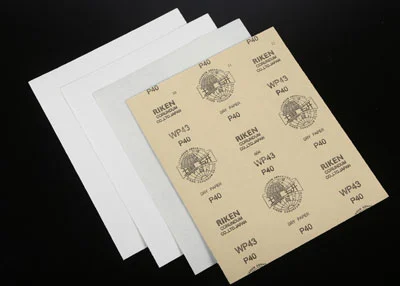
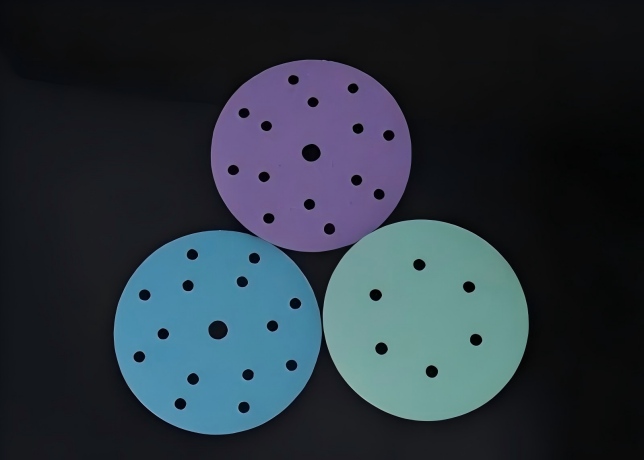
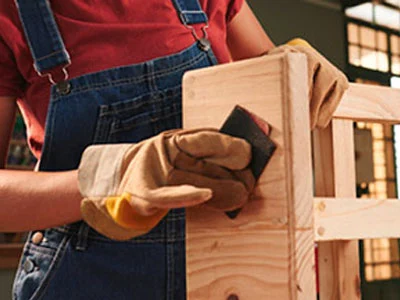
In 2026, industrial finishing lines are held to cosmetic standards that leave very little margin for surface imperfection. Customer audits are more rigorous, high-gloss coating specifications are tighter, and the cost of rework after painting has climbed alongside labor rates. In that environment, the quality of the surface preparation step — the sanding that happens before primer and topcoat — determines whether the finished part passes inspection on the first attempt or goes back through the coating line.
The problem that keeps appearing at the inspection stage is not a coating problem. It is a sanding problem. When workers hold sandpaper directly in their hands and sand a surface, the pressure distribution is controlled by finger geometry rather than by the surface being worked. Fingers create localized high-pressure zones at the contact points and low-pressure zones between them. The abrasive removes more material at the high-pressure points, leaving a surface that appears flat to the touch but has a subtle wave pattern that becomes highly visible under raking light after a high-gloss topcoat is applied. The coating does not create the defect — it reveals the one that was already there.
A sanding block solves this by replacing the compliant, variable contact of bare fingers with a rigid or semi-rigid body that distributes pressure across a defined, flat contact face. The base flatness of the block acts as a reference plane that shaves high spots evenly and reduces the tendency to dig into low spots. For high-gloss coating preparation, that controlled contact geometry is not a refinement — it is the prerequisite for a surface that will pass inspection after painting.
The working principle of a sanding block is a direct response to the failure mode of hand-held sandpaper. Understanding why bare-hand sanding creates waves makes it clear why the block's geometry solves the problem.
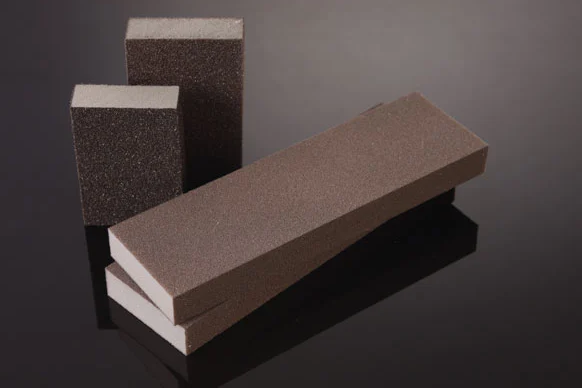
The pressure that a worker applies through bare fingers is not uniform. The fingertips and the pads of the fingers create contact zones with higher pressure, and the areas between fingers receive less pressure. On a flat surface, this means the abrasive removes material faster at the finger contact zones than at the areas between them. Over multiple passes, the surface develops a wave pattern that corresponds to the pressure distribution of the hand — not to the geometry of the surface.
The problem is compounded by the natural tendency of operators to focus sanding effort on areas that feel rough or look uneven. This "hunting" behavior concentrates abrasive action on perceived high spots, which often results in over-cutting those areas while leaving adjacent low spots relatively untouched. The surface that results from this process is not flat — it has a complex wave pattern that reflects the combination of the original surface variation and the uneven pressure applied during sanding.
On a flat panel destined for high-gloss coating, this wave pattern is invisible before painting. After a high-gloss topcoat is applied, the reflective surface amplifies the wave pattern into visible ripples, halos, and gloss inconsistency that are immediately apparent under inspection lighting. Correcting these defects after painting requires stripping the coating, re-sanding, and repainting — the most expensive point in the process to address a surface preparation problem.
A sanding block provides a flat, rigid or semi-rigid contact face that does not conform to finger geometry. When the block face is held flat against the workpiece surface, the pressure is distributed across the full contact area of the block rather than concentrated at finger contact points. The abrasive action is uniform across the contact zone, which means material is removed evenly from the workpiece surface.
The base flatness of the block is the property that determines how effectively it levels the surface. A block with high base flatness acts as a reference plane: it makes contact preferentially with the high spots on the surface and removes material from those spots, while the low spots receive less abrasive contact. Over multiple passes, the surface converges toward the reference plane defined by the block face. This is the leveling mechanism that makes a sanding block fundamentally different from hand-held sandpaper — the block imposes its geometry on the surface rather than conforming to the surface's existing geometry.
The result is a more consistent scratch pattern across the full surface area, which supports more uniform primer wetting and topcoat adhesion. The surface that goes to the coating line is genuinely flat rather than apparently flat, and the high-gloss topcoat reflects a smooth, wave-free surface rather than amplifying hidden preparation defects.
Selecting the right sanding block for an industrial finishing application requires understanding the specifications that determine how effectively the block controls surface flatness and finish quality.
Base flatness is the most important specification for any sanding block used in high-gloss coating preparation. A block whose base is not flat cannot act as a reference plane — it will follow the existing surface waves rather than correcting them, producing the same outcome as hand-held sandpaper with a slightly larger contact area.
For standard industrial finishing where the coating specification allows moderate surface variation, a block with adequate base flatness is sufficient. For high-gloss applications — automotive topcoats, lacquered furniture, high-end cabinetry, and any surface where the coating is expected to produce a mirror-like reflection — base flatness is the specification that determines whether the sanding step actually prepares the surface for the coating or simply redistributes the existing surface variation.
The practical test for base flatness is whether the block produces a consistent scratch pattern across the full contact face when used on a known-flat reference surface. A block with poor base flatness produces an uneven scratch pattern that reveals the variation in its contact geometry.
Block density and hardness determine the balance between leveling performance on flat surfaces and conformability on curved or contoured surfaces. A higher-density, stiffer block maintains its flat contact geometry under hand pressure, which maximizes the leveling effect on flat panels. The stiffness prevents the block from deforming to follow surface waves, ensuring that the reference plane geometry is maintained throughout the sanding stroke.
A medium or softer density block conforms more readily to gentle curves and contoured surfaces, maintaining abrasive contact across the full profile without cutting through edges or high points on curved geometry. For applications that involve both flat panels and gentle curves — automotive body panels, curved cabinet doors, and composite components with compound curves — a medium density block provides a workable balance between leveling performance and conformability.
The selection should be driven by the primary surface geometry in the application. For predominantly flat surfaces with high-gloss coating requirements, stiffness and base flatness are the priority. For predominantly curved surfaces, conformability is the priority and some leveling performance is traded for better profile following.
Block size affects both the leveling performance and the practical usability of the block in the application. A larger block provides a wider reference plane that averages out surface variation over a larger area, which improves leveling performance on wide flat panels. A larger contact face also reduces the tendency to create localized lows by concentrating sanding effort in a small area.
A smaller block provides better control in tight areas, near features and edges, and in confined spaces where a larger block cannot be maneuvered effectively. For applications that involve both open panel areas and tight transitions, having two block sizes available — a larger block for open areas and a smaller block for edges and features — covers the full range without requiring a compromise.
Edge geometry affects how the block performs at surface transitions and near edges. A block with sharp edges can be used to sand right up to a feature or edge without the block face overhanging and cutting into the adjacent surface. A block with slightly rounded edges is more forgiving at transitions and reduces the risk of edge dig-in on surfaces where the block needs to cross a transition.
The method by which the abrasive is attached to the block face affects how consistently the abrasive surface remains flat during use. An abrasive that is not tensioned consistently across the block face develops high and low spots that replicate the pressure distribution problem of hand-held sandpaper at a smaller scale.
Integrated abrasive blocks — where the abrasive is bonded directly to the block body — provide the most consistent abrasive surface because the grain is fixed in a defined plane relative to the block face. Wrap-and-replace systems, where sheet abrasive is wrapped around the block and secured at the edges, require consistent tensioning to maintain a flat abrasive face. A loosely tensioned sheet develops wrinkles and high spots that produce an inconsistent scratch pattern. Standardizing the tensioning method as part of the work instruction is a simple step that protects the flatness advantage of the block.
The sanding block creates the most significant performance difference in applications where the surface preparation quality directly determines the appearance of the final coating.
High-gloss coatings — automotive topcoats, piano lacquer, high-end furniture finishes, and clearcoat on composite panels — are the applications where the relationship between surface preparation flatness and coating appearance is most direct and most unforgiving. A high-gloss coating does not hide surface variation — it amplifies it. Waves that are invisible on a matte surface become clearly visible as ripples and distortion in the reflection of a high-gloss surface.
The sanding block's base flatness is the tool that makes it possible to prepare a surface to the standard that high-gloss coating requires. By distributing pressure evenly and acting as a reference plane, the block levels the surface to a condition where the coating can produce the smooth, distortion-free reflection that the specification requires. Without a block, achieving that surface condition consistently across operators and shifts is not reliably possible.
In woodworking and cabinetry, the sanding step before finishing is where joint lines, filler, and edge transitions are leveled to produce a surface that accepts stain and topcoat uniformly. Hand-held sandpaper on these surfaces tends to follow the existing surface variation rather than correcting it, leaving joint lines and filler edges slightly proud or recessed relative to the surrounding surface. After staining or finishing, those transitions show up as visible lines and color variation.
A sanding block levels joint lines and filler edges by acting as a reference plane that removes material from the high spots — the proud edges of joints and filler — while leaving the surrounding surface relatively untouched. The result is a surface where transitions are genuinely flush rather than apparently flush, which produces uniform stain absorption and consistent topcoat appearance.
On metal and composite surfaces destined for industrial coating, the sanding step before primer application determines the scratch pattern that the primer bonds to and the flatness of the surface that the topcoat reflects. Inconsistent scratch depth from hand-held sandpaper produces variable primer adhesion across the surface, which can show up as adhesion failures and gloss variation in the topcoat.
A sanding block produces a consistent scratch pattern across the full surface area, which supports uniform primer adhesion and consistent topcoat appearance. For composite panels with high cosmetic requirements — aerospace interiors, automotive body panels, and high-end industrial equipment — the block's flatness control is the preparation step that makes the coating specification achievable.
Specifying the right sanding block for an industrial finishing application requires matching the block's properties to the surface geometry, the coating specification, and the production environment.
Start by identifying the surface type. A flat panel with a high-gloss coating requirement needs a stiff, high-base-flatness block that maximizes leveling performance. A gently curved surface with a standard industrial coating requirement needs a medium-density block that balances leveling with conformability. An edge zone or tight area near a feature needs a smaller block that provides control without the larger block face overhanging into adjacent areas.
Define the finish target before selecting the block hardness. For standard industrial finishes where moderate surface variation is acceptable, a medium-density block is appropriate. For high-gloss cosmetic requirements where surface waves are not acceptable, a stiffer block with verified base flatness is the correct choice. The finish target drives the block specification — not the other way around.
Choose the block size based on the panel or part area. A block that is too small for the panel area creates micro-waves by concentrating sanding effort in small zones. A block that is too large for the available working space cannot be maneuvered effectively near edges and features. Matching block size to the working area is part of achieving the consistent pressure distribution that the block is designed to provide.
Define the grit sequence based on the starting surface condition and the coating requirement. For most industrial finishing applications, a two-step sequence — leveling and refinement — covers the full range from correcting surface variation to preparing for primer. A three-step sequence is appropriate when the starting surface is rough and the finish requirement is tight. Minimizing the number of grit steps reduces cycle time without compromising surface quality when the sequence is correctly matched to the application.
Use long, consistent strokes that cover the full panel area rather than short scrubbing strokes that concentrate sanding effort in small zones. Short strokes create localized lows that are difficult to correct without over-sanding the surrounding area. Long strokes distribute the sanding action evenly across the surface and produce a more uniform scratch pattern.
Keep the block face clean between passes. Debris — abrasive particles, paint chips, or dust — trapped between the block face and the workpiece creates deep scratches that telegraph through primer and topcoat. A clean wipe of the block face between passes is a simple step that prevents the most common source of deep scratch defects in block sanding operations.
Inspect under raking light between grit steps. Raking light — a light source held at a low angle to the surface — reveals surface waves and scratch patterns that are invisible under normal overhead lighting. Inspecting between grit steps confirms that the previous step's scratch pattern has been fully removed before moving to the next finer grit, preventing the situation where deep scratches from an earlier step are discovered after the final grit pass.
The cost argument for sanding blocks in industrial finishing is built on rework avoidance. The relevant comparison is not the cost of a sanding block versus a sheet of sandpaper — it is the cost of a rework cycle after painting versus the cost of getting the surface preparation right before the part goes to the coating line.
Rework after painting is the most expensive point in the finishing process to address surface preparation defects. A part that fails inspection after topcoat application has to be stripped or re-sanded, re-primed, and re-coated. Each of those steps involves labor time, material cost, and schedule disruption. For high-value cosmetic parts — automotive panels, high-end furniture, and precision industrial components — the cost of a single rework cycle is many times the cost of the abrasive consumables used in the preparation step.
Reducing the rework rate from surface preparation defects — waves, ripples, cut-through on edges, and scratch returns after paint — is the primary source of ROI from sanding blocks. Fewer defects after painting means fewer rework cycles, lower material cost, and more predictable throughput through the coating line.
The secondary source of ROI is consistency across operators and shifts. When surface preparation quality depends on individual operator technique, the defect rate varies with who is doing the sanding. A sanding block reduces that variability by providing a physical reference geometry that constrains the sanding process regardless of individual technique differences. More consistent results across operators means more predictable first-pass acceptance rates at inspection.
Track rework minutes per part before and after introducing sanding blocks into the preparation workflow. Track the defect rate from surface preparation issues — waves, ripples, cut-through on edges, and visible scratch returns after paint — separately from coating defects. Track cycle time to reach the acceptance standard at each inspection point. Track abrasive consumption per batch, including both block replacements and sheet abrasive replacements for wrap-style blocks.
These four metrics, measured over one to two weeks of production finishing work, give a clear picture of the cost savings that the sanding block delivers in the specific production environment. The rework reduction figure, expressed as minutes per part and multiplied by the labor rate, gives procurement a cost-per-part comparison that is specific to the operation and defensible in a budget review.
Surface waviness after high-gloss painting is not a coating problem and it is not an operator skill problem. It is a contact geometry problem. When sandpaper is held in bare hands, the pressure distribution is determined by finger geometry, and the surface that results reflects that uneven pressure in the form of waves that become visible after painting. No amount of operator care or experience fully compensates for the fundamental physics of uneven contact pressure.
A sanding block with strong base flatness solves the contact geometry problem directly. The flat reference face distributes pressure evenly, levels high spots consistently, and produces a scratch pattern that is uniform across the full surface area. For high-gloss coating preparation, that controlled geometry is the difference between a surface that passes inspection on the first attempt and one that requires a rework cycle. For industrial finishing lines where rework cost is the primary driver of total finishing cost, the sanding block is the tool that makes flatness a process outcome rather than a matter of luck.
To receive a recommended block type, hardness, size, grit plan, and quotation, visit the sanding blocks product page and submit the following details:
Operating conditions: substrate type (wood, MDF, metal, or composite), dry versus wet sanding, hand sanding steps in the current process, dust extraction or cleaning method
Quantity: monthly consumption volume, number of operators or stations, trial versus bulk order
Size and specs: preferred block dimensions, hardness or density preference, abrasive attachment method, grit range and sequence
Target metrics: flatness tolerance, surface finish target expressed as Ra or appearance grade, high-gloss coating requirement, rework rate goal, cycle time target
Current problems: waves or ripples after painting, cut-through on edges, uneven sanding marks, scratch returns after topcoat, inconsistent results between workers or shifts
Q1: What is a sanding block?
A sanding block is a hand tool that holds or integrates abrasive material on a flat or shaped contact face, providing a stable sanding surface that distributes pressure more evenly than hand-held sandpaper. The block body — rigid or semi-rigid depending on the application — acts as a reference plane that levels surfaces by making preferential contact with high spots and removing material from those spots more than from low spots. Sanding blocks are used in industrial finishing, woodworking, automotive preparation, and any application where surface flatness before coating is a quality requirement.
Q2: What is the difference between a sanding block and sanding with loose sandpaper?
Loose sandpaper held in bare hands conforms to finger geometry, concentrating pressure at finger contact points and creating uneven material removal that produces surface waves. A sanding block distributes pressure across a flat reference face, leveling high spots evenly and producing a more consistent scratch pattern across the full surface area. The practical difference shows up after high-gloss coating — surfaces prepared with a sanding block produce smooth, wave-free reflections, while surfaces prepared with hand-held sandpaper often show ripples and gloss inconsistency that require rework.
Q3: What is the ROI of switching to sanding blocks in industrial finishing?
The return on investment comes primarily from reduced rework after painting. Surface preparation defects — waves, ripples, cut-through on edges, and scratch returns — are expensive to address after topcoat application because the part must be stripped or re-sanded, re-primed, and re-coated. Each rework cycle avoided by achieving correct surface flatness before painting saves labor time, material cost, and schedule disruption. For high-gloss products where the rework rate from surface preparation defects is significant, the payback from switching to sanding blocks is typically rapid relative to the consumable cost difference.
Q4: Do we need to modify tools or processes to adopt sanding blocks?
No major equipment changes are required. The transition to sanding blocks involves selecting the correct block size, hardness, and grit sequence for the application, standardizing the tensioning method for wrap-style blocks, and adding a raking light inspection step between grit stages to confirm that each step's scratch pattern has been fully removed before proceeding. These are procedural changes that can be incorporated into standard work instructions without capital investment.
Q5: What parameters should we provide for accurate selection and quoting?
For the most useful recommendation, provide the substrate type and part geometry — flat panel, gentle curve, or edge zones — the target finish level including whether high-gloss coating is required, the current grit sequence in use, the preferred block size or any size constraints from the working area, the expected monthly usage volume, and the primary defect issues currently being experienced — waviness after painting, cut-through on edges, scratch returns after topcoat, or inconsistent results between operators. The more specific the inputs, the more accurate the block type, hardness, and grit sequence recommendation.