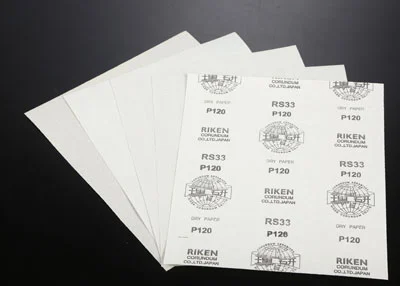
Distributors building a consumables program do not need another generic abrasive SKU — they need a brand that end users trust enough to ask for by name. In the abrasive market, sheet sandpaper is one of the highest-frequency repurchase categories across automotive refinishing, woodworking, and industrial maintenance. The distributors who win in this category are the ones whose brand generates pull from technicians and shop managers, not just price-driven switching. That is why more channel partners are building programs around fujistar sandpaper: a brand with international recognition, batch-consistent quality, and professional packaging that reduces complaint rates, protects repeat orders, and makes regional expansion manageable without constant quality firefighting.
Every technician who picks up a sheet of sandpaper applies an immediate performance test — whether consciously or not. The sheet either cuts cleanly and consistently, or it does not. The questions being answered in the first few strokes are:
Does it cut without glazing or loading prematurely?
Does it maintain a consistent scratch pattern across the full sheet surface?
Does it hold together under lateral stress and last long enough to justify the price?
A sheet that passes this test gets repurchased. A sheet that fails gets replaced — and the brand that supplied it gets replaced with it. For distributors, this means that the quality of the sheet sandpaper they stock is directly reflected in their repeat purchase rate and their complaint volume.
| Performance Variable | Inconsistent Brand | Consistent Brand |
|---|---|---|
| Batch-to-batch grit uniformity | Variable — technicians notice differences between orders | Stable — predictable performance across batches |
| Grain adhesion and sheet life | Unpredictable — some sheets shed early | Reliable — usable life matches expectations |
| Return and complaint rate | Higher — quality disputes consume sales team time | Lower — fewer credits and replacement logistics |
| Repeat purchase behavior | Price-driven — users switch when a cheaper option appears | Brand-driven — users repurchase without price-only comparison |
| Distributor stocking confidence | Low — uncertain demand makes forecasting difficult | High — stable sell-through supports confident bulk stocking |
View Fuji Star sheet sandpaper specifications and grit range
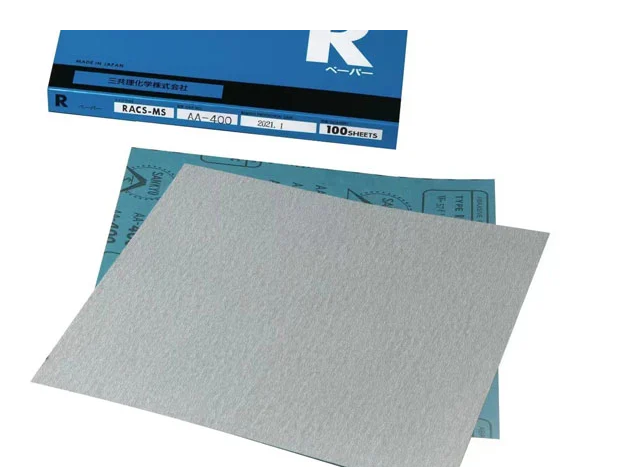
Grit range and grading consistency is the specification that most directly affects technician trust. Fuji Star's grit grading follows international standards with tight particle size distribution tolerances — which means a P240 sheet from one batch cuts the same as a P240 sheet from the next batch. For technicians working through a defined grit progression, this consistency eliminates the "scratch chasing" that occurs when one sheet cuts deeper than expected.
Backing weight and flexibility determines how the sheet performs in hand sanding and block sanding applications. Fuji Star offers backing weights matched to the specific demands of each application — lighter, more flexible backing for hand sanding on contoured surfaces, and heavier backing for block sanding where tear resistance under lateral stress is the priority.
Bond strength and grain adhesion determines usable sheet life. Premature grain shedding is the most common complaint about lower-grade sheet sandpaper — the sheet appears intact but stops cutting effectively because the abrasive layer has been depleted. Fuji Star's resin bond system is formulated for grain retention across the sheet's full usable life.
Anti-loading coating is available on selected grades for applications where clogging is the primary failure mode — filler sanding, primer sanding, and wood finishing where fine dust accumulates quickly on the abrasive surface.
| Packaging Element | What Fuji Star Provides | Distributor Benefit |
|---|---|---|
| Grit labeling | Clear, standardized grit marking on every sheet and outer pack | Reduces mis-picks and customer complaints from wrong-grit selection |
| Lot coding | Batch number on packaging for traceability | Faster problem isolation and corrective action if a quality issue arises |
| Moisture control | Sealed packaging where required for storage stability | Reduces shelf damage and returns from humidity-affected stock |
| Shelf-ready presentation | Retail-compatible packaging formats | Reduces distributor labor for shelf setup and restocking |
| Language customization | Available for OEM and private label programs | Supports regional market requirements without separate SKU management |
For brand background and international distribution references: Fuji Star Abrasives — Brand Overview
Automotive body shops are the highest-frequency sheet sandpaper consumers in most markets. The grit ladder for a standard repair — from feather-edge preparation through primer sanding and clear coat denibbing — consumes multiple grits per repair, and a busy shop goes through significant volume per week. Technicians in this segment are particularly sensitive to grit consistency and sheet life because inconsistent performance directly affects their cycle time and rework rate.
Woodworking applications demand clog resistance above almost any other specification — wood dust and finish residue load abrasive surfaces quickly, and a sheet that loads after a few strokes is effectively useless. Anti-loading coated grades are the appropriate specification for this segment, and the repeat purchase rate is high because sheet consumption per project is significant.
General-purpose metal deburring and surface preparation consume sheet sandpaper in industrial maintenance environments where supply consistency matters more than specialty performance. These buyers prioritize reliable availability and predictable quality over premium specifications — exactly the profile that a well-managed distributor program with stable supply can serve effectively.
When technicians get reliable results from a brand, they stop making price-only purchasing decisions. They ask for the brand by name, they recommend it to colleagues, and they resist switching even when a cheaper alternative is available. This brand loyalty is the most durable source of distributor margin protection — and it is built entirely on consistent product performance.
A distributor program built on too many SKUs creates inventory complexity that slows sell-through and increases the risk of dead stock. The recommended approach is a tiered SKU architecture:
Core fast-movers: the five to eight grits that account for 80% of volume in your target segment — typically P80, P120, P180, P240, P320, P400, and P800 for automotive and general use
Segment-specific additions: anti-loading grades for woodworking, coarser grits for metal fabrication, fine grits for clear coat work
Specialty grits on order: available but not stocked in depth until demand is confirmed
| Channel | Primary Grit Range | Key Specification | Packaging Priority |
|---|---|---|---|
| Automotive body shops | P80 – P1500 | Grit consistency, anti-loading on primer grades | Professional packaging, clear grit labeling |
| Woodworking and furniture | P80 – P400 | Anti-loading coating, consistent scratch pattern | Retail-ready, moisture-controlled |
| Industrial MRO | P60 – P240 | Tear resistance, stable supply | Bulk packaging, lot traceability |
Trial packs for key accounts are the most effective conversion tool for sheet sandpaper. A technician who uses a Fuji Star sheet in a real work context and gets a better result than their current brand will repurchase — the product sells itself when the quality is there. Structure trial packs around the three to five grits most relevant to the account's primary application, and follow up within two weeks to capture feedback and convert to a stocking order.
Stockouts are the primary reason end users switch brands — not price, not performance, but availability. A distributor who can guarantee consistent supply of the core grit range builds a structural advantage over competitors who run out of fast-moving SKUs. Lock a reorder cadence and maintain a buffer stock of the top five grits to protect against supply disruptions.
| TCO Component | Generic / Inconsistent Brand | Fuji Star |
|---|---|---|
| Return and credit rate | Higher — batch variation generates complaints | Lower — consistent quality reduces disputes |
| Sales team support cost | Higher — quality firefighting consumes time | Lower — fewer escalations per month |
| Inventory write-downs | Higher — dead stock from quality-driven switching | Lower — stable sell-through reduces excess stock |
| Customer lifetime value | Lower — price-driven switching reduces loyalty | Higher — brand trust supports long-term accounts |
Fuji Star supports OEM and private label programs for distributors who want to build their own brand on a proven manufacturing foundation. Customization options include:
Custom sheet sizes matched to regional market standards or specific tool compatibility
Private label packaging with the distributor's brand, language, and barcode requirements
Custom carton quantities aligned to the distributor's stocking and retail format
Custom grit range selection for market-specific SKU sets
Track the following metrics to measure program health and identify optimization opportunities:
Return rate by grit — identifies specific SKUs with quality or expectation issues
Repeat purchase interval — measures brand loyalty and consumption rate
Conversion rate from trial packs — measures the effectiveness of the sampling program
Margin per carton after credits — the true profitability metric that accounts for return and support costs
For distributors, best-sellers are built on trust: predictable performance for technicians and predictable quality for inventory planning. Sheet sandpaper that maintains consistent cut and scratch pattern — supported by professional packaging, stable batch quality, and OEM and private label flexibility — reduces support costs and strengthens repeat orders. Fujistar sandpaper is positioned as a scalable choice for channel partners looking to expand with a brand-backed abrasive line that generates end-user pull and protects distributor margins across automotive, woodworking, and industrial segments.
Sheet Sandpaper — Request SKU List and Distributor Pricing
To receive a recommended SKU list and pricing matched to your market and channel, provide the following:
Work conditions: Target market and industry focus (automotive, woodworking, metal, or MRO), sales channel (retail, wholesale, or online), and packaging language requirements.
Quantity: Trial order quantity, monthly or quarterly forecast, and preferred shipping plan.
Size and spec: Sheet size, grit range mix, backing preference, anti-loading requirement, and private label or OEM needs.
Target metrics: Target margin per carton, maximum acceptable return rate, lead-time target, and best-seller SKU goals.
Current problem: Inconsistent supplier batches, weak brand recognition in your market, high complaint rate, packaging not shelf-ready, or unstable supply from current source.
1. What is sheet sandpaper?
Sheet sandpaper is sandpaper supplied in flat, standard-sized sheets for use in hand sanding, block sanding, and surface preparation across automotive refinishing, woodworking, metal fabrication, and general industrial maintenance. The sheet format is the most versatile abrasive form factor — it can be used directly by hand, wrapped around a sanding block, cut to size for specific applications, or used with sheet-format sanding tools. Sheet sandpaper is available across a wide grit range and in multiple backing weights and abrasive types to suit different materials and finishing requirements.
2. How does Fuji Star compare with generic or low-cost sandpaper brands?
Generic brands can be price-competitive at the unit level but typically vary in grit consistency between batches, have shorter usable sheet life due to weaker grain adhesion, and come in packaging that creates mis-pick and shelf management problems for distributors. Fuji Star provides more stable batch-to-batch performance, professional packaging with clear grit labeling and lot traceability, and a recognized brand name that generates end-user pull rather than requiring price-only selling. For distributors, the relevant comparison is not unit price but total cost per carton after accounting for returns, credits, and support costs — where a consistent brand typically outperforms a cheaper alternative.
3. How can distributors estimate ROI when switching to Fujistar sandpaper?
Calculate the current total cost of your abrasive program: purchase cost plus return and credit cost plus sales team time spent on quality disputes plus inventory write-downs from quality-driven switching. Compare this against the projected cost with Fuji Star, accounting for the typically lower return rate and support cost. Additionally, model the revenue impact of higher repeat purchase rates and improved account retention — brand-loyal customers repurchase more frequently and are less likely to switch to a competitor on price alone. Most distributors find that the ROI calculation favors the consistent brand within the first two to three reorder cycles.
4. Do we need to change our sales or inventory model to carry Fujistar sandpaper?
Not necessarily. Most distributors start with a focused core SKU set — the five to eight grits that account for the majority of volume in their target segment — run trials with key accounts to confirm sell-through, and then expand the range based on demand data. The primary operational change is establishing a reorder cadence and buffer stock level for the fast-moving grits to protect against stockouts, which is the most common reason end users switch brands. OEM and private label programs require additional lead time for packaging setup but do not require changes to the distributor's core sales or inventory processes.
5. What parameters should we provide to get accurate product selection and pricing?
Provide the following: target industries and end-user segments, monthly demand estimate by grit if available, preferred sheet size and backing type, packaging requirements including language, barcode format, and carton quantity, OEM or private label requirements, target margin per carton, lead-time requirement, and your current supplier's primary failure mode — whether batch inconsistency, packaging quality, supply reliability, or brand recognition. This information allows Fuji Star to recommend the correct core SKU set, confirm OEM feasibility, and provide pricing that reflects your volume and program structure.