In 2026, the conversation about sanding discs in industrial finishing has shifted. Procurement teams that once evaluated abrasives purely on unit price are now being held accountable for labor efficiency, rework rates, and takt time — metrics that a price-per-disc comparison cannot capture. The result is a growing recognition that the cheapest sanding discs on the purchase order are frequently the most expensive choice once the full cost picture is assembled.
The mechanism is straightforward. A disc with a lower unit price but shorter effective life requires more frequent changes. Each changeover stops the sanding operation, costs labor time, and restarts the process with a fresh disc that may produce a slightly different scratch pattern than the one it replaced. Operators working with discs that dull quickly compensate by pressing harder, which generates heat, accelerates loading, deepens scratches, and increases the rework rate. In a finishing operation running at volume, these effects compound across a shift into a total cost that is significantly higher than the unit price comparison suggested.
For teams sourcing bulk sanding discs, the solution is not to assume that a higher unit price means better value — it is to measure performance in the terms that actually drive total cost: parts processed per disc, minutes per part to the acceptance standard, and rework rate from finish defects. This guide provides the formula, the trial method, and the specification variables needed to make that measurement and use it to make a procurement decision that holds up under scrutiny.
Understanding why unit price is an unreliable guide to abrasive value requires understanding what actually happens on the finishing floor when disc performance is inadequate.
A disc that costs less per unit but lasts half as long as a better disc does not save money — it doubles the number of disc changes per shift. Each disc change is not just the cost of the disc itself. It is the labor time of the operator stopping the sanding operation, removing the worn disc, attaching a new one, and resuming the pass. In a finishing operation where labor rates are significant, that changeover time has a real cost that accumulates across every change in every shift.
The performance degradation that precedes a disc change is equally costly. As a disc dulls, its cut rate drops. The operator feels the resistance increase and typically responds by pressing harder to maintain throughput. Higher pressure generates more heat at the abrasive interface, which accelerates loading — dust and swarf pack between the grains, further reducing cut rate and increasing heat. The scratch pattern produced by a loaded, dull disc is inconsistent: some areas are cut deeper where the operator has pressed harder, and some areas are cut shallower where the disc has lifted away from the surface. That inconsistent scratch pattern requires more polishing or rework to correct, adding labor cost downstream.
In bulk purchasing, these performance gaps scale. A small difference in parts processed per disc between two specifications, multiplied across a month's production volume, produces a large difference in total disc consumption, changeover labor, and rework cost. The unit price comparison that looked favorable at the purchasing stage looks very different when the monthly cost-per-part figures are assembled.
The performance variables that determine total cost in a sanding operation are parts processed per disc or per box, time-to-finish to the same acceptance standard, defect and rework rate from scratch inconsistency, and consistency of results across operators and shifts. These are the variables that a controlled trial measures and that a cost-per-part formula converts into a procurement-grade comparison.
A disc that processes more parts per unit, reaches the acceptance standard faster, produces fewer defects, and delivers consistent results across operators is a better disc regardless of its unit price — as long as the cost-per-part calculation confirms that the performance advantage outweighs the unit price difference. That calculation is the tool that makes the procurement decision defensible.
The cost-per-part formula is the foundation of a performance-based abrasive evaluation. It is simple enough to calculate from a one-week trial and specific enough to produce a number that procurement can defend in a budget review.
The baseline formula for comparing sanding discs is:
Total cost per part = (Disc unit price + Changeover labor cost) / Parts processed per disc
Where changeover labor cost equals the changeover time per swap multiplied by the labor rate, and parts processed per disc is measured in a controlled trial under consistent operating conditions.
This formula captures the two variables that unit price comparisons miss: the labor cost of changeovers and the number of parts each disc actually processes before it needs to be replaced. A disc with a higher unit price but significantly higher parts-per-disc output can produce a lower total cost per part than a cheaper disc with shorter life and more frequent changes.
The formula is auditable because each input is measurable. Unit price is known from the purchase order. Changeover time can be measured with a stopwatch during the trial. Parts per disc is counted during the trial. Labor rate is available from payroll data. There are no assumptions or estimates — the formula produces a number from measured data.
For finishing operations where post-sanding defects create rework loops — repainting, additional polishing, or re-sanding — the expanded formula captures the full cost picture:
True total cost per part = (Disc cost + Changeover labor + Rework labor + Scrap risk) / Good parts produced
The rework labor term adds the cost of correcting defects attributable to disc performance — deep scratches, pigtails, uneven finish — to the total. The scrap risk term accounts for the cost of parts that cannot be corrected and must be scrapped. Dividing by good parts produced rather than total parts processed ensures that the formula reflects the actual output of the operation, not the theoretical output before defects are subtracted.
For high-value parts where scrap risk is significant — automotive panels, high-gloss furniture components, and precision industrial surfaces — the expanded formula often produces a larger cost difference between disc specifications than the baseline formula, because the rework and scrap terms amplify the effect of disc performance differences.
The cost-per-part formula requires measured inputs from a controlled trial. The specification variables below are the ones that most directly affect the trial outcomes — parts per disc, time-to-finish, and defect rate.
Backing failure is an immediate and complete performance limiter. A disc that tears mid-pass ends its useful life at that moment, regardless of how much abrasive grain remains on the face. The torn disc must be replaced, the pass must be restarted, and the surface may have been damaged by the torn edge before the operator noticed the failure.
For wet sanding applications and edge-intensive work, backing tear resistance is the specification that determines how many disc changes occur per shift from failure rather than from wear. Film backing provides higher tear resistance than paper in wet conditions because it does not absorb moisture and soften. For dry applications with low edge stress, paper backing may be adequate and the tear resistance specification is less critical.
The mineral type determines how the disc's cut rate behaves over its usable life. A mineral that maintains its cutting edges through self-sharpening behavior — controlled micro-fracturing that exposes fresh grain as the worn surface is shed — produces a more stable cut rate from the beginning of the disc's life to near the end. A mineral that dulls progressively produces a declining cut rate that operators compensate for by pressing harder, with the heat and loading consequences described above.
Cut stability is the specification that most directly affects the parts-per-disc outcome in a trial. A disc with stable cut rate processes more parts before the cut rate drops below the threshold where the operator changes it. That higher parts-per-disc figure is the input that drives the cost-per-part advantage in the formula.
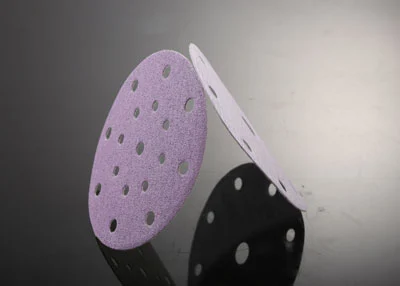
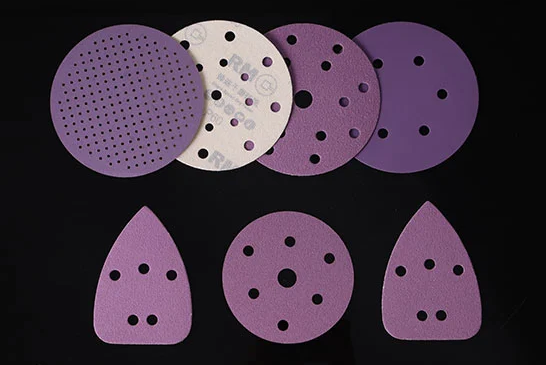
The hole pattern determines how effectively dust and swarf are removed from the cutting zone during sanding. Effective extraction keeps the abrasive grain exposed and the cutting action consistent, reducing the loading that causes cut rate to drop and scratch depth to become inconsistent. A hole pattern that does not align with the extraction ports on the backing pad reduces extraction efficiency and accelerates loading, shortening effective disc life and increasing scratch inconsistency.
Confirming hole pattern compatibility between the disc and the pad before a trial is a prerequisite for a meaningful comparison. A disc that is tested on a mismatched pad will underperform relative to its actual capability, producing trial data that does not reflect the disc's performance under correct operating conditions.
The hook-and-loop or PSA attachment system determines how securely the disc is held to the backing pad during sanding. A worn or low-quality hook-and-loop interface allows the disc to slip on the pad, which produces pigtail scratches — curved scratch marks caused by the disc rotating relative to the pad rather than moving with it. Pigtails are a common source of rework in finishing operations and are frequently attributed to disc quality when the actual cause is attachment system wear.
Replacing worn interface pads before a trial is essential for generating trial data that reflects disc performance rather than pad condition. This is one of the most common sources of bias in informal disc comparisons — the current disc is tested on a worn pad that has been in service for weeks, and the new disc is tested on the same worn pad, producing results that reflect pad condition more than disc performance.
A controlled trial is the only reliable way to generate the cost-per-part data that the formula requires. The trial design below is structured to produce credible, auditable results from a small-scale test that can be completed in one week of production.
Select one to two representative parts and one defined sanding step — pre-paint preparation, post-paint leveling, or clearcoat correction — that represents the primary application for the disc specification being evaluated. Using a representative part and a defined step ensures that the trial data is relevant to the actual production application.
Lock the process variables before starting the trial. The same tool, pad, RPM or orbit setting, pressure range, grit, and operator — or operators rotated equally between the two disc conditions — must be used for both the current disc and the Fuji Star disc being evaluated. Any variable that differs between the two conditions introduces a confound that makes the trial data unreliable.
Run the trial as an A/B comparison: the current disc specification on one set of parts and the Fuji Star disc on a matched set of parts, under identical process conditions. Measure parts per disc by counting the number of parts processed before each disc is changed. Measure average changeovers per shift by recording every disc change during the trial period. Measure total sanding minutes per part with a timer. Record finish acceptance rate and rework minutes for each condition.
Use the same inspection method for both conditions. Raking light inspection, gloss or haze measurement, and Ra measurement if applicable should be applied consistently to both conditions. An inspection method that is more lenient for one condition than the other produces acceptance rate data that does not reflect actual disc performance.
Replace worn pads before the trial begins. As noted above, pad condition affects both scratch quality and extraction efficiency in ways that can dominate the trial results if not controlled. Starting the trial with fresh pads for both conditions ensures that the data reflects disc performance.
Record ambient and substrate conditions if the application involves wet sanding or coating-sensitive surfaces. Temperature and humidity affect both the sanding process and the coating behavior, and significant variation in these conditions between the two trial conditions can introduce confounds that are difficult to separate from disc performance differences.
After the trial, calculate the cost-per-part figure for each disc condition using the baseline formula. If the Fuji Star disc produces a lower cost-per-part figure despite a higher unit price, the performance advantage is confirmed and the procurement case is made. If the cost-per-part figures are similar, the decision can be made on secondary factors — consistency across operators, defect rate, and rework risk. If the current disc produces a lower cost-per-part figure, the trial has identified that the current specification is appropriate for the application and the evaluation is complete.
The trial data also identifies the specific performance variables that drive the cost difference. If the advantage comes primarily from higher parts per disc, the disc life specification is the key variable. If the advantage comes primarily from lower rework rate, the scratch consistency specification is the key variable. That information is useful for specifying future disc purchases and for communicating the value of the specification to management.
The performance advantage of a higher-quality disc specification is only fully realized when the operating conditions are set up to support it. The maintenance practices below protect the disc life and scratch consistency that the cost-per-part formula depends on.
Keep extraction active and hole patterns aligned to the pad throughout the sanding operation. Extraction removes swarf from the cutting zone continuously, reducing loading and maintaining the cut rate that the disc's mineral specification is designed to deliver. A disc used without extraction loads faster and reaches the end of its effective cutting life sooner than the same disc used with extraction.
Avoid excessive pressure. The instinct to press harder when cut rate drops is the behavior that most rapidly shortens disc life and worsens scratch quality. Standardizing the pressure range in the work instruction — and training operators to change the disc when cut rate drops rather than compensating with pressure — is the process change that most directly protects disc life.
Standardize the grit progression to match the application. Using a coarser grit than necessary for a given step removes more material than needed and shortens disc life. Using a finer grit than necessary for a given step requires more passes to reach the acceptance standard, also shortening disc life relative to the work accomplished. A grit sequence that is correctly matched to the starting surface condition and the acceptance standard minimizes disc consumption per part.
The trial data and cost-per-part formula produce the inputs for a TCO report that management can evaluate. The report should include cost per part before and after the disc specification change, minutes per part before and after, rework rate and the defect types that drive it, a monthly savings projection at the current production volume, and a note on risk reduction from fewer defects and more consistent finish quality.
The monthly savings projection is calculated by multiplying the cost-per-part difference by the monthly production volume. For operations running significant volume, even a small cost-per-part improvement produces a large monthly saving that is easy to present in a budget review. The risk reduction note addresses the non-financial value of more consistent finish quality — fewer customer complaints, fewer warranty claims, and more predictable throughput through the finishing line.
The decision to buy cheaper sanding discs to control consumables spend is a decision made with incomplete information. Unit price captures one variable in a total cost calculation that includes changeover labor, rework labor, and scrap risk — variables that a price comparison cannot reveal. In finishing operations where labor is expensive and rework is common, those hidden costs frequently exceed the unit price difference between a budget disc and a better-performing specification.
The cost-per-part formula provides the complete picture. It converts disc unit price, changeover time, labor rate, and parts per disc into a single number that reflects the true cost of the abrasive choice. A controlled one-week trial generates the measured inputs the formula requires. The result is a procurement decision that is based on auditable data rather than assumptions — and that holds up when management asks why the consumables budget looks different from last quarter.
For teams sourcing bulk sanding discs, the trial investment is small relative to the monthly cost difference it can reveal. A one-week test on one representative part and one defined sanding step is sufficient to generate the data needed to make the cost-per-part comparison and project the monthly saving at production volume.
To receive a recommended disc specification, trial plan, and bulk quotation, visit the sanding discs product page and submit the following details:
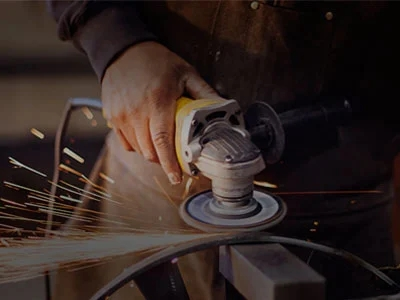
Operating conditions: substrate or coating type, dry versus wet sanding, tool type (DA, orbital, or angle grinder), RPM or orbit setting, extraction availability, percentage of edge or contour work
Quantity: monthly disc usage volume, number of shifts and stations, trial quantity versus bulk order
Size and specs: disc diameter, hole pattern, attachment type (hook-and-loop or PSA), grit range and step plan
Target metrics: parts per disc goal, time-per-part goal, rework reduction goal, finish standard expressed as gloss level, haze tolerance, or Ra
Current problems: short disc life, frequent changeovers, loading or clogging, tearing, deep scratches or pigtails, inconsistent finish across operators or shifts
Q1: What are sanding discs and why does performance vary so much between specifications?
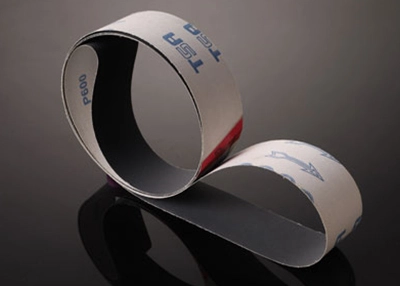
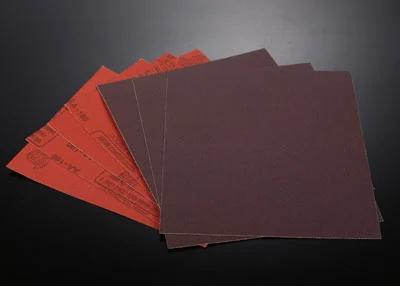
Sanding discs are abrasive discs used on power sanders for surface preparation and finishing. Performance varies between specifications because of differences in mineral type, backing strength and material, abrasive coating, hole pattern and extraction efficiency, and attachment system stability. Each of these variables affects cut rate, disc life, scratch depth consistency, and defect rate in ways that are not visible in a unit price comparison. Two discs with the same grit designation and similar unit prices can produce very different parts-per-disc figures and rework rates depending on how these underlying specifications differ.
Q2: What should we compare instead of unit price when evaluating sanding discs?
The correct comparison metric is cost per finished part, calculated using the formula: total cost per part equals disc unit price plus changeover labor cost, divided by parts processed per disc. This formula captures the labor cost of changeovers and the disc life variable that unit price comparisons miss. For operations with significant rework, the expanded formula adds rework labor and scrap risk to the numerator and divides by good parts produced rather than total parts processed. Both formulas require measured inputs from a controlled trial rather than estimates or assumptions.
Q3: How do we calculate ROI and payback for switching to better sanding discs?
Calculate the cost-per-part figure for the current disc specification and the candidate specification using the baseline formula, with inputs measured in a controlled A/B trial. The cost-per-part difference, multiplied by the monthly production volume, gives the monthly saving from switching. Divide the unit price premium of the better disc by the monthly saving to get the payback period in months. For operations with high changeover frequency or significant rework, the payback period is typically short because the labor savings in those categories are large relative to the unit price difference.
Q4: Do we need to modify equipment to see performance improvements from better sanding discs?
No major equipment changes are required. The process adjustments that allow a better disc specification to deliver its full performance advantage are operational: ensuring that the pad condition is good before the trial, confirming that the hole pattern aligns with the pad's extraction ports, standardizing the pressure range and grit progression in the work instruction, and keeping extraction active during sanding. These are procedural changes that can be implemented without capital investment. The most common reason that a better disc specification underperforms in an informal comparison is that it is tested on a worn pad or without extraction, which prevents the disc from delivering its designed performance.
Q5: What parameters should we provide for selecting and quoting bulk sanding discs?
For the most useful recommendation, provide the substrate or coating type and the specific sanding step — pre-paint preparation, post-paint leveling, or clearcoat correction — along with the tool model and operating settings, disc diameter and hole pattern, attachment type, whether the application is wet or dry, the extraction setup, the grit sequence currently in use or planned, the monthly usage volume, the target finish standard expressed as gloss level, haze tolerance, or Ra, and the primary performance problems currently being experienced — short disc life, loading, tearing, pigtails, inconsistent finish, or high rework rate. The more specific the inputs, the more accurate the disc specification recommendation and the more relevant the trial plan.