In 2026, commercial drywall contractors are operating in a tighter environment than ever. Labor costs are climbing, project timelines are compressing, and finish quality expectations from general contractors and building owners have never been stricter. Against that backdrop, consumable performance has quietly become one of the most controllable productivity levers on the jobsite.
The problem most crews know firsthand: cheap drywall sanding screen products tear at the edges, dull out after a single pass, and force workers to stop, peel off a ruined screen, and reload — over and over again. That stop-start rhythm kills momentum on large-area joint compound work, and the true cost rarely shows up in the consumables line of a budget. It shows up in labor hours, missed milestones, and the occasional rework call.
This guide examines what actually drives drywall mesh screen durability, how to evaluate screens before you buy, and how CG-VP is engineered to address the specific failure modes that slow commercial crews down. If you are sourcing abrasives for a hotel fit-out, an office renovation, or a multi-unit residential project, the information below is built for your context.
To understand durability, you first need to understand why conventional paper-backed sandpaper fails so predictably on drywall.
Joint compound is a soft, powdery material that generates fine dust in large volumes the moment you start sanding. That dust has nowhere to go on a solid paper backing. It packs into the spaces between abrasive grains almost immediately, forming a layer that insulates the cutting surface from the workpiece. The screen still looks intact. The grit is technically still there. But the effective cutting rate has dropped sharply — and most workers interpret that as "the screen is worn out" and swap it.
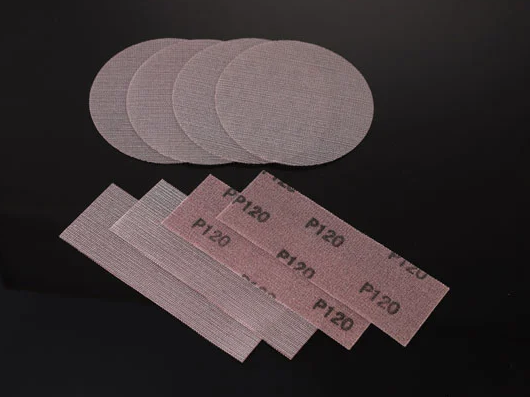
A drywall mesh screen works on a fundamentally different principle. The open lattice structure of the mesh allows dust to pass through the abrasive surface rather than accumulate on top of it. Airflow — whether from natural movement, a dust extraction system, or simply the motion of the sander — carries particles away from the cutting zone continuously. The abrasive grains stay exposed and in contact with the surface.
The practical result for commercial crews is more consistent cutting across the full life of the screen, fewer premature swap-outs driven by clogging rather than actual wear, and a more predictable workflow. When you can trust that a screen will perform consistently from the first stroke to the last, you can plan changeover intervals instead of reacting to them.
Clogging is the hidden failure mode that most buyers never measure. They count torn screens and worn-out screens, but they rarely count the screens that were discarded at 40% of their actual useful life because dust loading made them feel dull. Mesh construction addresses that failure mode at the structural level.
Not all mesh screens are built the same. The market includes a wide range of products at very different quality levels, and price per piece is a poor proxy for value. Here are the five specification areas that actually determine how long a screen will last and how consistently it will perform.
Tear resistance of the mesh backing
This is the failure mode that stops work cold. A screen that tears at a fastener head, a corner bead, or a slightly proud joint forces an immediate stop, and if the torn fragment scratches a finished surface, it can create rework. The backing material — its fiber construction, weave density, and edge treatment — determines how well the screen holds up under lateral stress and point loading. CG-VP uses a tear-resistant fiber mesh backing specifically engineered to resist ripping at the edges and at surface irregularities that are common on commercial drywall work.
Abrasive type and grain anchoring
Grit that detaches from the backing early is another form of premature failure. The bonding system that holds abrasive grains to the mesh substrate determines how long the cutting surface remains effective. Look for consistent grain distribution and a bonding layer that maintains adhesion even after rinsing.
Grit range availability
Commercial drywall work involves multiple stages — coarse stock removal over butt joints, medium blending across tape lines, and fine surface prep before primer. A screen product that only covers part of that range forces you to source from multiple suppliers, which creates inventory complexity and inconsistency. Confirm that your chosen screen is available across the grit range your crews actually use.
Double-sided usage
This is one of the most underappreciated durability features in the category. A screen with abrasive on both faces effectively doubles the usable cutting surface per unit. When one side loads up or begins to dull, the crew flips the screen and continues working without stopping to retrieve a new one. CG-VP is designed for double-sided usage, which directly reduces changeover frequency and keeps crews in motion on large-area work.
Washable and rinse-to-restore capability
When clogging — not wear — is the reason a screen is underperforming, rinsing with clean water can restore a significant portion of its cutting effectiveness. CG-VP supports this workflow. A quick rinse removes accumulated dust from the mesh, reopens the cutting surface, and extends the screen's effective life before it genuinely needs to be replaced. This capability is particularly valuable on jobs where dust extraction is limited or where compound type generates heavy loading.
Buyer note: the right comparison metric is not price per piece. It is cost per square meter or square foot of finished surface — accounting for how many screens you consume, how many changeovers interrupt your crew, and whether any rework results from screen failure.
The durability features described above are not equally valuable in every context. They matter most in the scenarios where screen failure has the highest operational cost.
Large-area joint compound sanding is the clearest fit. On a floor plate of 500 square meters or more, the cumulative time lost to frequent screen changes is substantial. Double-sided usage and rinse-to-reuse capability both reduce that interruption frequency directly.
Renovation skim coat work often involves variable surface conditions — old paint, texture residue, uneven compound layers — that create unpredictable stress on the abrasive. Tear-resistant backing reduces the risk of sudden failure on these surfaces.
Hotel and office fit-outs operate under deadline pressure where schedule risk is real. A screen that fails unexpectedly at the wrong moment — during a final-coat sand on a high-visibility wall, for example — can create rework that pushes a handover date. Consistent, predictable screen performance is a risk management tool in these environments.
Multi-trade interiors with dust extraction benefit from the mesh structure's compatibility with vacuum sanding systems. The open lattice allows extraction to work as intended, keeping the cutting surface clear and reducing airborne dust in occupied or partially occupied buildings.
In each of these scenarios, the CG-VP value proposition is the same: fewer stops, more consistent cutting, and a lower total screen consumption rate per unit of finished area.
Choosing the right screen configuration before the job starts is as important as the screen's physical durability. A crew using the wrong grit for the stage they are working on will burn through screens faster and produce inconsistent results regardless of screen quality.
Here is a practical selection workflow for foremen and procurement managers.
Step one: define the sanding stage. Leveling over butt joints and fastener dimples requires a coarser grit with faster stock removal. Blending tape lines and feathering compound edges calls for a medium grit. Final surface prep before primer needs a fine grit that leaves a scratch pattern compatible with the coating system.
Step two: choose a grit strategy. Faster cut versus finer scratch pattern is a tradeoff. On a tight schedule, crews sometimes push coarser grits further into the finishing stages than they should, which creates visible scratch patterns under paint. Standardizing grit transitions by stage — rather than leaving it to individual judgment — produces more consistent results.
Step three: match screen size to your sanding system. CG-VP is available in sizes compatible with standard hand sanders, pole sanders, and pad systems. Confirm the fit before ordering to avoid waste from trimming or poor pad contact.
Step four: confirm dust extraction compatibility. If your system uses vacuum sanding, verify that the screen's mesh structure is compatible with your extraction pad's airflow design. Most open-mesh screens work well with extraction, but it is worth confirming.
Step five: set a replacement rule. Replace the screen when cutting rate drops noticeably and rinsing no longer restores performance. This is a more accurate trigger than time-based or area-based rules, and it prevents both premature disposal and continued use of a genuinely worn screen.
For foremen managing multiple crews: standardize on two or three grits per crew. Reducing the number of SKUs in circulation simplifies inventory, reduces the chance of a crew grabbing the wrong grit, and makes consumption tracking more meaningful.
Durability is ultimately a total cost of ownership question. The unit price of a screen is one input. The full cost equation includes abrasive spend, labor time lost to changeovers, schedule risk from unexpected failures, and the cost of any rework that results from screen-related surface damage.
What to measure on your own jobs:
Usable sanding time per screen, from first use to disposal
Tear rate: screens discarded due to physical failure versus screens discarded due to wear
Clogging recovery: how many rinse cycles restore acceptable cutting performance before the screen is genuinely spent
Screens consumed per 100 square meters or 1,000 square feet of finished surface
These four metrics give you a real picture of screen performance that price-per-piece comparisons cannot provide.
CG-VP lifetime in context:
When crews use both faces and apply the rinse-to-reuse workflow consistently, CG-VP's effective cutting life is substantially longer than common paper-backed sandpaper — in controlled testing, multiple times longer under comparable conditions. The exact multiplier depends on compound type, sanding stage, and dust extraction setup, which is why providing your specific operating conditions when requesting a quotation produces the most accurate projection.
The compounding effect of fewer changeovers:
On a large commercial project, reducing changeover frequency by even 30% has a measurable impact on daily output. If a crew of four changes screens an average of 20 times per day and each changeover costs two minutes of productive time, that is 40 minutes of lost output per crew per day. Extend that across a 60-day project and the labor cost of screen changes becomes a line item worth managing.
Durable screens do not just save money on abrasives. They protect the pace of the job.
Commercial drywall sanding is a volume game. The crews that finish on time and on budget are the ones that maintain momentum — consistent cutting, minimal interruptions, and predictable consumable performance from the first day of a project to the last.
When a drywall sanding screen tears unexpectedly or dulls after a single pass, the true cost is not the screen itself. It is the two minutes of stoppage, the disrupted rhythm, the occasional surface damage, and the cumulative schedule pressure that builds when those events happen dozens of times a day across multiple crews.
CG-VP is engineered to address those failure modes directly. Double-sided usage reduces changeover frequency. Tear-resistant fiber mesh backing eliminates sudden failures at fastener heads and corners. Washable reusability extends effective cutting life when dust loading — not wear — is the limiting factor. Together, these features lower the total cost per square meter of finished surface and help contractors protect the pace that commercial schedules demand.
If you are evaluating drywall mesh screen options for an upcoming project or looking to reduce annual abrasive spend across your operation, the CG-VP product page is the right starting point.
To receive a recommended grit and size configuration along with a quotation, send the following details:
Operating conditions: joint compound type, sanding stage, dry sanding versus occasional wet wipe, dust extraction yes or no
Quantity: monthly consumption or per-project demand, and whether you need ongoing supply
Size and specs: screen size, compatible pad or sander model, target grit range
Target metrics: life-per-screen target, changeovers per 100 m² or 1,000 ft² goal, finish quality requirement
Current problems: tearing, fast dulling, heavy loading or clogging, uneven scratch pattern, schedule pressure
The more specific your inputs, the more accurate the recommendation.
Q1: What is a drywall sanding screen?
A drywall sanding screen is a mesh-based abrasive product used for sanding joint compound and drywall surfaces. The open mesh structure allows dust to pass through rather than accumulate on the abrasive surface, which helps maintain cutting performance longer than solid paper-backed alternatives. It is used with hand sanders, pole sanders, and pad systems across all stages of drywall finishing.
Q2: What is the key difference between a drywall mesh screen and paper sandpaper?
Paper sandpaper uses a solid backing that traps drywall dust between abrasive grains, causing rapid clogging and a sharp drop in cutting rate — often before the grit itself is worn out. A drywall mesh screen allows dust to evacuate through the open lattice, keeping the cutting surface exposed longer. Mesh screens also tend to be more resistant to tearing under the lateral and point stresses common in drywall work, particularly when the backing is a reinforced fiber construction like CG-VP's.
Q3: How does a longer-lasting screen pay back financially?
The payback comes from three sources. First, fewer screen changes mean less stoppage time and more productive minutes per crew per day. Second, a consistent cutting rate reduces the risk of uneven surfaces that require rework. Third, lower screen consumption per unit of finished area reduces total abrasive spend even if the unit price of a durable screen is higher than a cheap alternative. On large commercial projects, the labor cost of changeovers alone often exceeds the cost of the screens themselves.
Q4: Do we need new tools or equipment to switch to CG-VP screens?
In most cases, no significant changes are required. CG-VP screens are designed to fit standard hand sanding and pole sanding pad systems. The main adjustment is procedural: crews need to follow the double-sided usage workflow — flipping the screen when one face loads up — and apply the rinse-to-reuse process when clogging is the issue rather than actual wear. Both practices are straightforward to implement and can be standardized by foremen as part of normal crew briefing.
Q5: What information should we provide to get an accurate screen selection and pricing?
For the most useful recommendation, provide: the type of joint compound you are sanding and the finishing stage (leveling, blending, or final prep); whether you sand dry or occasionally wipe with water; whether dust extraction is in use; your target screen size and the sander or pad model it needs to fit; your target grit range; your expected monthly or per-project consumption volume; and your main current problems — tearing, fast dulling, heavy loading, uneven scratch pattern, or changeover frequency. With those inputs, a specific grit and size configuration can be recommended along with a quotation.