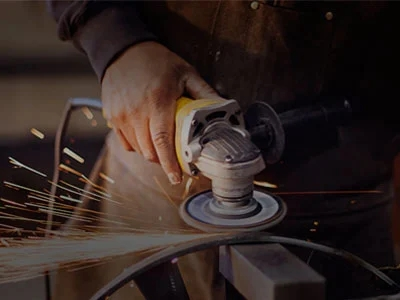
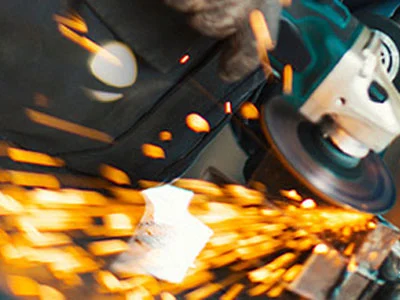
In 2026, the pressure on manufacturing procurement has not eased. Labor rates are higher, takt time targets are tighter, and surface quality audits have become more rigorous — while the expectation to reduce consumable spend has not gone away. Into that environment, abrasive suppliers are actively promoting ceramic and zirconia alumina products as essential upgrades, often with compelling data on cut rate and grain longevity under specific conditions.
The challenge for procurement managers and process engineers is not whether those premium abrasives perform well in their target applications. They do. The challenge is justifying the cost difference when the production line is running hardwood furniture components, carbon steel fabrications, or non-ferrous metal assemblies — applications where aluminum oxide sandpaper has been delivering reliable, repeatable results for decades and continues to do so.
The case for aluminum oxide in mass production finishing is not nostalgia. It is a cost-per-finished-part argument built on two specific material properties: toughness and self-sharpening behavior. Understanding how those properties translate into line stability, rework reduction, and predictable consumable spend is what allows procurement to defend the choice on paper — and to know precisely when a premium abrasive actually justifies its price.
The performance characteristics of any abrasive in production sanding come down to how the grain behaves under sustained mechanical stress. Aluminum oxide has two properties that make it particularly well suited to the variable conditions of mass production finishing.
Toughness in an abrasive grain refers to its resistance to fracture under pressure and impact. In production sanding, the abrasive is subjected to continuous mechanical loading — varying operator pressure, vibration from the machine, changes in material density across a workpiece, and the cumulative stress of long runs. A grain that fractures too easily under these conditions loses its cutting geometry rapidly, leading to a sudden drop in cut rate that operators typically compensate for by pressing harder. That response accelerates heat buildup, increases loading, and often produces surface defects that require rework.
Aluminum oxide grains resist that kind of sudden fracture. They maintain their cutting geometry under pressure and vibration, which means the cut rate across a long production run is more stable and more predictable. For a line running mixed materials or variable part geometries, that stability reduces the variability in output quality that drives rework.
Self-sharpening is the controlled micro-fracturing behavior that distinguishes aluminum oxide from abrasives that simply glaze and dull. As aluminum oxide grains wear, they fracture along predictable planes, exposing fresh cutting edges rather than rounding off into smooth, non-cutting surfaces. The result is a grain that continues to cut at a useful rate throughout most of its life, rather than cutting well initially and then glazing into a surface that generates heat and friction without removing material.
In production terms, self-sharpening behavior means the scratch pattern produced by the abrasive remains consistent from the beginning of a sheet or belt's life to near the end. Operators do not need to compensate for a dulling abrasive by changing technique or pressure. The finish quality is more consistent across parts, and the decision to replace the abrasive is based on actual wear rather than performance degradation from glazing.
Ceramic and zirconia alumina abrasives are engineered for high-pressure, high-removal applications. In those conditions — aggressive stock removal on hard alloys, heavy grinding under significant downforce — their superior hardness and fracture toughness deliver a genuine performance advantage that can justify the cost premium.
The question for mass production finishing is whether the process actually operates in that regime. For hardwood sanding, carbon steel deburring and blending, and non-ferrous metal surface preparation, the limiting factor is rarely maximum removal rate. It is consistent finish quality, controlled scratch pattern, and stable performance across a shift. Aluminum oxide's toughness and self-sharpening behavior address those requirements directly, at a cost point that ceramic and zirconia cannot match for general finishing work.
Selecting aluminum oxide sandpaper for a production line is not a single decision. The configuration — grain quality, coating type, backing, bonding system, and format — determines whether the theoretical performance advantages translate into actual cost-per-part outcomes.
The coating density of the abrasive layer has a direct effect on loading behavior and finish consistency. Closed-coat construction, where the abrasive grains cover the full backing surface, delivers a faster cut rate and is appropriate for hard, non-loading materials. Open-coat construction, where the grains cover a lower percentage of the backing surface, provides space for swarf to escape rather than pack between grains. For resinous hardwoods, softer metals, and any application where dust loading is a known problem, open-coat construction extends effective cutting life and reduces the frequency of premature replacement due to clogging.
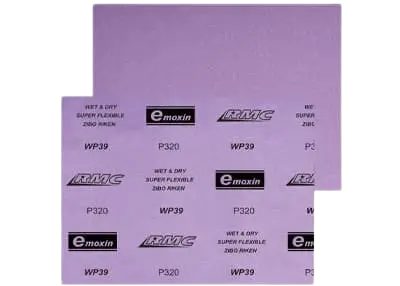
The backing determines how the abrasive handles mechanical stress and whether it is compatible with the process conditions. Paper backings in various weights suit different pressure levels and flexibility requirements. Cloth backings provide higher tear resistance for demanding applications and curved surface work. For processes involving coolant, water, or wet sanding conditions, a waterproof paper backing is required to maintain structural integrity — the aluminum oxide waterproof paper option addresses this requirement for wet process applications.
Specifying the wrong backing for the process conditions is one of the most common sources of premature abrasive failure in production environments. A paper-backed product used in a wet process will delaminate. A flexible cloth backing used where a firm, flat cutting surface is needed will produce inconsistent results. Matching backing to process conditions is a prerequisite for achieving the expected service life.
The resin bonding system that holds abrasive grains to the backing determines how well the grain is retained under sustained cutting loads. Weak bonding leads to grain shedding — grains detach from the backing before they are worn out, reducing the effective cutting surface and potentially contaminating the workpiece. Strong resin bonding keeps grains in place through their useful cutting life, which is particularly important in continuous operation where the abrasive is under load for extended periods without rest. Heat resistance in the bonding system matters for applications where friction generates significant thermal load.
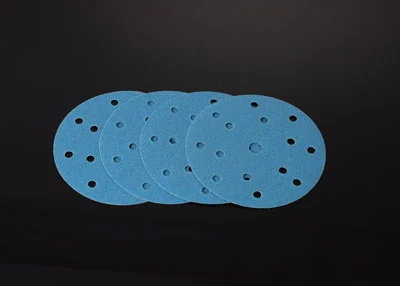
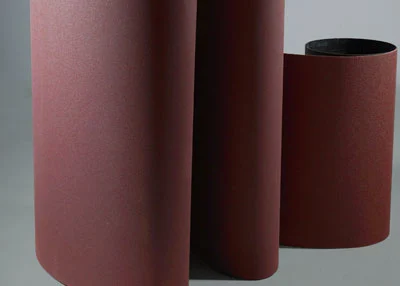
The format — sheet, roll, disc, or belt — affects changeover time, automation compatibility, and material waste from cutting or trimming. In high-volume production, the time cost of changeovers is a real component of total abrasive cost. A format that requires frequent changes or generates significant trim waste adds to the cost-per-part calculation in ways that are easy to overlook when comparing unit prices. Matching the format to the machine and the part geometry is part of the ROI optimization, not an afterthought.
The applications where aluminum oxide delivers the best cost-per-part outcome are those where consistent finish quality and stable cutting behavior matter more than maximum removal rate.
Hardwood sanding presents a specific challenge for abrasive performance: wood grain direction changes across a workpiece, density varies between species and even within a single board, and the surface finish requirement is often tight because the next step is a visible coating. An abrasive that cuts aggressively in one direction and inconsistently in another produces surface texture variation that shows up under stain or clear finish.
Aluminum oxide's toughness handles the variable mechanical demands of hardwood sanding without the sudden performance changes that can occur with more brittle abrasive types. The self-sharpening behavior maintains a consistent scratch pattern across the workpiece, which supports uniform coating adhesion and appearance. For furniture, flooring, and panel production running at volume, the combination of consistent finish and competitive cost per sheet or belt makes aluminum oxide the practical choice in most cases.
Carbon steel fabrication finishing involves removing burrs, blending weld seams, and preparing surfaces for coating. These are applications where cut rate matters, but where the finish quality before coating is equally important — coating adhesion failures traced back to inconsistent surface preparation are expensive to address after the fact.
Aluminum oxide provides reliable cut on carbon steel without requiring the cost premium of ceramic or zirconia unless the stock removal requirement is genuinely heavy. For deburring and blending operations where the goal is a consistent surface condition rather than maximum material removal, aluminum oxide delivers the required outcome at a cost that is straightforward to justify.
Non-ferrous metals present a loading risk that needs to be managed through abrasive selection. Aluminum and copper alloys generate soft, adhesive swarf that packs abrasive surfaces quickly if the coating type and grain density are not matched to the material. With the right open-coat construction and appropriate grit selection, aluminum oxide provides predictable scratch control and good service life on non-ferrous surface preparation work — at a cost point that makes it the default choice for blending and finishing operations that do not require the extreme performance of premium abrasives.
Knowing when aluminum oxide is the right choice — and when it is not — is what allows procurement to make defensible decisions rather than defaulting to either the cheapest or the most heavily marketed option.
Aluminum oxide is the appropriate choice when the production line needs stable performance across mixed materials and variable operators. When the primary bottleneck is changeover frequency, rework from inconsistent finish, or surface quality variation rather than maximum removal rate, aluminum oxide's predictable wear behavior addresses the actual problem. When the next process step is coating or polishing and a controlled scratch pattern is required, the self-sharpening behavior of aluminum oxide supports that requirement more reliably than abrasives that glaze and produce an inconsistent surface before they are replaced.
The case for ceramic or zirconia alumina is strongest when the application involves very high-pressure grinding, aggressive stock removal on hard-to-grind alloys, or conditions where removal rate is the dominant variable in cost-per-part. If the production process genuinely operates at the extreme end of the mechanical loading range — heavy grinding on hardened steel, for example — the superior performance of ceramic abrasives in those conditions can justify the cost premium. The key question is whether the process actually operates in that regime or whether the premium abrasive is being specified for a general finishing application where aluminum oxide would perform equally well at lower cost.
The grit progression used on a production line has a significant effect on both finish quality and total abrasive cost. Using more grit steps than necessary adds changeover time and abrasive spend without improving the final result. Using too few steps forces each grit to remove more material than it is designed for, shortening abrasive life and risking surface defects.
For most production finishing applications, two to three grit steps — leveling, refining, and pre-finish preparation — cover the full range from stock removal to final surface condition. Standardizing the grit set per product family reduces inventory complexity, eliminates operator errors from selecting the wrong grit, and makes consumption tracking more meaningful for procurement planning.
| Criteria | Aluminum Oxide | Zirconia Alumina | Ceramic |
|---|---|---|---|
| Unit price | Low | Medium–High | High |
| Cut stability across long runs | High — self-sharpening maintains consistent cut rate | Medium — good under high pressure, less stable at moderate loads | High — but optimized for aggressive, high-pressure conditions |
| Self-sharpening behavior | Controlled micro-fracturing exposes fresh edges throughout grain life | Moderate — fractures under pressure but less predictably at lower loads | Engineered micro-fracturing, most effective under high downforce |
| Typical best-use cases | Hardwood, carbon steel finishing, non-ferrous blending, mixed-material production lines | Heavy stock removal on steel, aggressive deburring, high-pressure belt grinding | Hard-to-grind alloys, extreme stock removal, high-heat grinding environments |
| Loading resistance | Good with open-coat selection | Moderate | Moderate |
| Rework risk from inconsistent finish | Low — predictable wear pattern reduces surface variability | Medium — performance varies more at moderate pressure | Low at target conditions, higher if used outside optimal pressure range |
| Cost per finished part (general finishing) | Lowest in most general finishing applications | Higher — justified only when removal rate is the bottleneck | Highest — justified only in extreme stock removal or hard-alloy applications |
| Recommended when | Stable finish quality, mixed materials, cost-per-part optimization, controlled scratch pattern before coating | High-pressure grinding dominates the process; removal rate is the primary ROI driver | Extreme mechanical demands; hard alloys; conditions where ceramic's grain engineering is fully utilized |
A simple ROI view: aluminum oxide sandpaper often delivers the best cost-per-part outcome in mass production finishing when stable cutting, low rework risk, and consistent scratch pattern matter more than maximum stock removal rate. Ceramic and zirconia justify their cost premium only when the process genuinely operates at the extreme end of the mechanical loading range.
The total cost of ownership argument for aluminum oxide sandpaper is straightforward to construct, but it requires measuring the right variables.
Total cost equals abrasive spend plus the labor cost of changeovers plus rework and scrap costs plus quality escapes that reach the customer. The best abrasive for a production line is the one that minimizes that total, not the one with the lowest unit price or the highest cut rate in isolation.
Aluminum oxide's advantage in this model comes from the stability side of the equation. Predictable wear behavior reduces the variability in finish quality that drives rework. Consistent self-sharpening behavior reduces the frequency of premature replacement due to glazing. Appropriate backing and coating selection reduces loading-related failures. Together, these factors lower the non-abrasive components of the total cost — labor, rework, and scrap — in ways that a unit price comparison does not capture.
The most effective way to build the cost-per-part case for a specific production environment is a structured trial. Track parts per sheet, belt, or disc — or meters per roll — under consistent operating conditions. Track time-to-finish and defect rate separately, distinguishing between scratch failures and coating adhesion issues. Track changeover frequency and collect operator feedback on consistency. Record rework hours and scrap incidents attributable to abrasive performance.
Two weeks of data from a controlled trial, compared against the same metrics from the current abrasive, gives procurement a defensible cost-per-part comparison that goes beyond unit price and addresses the variables that actually drive total consumable cost on the line.
The hidden driver of rework and lost takt time in most production finishing environments is not abrasive unit price — it is performance variability. When the abrasive behaves differently at the start of a run than at the end, when different operators get different results from the same product, or when finish quality varies across a batch without a clear cause, the investigation and correction cost adds up quickly. Aluminum oxide's predictable toughness and self-sharpening behavior reduce that variability at the source, which is where the real cost-per-part advantage is built.
The argument for aluminum oxide sandpaper in mass production finishing is not that it is the cheapest option or the highest-performing option in every condition. It is that for hardwood, carbon steel, and non-ferrous metal finishing applications — where consistent finish quality, controlled scratch pattern, and stable cutting behavior are the primary requirements — aluminum oxide's toughness and self-sharpening properties deliver the best cost-per-finished-part outcome in most production environments.
Premium abrasives have their place. When the application genuinely demands extreme stock removal or involves hard-to-grind materials under high pressure, the cost premium for ceramic or zirconia can be justified. But for the majority of mass production finishing work, the winning metric is stable, repeatable performance at a cost that the total cost model supports — and that is where aluminum oxide continues to lead.
To receive a recommended specification, trial plan, and quotation, visit the aluminum oxide sandpaper product page and submit the following details:
Operating conditions: material or materials being sanded, dry versus wet process, pressure level, tool or machine type, dust extraction or coolant setup
Quantity: monthly consumption volume, production output, trial order size
Size and specs: format (sheet, roll, disc, or belt), dimensions, backing type, grit range and number of steps
Target metrics: takt time requirement, finish specification expressed as Ra or appearance grade, defect rate goal, lifetime target per abrasive unit
Current problems: short abrasive life, inconsistent finish quality, loading or clogging, overheating, high changeover frequency, rework or scrap rate
Q1: What is aluminum oxide sandpaper?
Aluminum oxide sandpaper is an abrasive product that uses aluminum oxide grains bonded to a backing material — paper, cloth, or film — to sand and finish wood, metal, and other surfaces. Aluminum oxide is one of the most widely used abrasive materials in industrial finishing because it combines durability, consistent cutting behavior, and cost-effectiveness across a broad range of applications. Its toughness and self-sharpening properties make it particularly well suited to production environments where stable, repeatable performance across long runs is the primary requirement.
Q2: How does aluminum oxide compare to ceramic or zirconia abrasives?
Ceramic and zirconia abrasives are engineered for high-pressure, high-removal applications where maximum cut rate and grain longevity under extreme mechanical loading are the dominant performance requirements. They typically carry a significant cost premium over aluminum oxide. In applications where the process operates at the extreme end of the mechanical loading range — heavy grinding on hard alloys, for example — that premium can be justified by the performance difference. For general finishing work on hardwood, carbon steel, and non-ferrous metals, aluminum oxide delivers comparable finish quality at a lower cost per finished part, because the process conditions do not require the extreme performance characteristics that ceramic and zirconia are optimized for.
Q3: How do you calculate ROI for aluminum oxide sandpaper in production?
The correct metric is cost per finished part, not cost per sheet or belt. Calculate total abrasive spend over a measurement period, add the labor cost of changeovers, add rework and scrap costs attributable to abrasive performance, and divide by the number of finished parts produced. Compare that figure against the same calculation for the alternative abrasive under the same conditions. A structured two-week A/B trial with consistent tracking of parts per abrasive unit, defect rate, and changeover frequency provides the data needed to make that comparison defensible.
Q4: Do we need equipment changes to switch to a better aluminum oxide sandpaper specification?
In most cases, no equipment changes are required. The performance improvements from upgrading aluminum oxide specification come from selecting the right backing type, coating density, bonding system, and grit progression for the specific application — not from hardware changes. The main process adjustments are standardizing operating parameters such as pressure, speed, and dust extraction or coolant setup, and implementing a consistent grit sequence per product family. These are procedural changes that can be incorporated into work instructions without capital investment.
Q5: What parameters should we provide for accurate selection and quoting?
For the most useful recommendation, provide the substrate or substrates being processed, the process type (sanding, deburring, blending, or surface preparation), whether the process is dry or wet, the machine or tool model and its operating parameters, the required format and dimensions, the grit range and number of steps in the current or planned sequence, the monthly usage volume, the target finish specification expressed as Ra or appearance grade, and the primary failure mode currently being experienced — whether that is short abrasive life, loading, inconsistent finish, overheating, high changeover frequency, or rework and scrap rate.