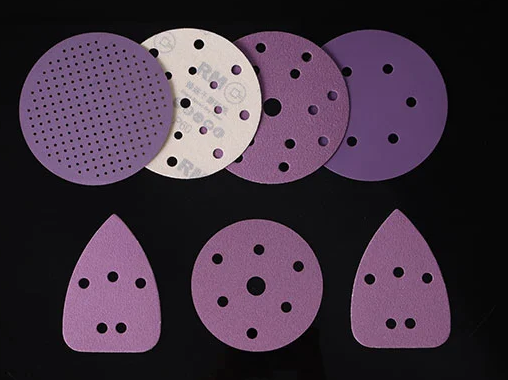
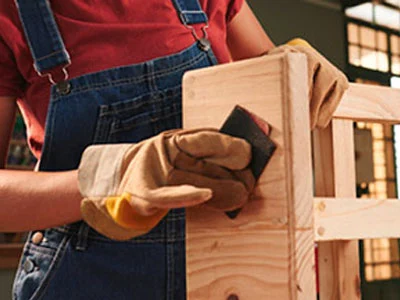
When a sanding job feels slow, uneven, or inconsistent, the problem is not always the grit number. The way abrasive grains contact the workpiece, break down, and continue cutting has a direct impact on material removal, surface quality, and abrasive life. This is where the construction of aluminum oxide sandpaper becomes important.
Aluminum oxide is widely used in coated abrasives because its combination of hardness and toughness allows the grains to cut effectively while remaining durable under repeated contact. From general surface preparation to aluminum oxide sandpaper for metal, its performance depends on much more than the abrasive mineral itself. Grain shape, distribution, grit size, backing, bonding, pressure, and sanding conditions all influence the final result.
Understanding how these factors work together makes it easier to choose the right abrasive for a specific material and finish. The following guide breaks down the abrasive action of aluminum oxide sandpaper, explains why its performance changes during use, and shows how to achieve more consistent sanding results.
The effectiveness of aluminum oxide comes from a useful balance between hardness and toughness. An abrasive needs to be hard enough to penetrate and remove material from the workpiece, but it also needs sufficient toughness to withstand repeated impact and friction during sanding.
When an aluminum oxide sandpaper grain contacts a surface, its exposed cutting points penetrate the material and remove small amounts of it. As sanding continues, the abrasive grain gradually changes through wear or controlled fracture. This allows the abrasive surface to continue producing cutting action rather than losing effectiveness immediately after the first few contacts.
This balance makes aluminum oxide suitable for a broad range of sanding operations. Depending on the grit, backing, coating structure, and application, it can be used for relatively aggressive material removal or for progressive surface refinement.
For industrial users, this versatility is one of the main reasons aluminum oxide remains an important abrasive grain for coated abrasive products. Aluminum oxide sandpaper for metal, for example, can be used for surface preparation, deburring, weld blending, coating removal, and finishing when the abrasive specification is properly matched to the application.
| Aluminum Oxide Property | Influence on Abrasive Action | Practical Effect |
|---|---|---|
| Hardness | Allows grains to penetrate the workpiece | Supports effective cutting and material removal |
| Toughness | Helps grains withstand repeated contact | Contributes to abrasive durability |
| Grain shape | Changes how individual cutting points contact the surface | Affects cutting aggressiveness and scratch pattern |
| Grit size | Controls the relative coarseness of the abrasive | Helps determine the sanding stage and finish |
| Grain distribution | Determines the spacing of active abrasive points | Influences cutting consistency and loading behavior |
Sandpaper removes material through the interaction between abrasive grains and the workpiece. Each exposed grain acts as a small cutting point. When force is applied and the abrasive moves across the surface, the grain penetrates the material and produces a series of microscopic scratches and cuts.
With aluminum oxide sandpaper, thousands of abrasive grains work across the contact area at the same time. The combined action gradually levels high spots, removes coatings, eliminates surface imperfections, or changes the existing surface texture.
The amount of material removed during a sanding operation depends on several variables. Grit size influences the scale of the abrasive cutting points, while applied pressure affects how deeply the grains engage with the workpiece. Sanding speed, contact area, workpiece hardness, and abrasive condition also influence the cutting response.
However, more pressure does not necessarily produce better performance. Excessive pressure can increase friction and heat while accelerating abrasive wear. It can also encourage loading, particularly when sanding softer materials, coatings, or other substances that readily accumulate between abrasive grains.
This is particularly relevant when using aluminum oxide sandpaper for metal. Different metals respond differently to abrasive contact. A product intended for one metalworking operation may not deliver the same results on another substrate. The right abrasive should therefore be selected according to the actual material and processing objective rather than grit number alone.
As sanding continues, the abrasive surface also evolves. Some grains gradually become less sharp, while others may fracture and expose new cutting edges. The ability of the abrasive to maintain useful cutting action over this wear cycle is an important factor in determining both productivity and abrasive life.
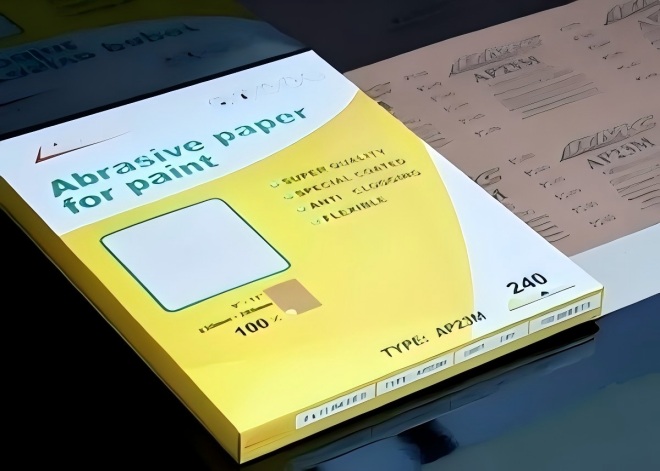
Two abrasive products with the same nominal grit can perform differently because abrasive performance is determined by the overall grain structure, not simply by particle size.
Grain shape affects how an abrasive point enters the workpiece. A sharper grain can produce a more concentrated cutting action, while a different grain geometry may provide a broader contact pattern. These differences can influence cutting speed, scratch characteristics, heat generation, and the way the abrasive wears.
Grain distribution is another important consideration. Abrasive grains need to be positioned consistently across the coated surface so that the workpiece encounters a relatively uniform pattern of active cutting points. Poor distribution can contribute to uneven cutting, localized wear, or inconsistent surface texture.
The spacing between grains also affects how removed material behaves during sanding. If particles are packed too closely together, sanding debris can accumulate between the grains more readily. This can reduce the number of effective cutting points and cause the abrasive to appear dull even though usable grain remains on the backing.
For aluminum oxide sandpaper for metal, consistent grain distribution is especially valuable when the final surface needs to meet a controlled appearance or preparation requirement. Applications such as weld blending, coating preparation, and surface finishing can be sensitive to variations in scratch pattern and material removal.
For this reason, abrasive manufacturing involves more than simply placing aluminum oxide particles onto a backing. Grain selection, distribution, orientation, bonding, and overall construction all contribute to the final sanding behavior.
The surface finish produced by aluminum oxide sandpaper is largely determined by the interaction between abrasive grit and the workpiece. A coarse abrasive generally produces deeper and more visible scratches while removing material more quickly. A finer abrasive produces smaller scratches and is normally used when the objective is to refine an existing surface.
This does not mean that a finer grit is always the better choice. If a surface contains substantial defects or unwanted material, starting with an excessively fine abrasive can make the process unnecessarily slow. Conversely, using an abrasive that is too coarse during a finishing stage may create scratches that require additional processing.
A progressive grit sequence is therefore commonly used. The initial abrasive removes the required amount of material, while subsequent grades gradually reduce the scratch pattern left by earlier sanding stages.
For example, a metal fabrication process may begin with a relatively coarse aluminum oxide sandpaper for metal to remove burrs, prepare weld areas, or eliminate unwanted coatings. A medium grade can then refine the surface, followed by a finer abrasive when a smoother or more uniform appearance is required.
The final result also depends on pressure, sanding direction, equipment, backing flexibility, and the condition of the abrasive. Even when the same grit is used, changing these variables can change the appearance and texture of the finished surface.
For manufacturers and distributors, this is why abrasive selection should be based on the complete application rather than simply requesting a particular grit. Fujistar Abrasives offers abrasive solutions for different material-removal and finishing requirements, allowing buyers to consider product construction alongside the needs of a specific sanding process. When comparing options, users can explore abrasive products suited to different applications and identify the construction that best matches their workpiece and processing conditions.
The working life of aluminum oxide sandpaper is influenced by both product characteristics and operating conditions. Even a high-quality abrasive can perform poorly if it is used outside the conditions for which it was designed.
Workpiece material: Material hardness, ductility, coating composition, and surface condition all affect abrasive wear.
Grit size: Coarser grades are generally selected for greater material removal, while finer grades are normally used for finishing and surface refinement.
Applied pressure: Excessive force can increase friction, heat, loading, and premature wear.
Sanding speed: Machine speed or manual sanding speed affects the interaction between abrasive grains and the workpiece.
Backing material: The backing influences flexibility, support, tear resistance, and how the abrasive conforms to the workpiece.
Bonding system: The bond must hold abrasive grains securely while allowing effective grain exposure during use.
Loading: Dust, paint, resin, metal particles, or other debris can cover abrasive grains and reduce cutting efficiency.
Heat: Excessive heat can affect both abrasive performance and the workpiece, particularly during aggressive metal sanding.
Storage and handling: Abrasive products should be stored and handled according to the manufacturer's recommendations to maintain their intended condition.
Loading deserves particular attention. When debris fills the spaces around abrasive grains, fewer cutting points remain exposed to the workpiece. The user may then compensate by applying more pressure, which can increase heat and wear without restoring the original cutting efficiency.
For aluminum oxide sandpaper for metal, application conditions are especially important because different metals can produce different levels of heat, debris, and abrasive loading. Stainless steel, aluminum, carbon steel, and coated metal surfaces should not automatically be treated as identical applications.
When abrasive consumption seems unusually high, it is therefore worth reviewing the complete process. The issue may be related to grit selection, sanding pressure, machine speed, workpiece condition, loading, or backing rather than the aluminum oxide grain itself.
Consistent sanding results come from controlling the relationship between the abrasive, the workpiece, and the sanding process. The following practices can help improve repeatability.
First determine what the abrasive actually needs to accomplish. Removing a weld, stripping a coating, eliminating burrs, preparing a surface for painting, and refining an existing finish require different levels of cutting action.
Choose a coarse, medium, or fine abrasive based on the amount of material that needs to be removed and the finish that must be achieved. Do not select the finest available grit simply because a smoother abrasive sounds preferable.
When several sanding stages are required, use a sensible progression. Each grade should remove the scratch pattern created by the previous stage without introducing unnecessarily deep scratches.
Keep pressure consistent across the workpiece. Excessive pressure can increase friction and heat while shortening abrasive life. Controlled contact usually provides better process stability than simply pressing harder.
Uneven movement can produce variations in scratch direction, surface texture, and abrasive wear. In machine sanding, stable operating parameters and proper workpiece positioning can help maintain repeatable results.
Do not judge abrasive condition only by whether grains remain visible. If cutting efficiency has dropped because of wear or loading, continuing to use the same sheet or belt may reduce overall productivity.
The most aggressive aluminum oxide sandpaper is not automatically the most suitable option. The right choice balances cutting speed, surface requirements, abrasive life, backing characteristics, and process conditions.
This becomes particularly important for industrial buyers who need stable performance across repeated production runs. A suitable abrasive specification can reduce unnecessary trial and error and make sanding results easier to standardize. If the application involves a specific metal, surface condition, production process, or finishing requirement, buyers can discuss their abrasive requirements with the Fujistar Abrasives team before selecting a product specification.
Aluminum oxide sandpaper works by using exposed abrasive grains as microscopic cutting points that progressively remove material from a workpiece. Its performance depends on the combined effects of grain hardness, toughness, shape, distribution, grit size, backing, bonding, pressure, speed, and workpiece characteristics.
For aluminum oxide sandpaper for metal, these factors become particularly important because different metals can respond differently to abrasive contact and generate different levels of heat and loading. Choosing the correct product therefore requires consideration of the complete application rather than grit size alone.
A reliable sanding process starts with a clear understanding of the required material removal and surface finish. From there, selecting the appropriate grit progression, maintaining controlled pressure, monitoring abrasive condition, and matching the product to the workpiece can help deliver more consistent results.
For manufacturers, distributors, and professional users, Fujistar Abrasives can be a practical resource when evaluating coated abrasive requirements. By considering abrasive construction and application conditions together, users can make more informed decisions about performance, productivity, and abrasive life.
Aluminum oxide sandpaper is commonly used for material removal, surface preparation, deburring, coating removal, weld preparation, blending, and finishing on materials such as wood, painted surfaces, plastics, and metals.
Yes. Aluminum oxide sandpaper for metal can be used for applications including deburring, weld preparation, coating removal, surface blending, and finishing. The appropriate abrasive specification depends on the metal and the desired result.
No. A higher grit number generally indicates a finer abrasive, but the appropriate grit depends on the application. Coarser grades are normally better for faster material removal, while finer grades are used to refine the surface.
Cutting efficiency can decrease because of abrasive grain wear, loading, glazing, excessive pressure, unsuitable sanding conditions, or a product specification that does not match the workpiece.
Use the appropriate grit and backing, maintain controlled pressure and sanding speed, avoid unnecessary heat, and monitor loading and wear. Selecting an abrasive designed for the specific workpiece can also improve service life.
Consider the workpiece material, required material removal, desired surface finish, sanding equipment, grit range, backing, and expected abrasive life. For specialized industrial applications, consulting the abrasive manufacturer can help identify a more suitable specification.