In precision manufacturing, even microscopic surface imperfections can affect product performance, durability, and appearance. Whether producing optical lenses, automotive components, semiconductor wafers, or medical devices, manufacturers require abrasive materials capable of delivering consistent, repeatable, and ultra-fine finishes.
This is where microfinishing film stands out. Engineered with micron-graded abrasive particles bonded to a high-strength polyester film backing, it provides exceptional surface consistency, dimensional accuracy, and controlled material removal.
Compared with conventional abrasive paper, microfinishing film offers tighter particle size distribution, better wear resistance, and more uniform finishing results, making it an essential solution for industries where precision matters.
Microfinishing film is a precision abrasive product manufactured by coating micron-sized abrasive grains onto a durable polyester film substrate.
Unlike paper-backed abrasives, the film backing remains dimensionally stable during use, allowing the abrasive grains to contact the workpiece evenly. This stability helps achieve highly consistent surface roughness while minimizing scratches and variation.
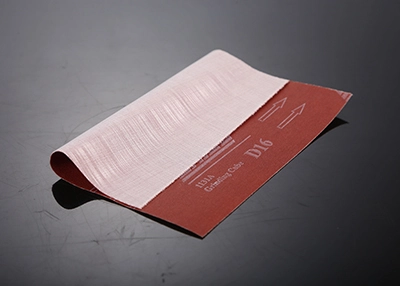
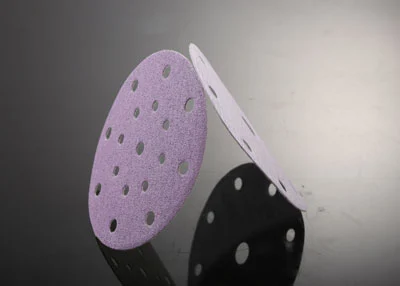
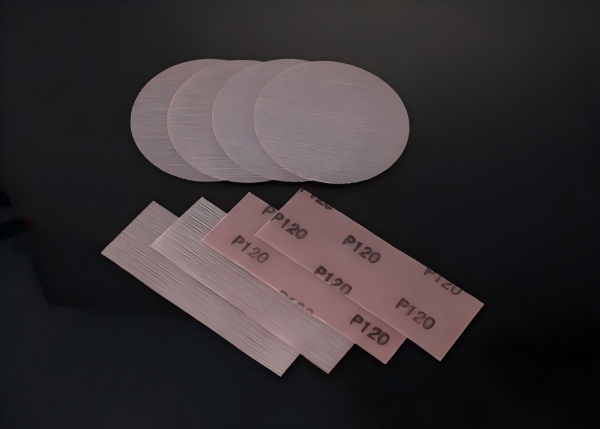
Microfinishing film is available in sheets, discs, rolls, belts, and custom-cut formats, making it suitable for both manual finishing and automated production lines.
Common abrasive minerals include:
Aluminum Oxide
Silicon Carbide
Diamond
Aluminum Oxide with precision grading
Diamond micron abrasives for ultra-hard materials
Depending on the application, grit sizes are typically specified in microns (μm) rather than conventional FEPA grit numbers.
During polishing or finishing, each abrasive particle removes a precisely controlled amount of material.
Because the abrasive grains are carefully graded and uniformly distributed, every pass produces a predictable cutting action. The polyester film backing minimizes deformation, allowing operators to maintain consistent pressure across the workpiece.
This results in:
Uniform surface roughness
Reduced scratch depth
Better dimensional control
Excellent edge quality
Improved repeatability
These characteristics are particularly valuable for high-precision industries where even minor surface defects can impact product performance.
One of the biggest advantages of microfinishing film is its ability to create highly uniform finishes.
Compared with conventional coated abrasives, the precisely graded abrasive particles reduce random deep scratches and improve overall surface quality.
Precision manufacturing often requires removing only a few microns of material.
Microfinishing film enables controlled stock removal without significantly affecting part dimensions, making it ideal for finishing precision components.
Unlike paper backings that may stretch or absorb moisture, polyester film provides:
Excellent dimensional stability
High tear resistance
Flat contact with workpieces
Consistent polishing performance
This stability improves finishing accuracy throughout the product's service life.
High-quality resin bonding systems securely hold abrasive particles in place during use.
As a result, microfinishing film maintains its cutting ability longer, reducing abrasive replacement frequency and improving production efficiency.
For automated polishing systems, consistency is critical.
Microfinishing film delivers repeatable finishing results from batch to batch, helping manufacturers maintain strict quality standards.
Microfinishing film is widely used in the optical industry for polishing:
Camera lenses
Optical glass
Fiber optic connectors
Laser components
Precision mirrors
Microscope lenses
The fine abrasive structure minimizes scratches that could affect optical performance.
Electronic manufacturers rely on microfinishing film for:
Semiconductor processing
Printed circuit board finishing
Connector polishing
Precision electronic components
Ceramic substrates
The controlled abrasive action helps protect delicate materials while achieving tight dimensional tolerances.
Automotive manufacturers use microfinishing film for:
Crankshafts
Camshafts
Fuel injection components
Transmission parts
Bearing surfaces
Engine valve components
These applications require precise surface finishes to reduce friction and extend component life.
Aerospace manufacturers demand superior surface quality for:
Turbine blades
Hydraulic systems
Landing gear components
Precision bearings
Aircraft engine parts
Microfinishing film helps achieve the consistency required for mission-critical components.
Medical applications include finishing:
Surgical instruments
Orthopedic implants
Dental components
Stainless steel instruments
Precision medical equipment
Smooth surfaces improve cleanliness, functionality, and product quality.
| Feature | Microfinishing Film | Conventional Sandpaper |
|---|---|---|
| Backing Material | Polyester Film | Paper or Cloth |
| Abrasive Uniformity | Excellent | Moderate |
| Surface Finish | Ultra-Consistent | Less Uniform |
| Dimensional Stability | High | Moderate |
| Scratch Control | Excellent | Average |
| Precision Applications | Ideal | Limited |
| Service Life | Longer | Shorter |
For applications requiring tight tolerances and repeatable surface finishes, microfinishing film provides clear performance advantages.
Different materials require different abrasive minerals.
Aluminum Oxide – General-purpose precision finishing
Silicon Carbide – Glass, ceramics, and hard alloys
Diamond – Carbide, sapphire, ceramics, and superhard materials
Instead of standard grit numbers, microfinishing film is commonly classified by particle size.
Typical micron ranges include:
| Micron Size | Typical Application |
|---|---|
| 60 μm | Heavy stock removal |
| 30 μm | Intermediate finishing |
| 15 μm | Fine finishing |
| 9 μm | Precision polishing |
| 5 μm | Ultra-fine finishing |
| 3 μm | Mirror preparation |
| 1 μm | High-precision polishing |
| 0.5 μm | Optical-grade finishing |
Film thickness influences flexibility and durability.
Thicker films provide greater stability, while thinner films conform better to complex surfaces.
Microfinishing film is available for:
Manual polishing
Automated polishing machines
Precision lapping
Robotic finishing systems
Continuous production lines
Selecting the appropriate format helps maximize process efficiency.
To achieve optimal finishing results:
Progress gradually through finer micron grades.
Use clean polishing equipment to prevent contamination.
Apply consistent pressure during finishing.
Replace worn film before surface quality declines.
Store abrasive films in a cool, dry environment.
Follow the manufacturer's recommended operating speeds.
Proper process control significantly improves finish quality and extends abrasive life.
Industries are increasingly adopting microfinishing film because it combines precision, consistency, and production efficiency.
Its ability to produce predictable surface finishes while minimizing dimensional variation makes it an ideal solution for high-value manufacturing.
As quality standards become more demanding, precision abrasive films continue to replace traditional finishing methods across optics, electronics, aerospace, automotive, and medical manufacturing.
At Fujistar Abrasives, we manufacture high-performance microfinishing films designed for precision surface finishing across a wide range of industrial applications.
Our products are engineered to provide:
Precision-graded micron abrasive particles
Uniform scratch patterns for consistent surface quality
Durable polyester film backing with excellent dimensional stability
Long service life and reliable cutting performance
Multiple abrasive materials, including Aluminum Oxide, Silicon Carbide, and Diamond
Custom sizes, rolls, sheets, discs, and OEM solutions
With advanced manufacturing technology and strict quality control, Fujistar supports global customers in automotive, electronics, optics, aerospace, medical, and precision engineering industries.
Whether you require standard specifications or customized abrasive solutions, our team can help you improve finishing quality and production efficiency.
Microfinishing film is used for precision polishing and finishing in industries such as optics, electronics, automotive, aerospace, medical devices, and precision engineering, where consistent surface quality is essential.
For precision applications, yes. Its micron-graded abrasive particles and stable polyester backing provide superior consistency, tighter dimensional control, and finer surface finishes.
Yes. It is widely used to finish stainless steel, aluminum, hardened steel, bearing surfaces, crankshafts, camshafts, and other precision metal components.
Common options include Aluminum Oxide, Silicon Carbide, Diamond, and other precision abrasive formulations selected according to the workpiece material and required finish.