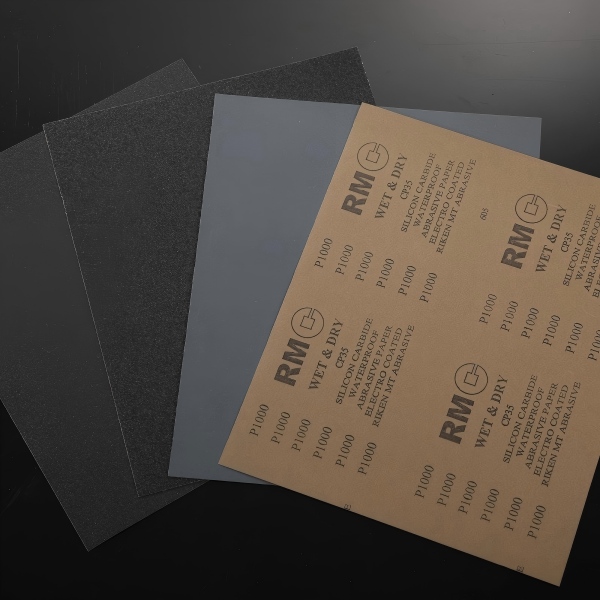
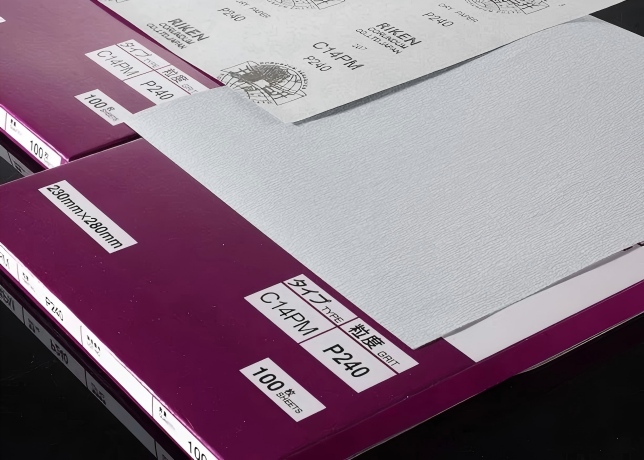
High-end cabinetry tolerates almost no margin for sanding error. A scratch that looks minor on raw timber under workshop lighting becomes a clearly visible defect after stain amplifies the grain contrast, or after a high-gloss lacquer creates a specular surface that reflects every imperfection. For production teams working with expensive veneer, figured hardwood, or premium solid timber, a single unexpected deep scratch from inconsistent grit distribution can force rework or scrap on material that cannot be replaced cheaply or quickly.
This is why the choice of sanding paper wood system — and the qualification of reliable woodworking abrasives suppliers — is a production quality decision, not just a consumables procurement decision. The right multi-stage sanding process, supported by consistent grit distribution across batches, is what separates a finish that passes inspection under direct lighting from one that reveals its history in the spray booth.
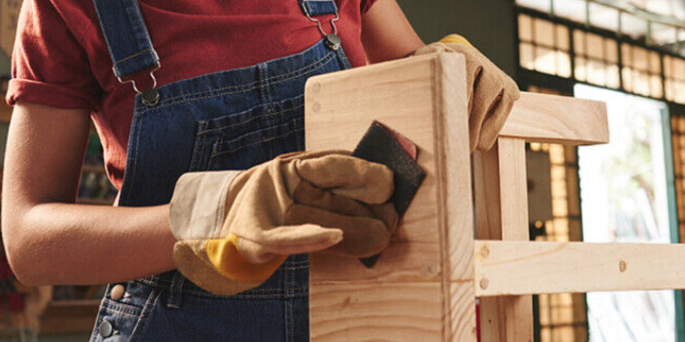
The fundamental principle of multi-stage sanding is that each grit leaves a defined scratch profile in the wood surface, and the job of the next grit is to remove that profile completely — replacing it with a shallower, finer scratch pattern — without introducing random deep marks of its own. The final grit stage leaves a scratch profile fine enough that the coating system can fill and obscure it completely.
This principle has a direct implication for grit selection: the step between consecutive grits must be small enough that the finer grit can efficiently remove the coarser grit's scratches. When the step is too large — when grits are skipped to save time — the finer grit cannot remove the deeper scratches from the previous stage, and those scratches survive into the coating process where they become visible defects.
On premium wood, the most damaging failure mode is not a consistently coarse scratch — it is an occasional deep scratch from an oversized grain particle in an otherwise correctly graded abrasive. A consistent scratch profile can be managed with the correct grit progression. A random deep scratch from a rogue oversized grain cannot be predicted or prevented by technique — it requires rework after the fact.
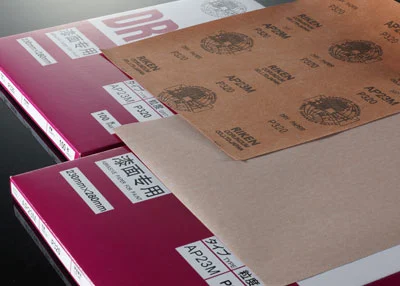
This is why grit distribution consistency — the tightness of the particle size distribution within a grit grade — is the specification that most directly protects expensive timber from unexpected defects. Fuji Star woodworking abrasives are graded to tight particle size distribution tolerances, reducing the risk of oversized particles that create isolated deep scratches in an otherwise correctly prepared surface.
View Fuji Star woodworking abrasives and grit range
The first sanding stage addresses the surface condition left by the previous machining operation — planer marks, cutter ripples, glue squeeze-out at joints, and uneven surfaces from assembly. The goal is to remove these defects efficiently without tearing wood fibers or creating a scratch profile so deep that the medium stage cannot remove it in a reasonable number of passes.
Typical grit range for this stage is P80 to P120, depending on the severity of the machining marks and the hardness of the wood species. Harder species like oak and maple can tolerate a coarser starting grit because their fiber structure resists tearing; softer species and veneers require a finer starting grit to avoid fiber damage that creates a rough texture under the coating.
The medium stage has two objectives: flatten the panel surface by removing the coarse scratch profile from Stage 1, and blend any remaining joint lines or surface variations into a uniform plane. This is the stage where the quality of the grit progression discipline has the most impact — if Stage 1 left scratches that are too deep for the medium grit to remove efficiently, the operator either spends excessive time at this stage or moves forward with residual coarse scratches that will appear after coating.
Typical grit range for this stage is P150 to P180. The transition from Stage 1 to Stage 2 should be validated on a sample board under an inspection light — all Stage 1 scratches should be completely replaced by the finer Stage 2 scratch pattern before moving forward.
The fine stage refines the scratch pattern to the level required by the coating system. For stained finishes, the scratch direction and depth affect how the stain absorbs into the wood — cross-grain scratches create darker lines that are highly visible after staining. For high-gloss lacquer and paint, the scratch depth determines whether the coating can fill the profile completely or whether the scratches print through the finished surface.
Typical grit range for this stage is P220 to P320, depending on the coating system. High-gloss systems require finer preparation than matte or satin finishes. The final sanding pass should always be in the direction of the wood grain to minimize cross-grain scratches.
| Wood Type and Coating System | Stage 1 (Coarse) | Stage 2 (Medium) | Stage 3 (Fine) |
|---|---|---|---|
| Hardwood, stained finish | P80 – P100 | P150 | P220 |
| Hardwood, high-gloss lacquer | P100 – P120 | P180 | P280 – P320 |
| Veneer panel, matte lacquer | P120 | P180 | P240 |
| Veneer panel, high-gloss paint | P120 | P180 – P220 | P320 |
| MDF, painted finish | P120 | P180 | P240 – P280 |
Validate the grit ladder for each new wood species and coating system combination using a sample board inspected under a raking light before committing to production.
For high-value cabinetry production, the cost of a single rework event on an expensive veneer panel or figured hardwood door typically exceeds the cost savings from switching to a cheaper abrasive supplier. The qualification criteria for woodworking abrasives suppliers should reflect this risk:
| Qualification Criterion | What to Request | Risk It Controls |
|---|---|---|
| Grit distribution consistency | Particle size distribution tolerance data and batch QC standard | Random deep scratches from oversized particles |
| Backing strength and flexibility | Tear resistance data; flexibility rating for profile sanding | Backing failure on edges and profiles |
| Anti-loading performance | Loading resistance test data or coating specification | Premature clogging on resinous woods and sealers |
| Lot traceability | Lot number on packaging; QC records available on request | Fast corrective action when a defect appears |
| Packaging integrity | Moisture-resistant packaging; edge protection | Abrasive damage in storage and on the shop floor |
Before releasing a new batch of abrasives to production, run a quick incoming inspection:
Sand a test board of the most common wood species through the full grit ladder and inspect under a raking light for unexpected deep scratches
Check grit uniformity visually — the abrasive surface should appear consistent in grain density and size across the sheet
Check loading behavior on a resinous species or a sealed surface — the sheet should cut cleanly for a reasonable number of strokes before showing signs of loading
This inspection takes less than ten minutes and can prevent a batch quality problem from reaching production on expensive timber.
High-gloss finishes are the most demanding application for sanding quality because specular reflection makes every surface imperfection visible. A scratch that is invisible under diffuse workshop lighting becomes clearly visible under the directional light of a showroom or kitchen installation. Scratch control at the fine sanding stage — consistent grit distribution, correct final grit, and sanding in the grain direction — is non-negotiable for high-gloss cabinet door production.
Veneer face layers are typically 0.5mm to 1.0mm thick. A single pass with an abrasive that contains oversized particles can sand through the veneer face and expose the substrate — a defect that cannot be corrected without replacing the panel. Tight grit distribution control and a conservative starting grit are essential for veneer sanding.
Figured hardwoods — burls, quilted maple, curly walnut — have complex grain patterns that sand differently in different directions across the same panel. Cross-grain scratches are particularly visible on these species after staining because the stain absorbs differently in the scratch than in the surrounding grain. Fine sanding in a consistent direction, with a grit fine enough to produce a scratch profile that the stain can fill uniformly, is the key to a clean result on figured timber.
Edge banding and routed profiles require an abrasive with sufficient backing flexibility to maintain consistent contact across the profile geometry without rounding the edges excessively. A backing that is too stiff concentrates pressure at the profile's high points and rounds them; a backing that is too flexible follows the profile without cutting the high points down. Match backing flexibility to the profile geometry and the required edge sharpness.
| Input Variable | Options | Impact on Abrasive Selection |
|---|---|---|
| Wood species | Hardwood, softwood, resinous, veneer | Determines starting grit and anti-loading requirement |
| Substrate | Solid wood, veneer, MDF | Determines maximum coarseness and sand-through risk |
| Coating system | Stain, matte lacquer, high-gloss paint | Determines final grit and scratch direction requirement |
| Sanding method | Hand, orbital, wide-belt | Determines format, size, and attachment type |
| Dust extraction | Effective, moderate, minimal | Affects loading rate and required anti-loading coating |
Replace abrasives before they glaze — a glazed abrasive burnishes the wood surface rather than cutting it, creating a surface that resists stain absorption and produces an uneven finish
Keep dust extraction effective — reduced extraction accelerates loading, which increases heat and burnishing risk
Standardize grit ladders and work instructions across operators — variability in grit progression between technicians is a common source of inconsistent finish quality in production environments
| TCO Component | Measurement Method | Target |
|---|---|---|
| Rework hours from scratch defects | Hours per week attributed to sanding-related rework | Reduce by 50% or more with consistent grit distribution |
| Scrap rate on veneer and premium timber | Panels scrapped per month due to sand-through or deep scratches | Near zero with correct grit selection and supplier qualification |
| Abrasive consumption per door or panel | Sheets or discs consumed per unit of output | Benchmark and track monthly |
| Changeover downtime | Minutes per shift spent changing abrasives | Reduce by extending usable life through anti-loading coating |
Flawless cabinetry finishes are built in sanding, not in the spray booth. A controlled coarse-to-medium-to-fine sequence removes machining marks, levels surfaces, and refines the scratch profile so it does not print through after coating. By using sanding paper wood with consistent grit distribution — and by working with stable woodworking abrasives suppliers who can document batch consistency and provide lot traceability — manufacturers can protect expensive timber, reduce rework, and deliver repeatable high-end results across every production shift.
Fuji Star Woodworking Abrasives — View Options and Request a Quote
To receive a recommended multi-stage sanding specification matched to your wood species and coating system, provide the following:
Work conditions: Wood species, solid wood versus veneer or MDF, coating system (stain, sealer, lacquer, or paint and gloss level), and dust extraction setup.
Quantity: Monthly door or panel output, current abrasive monthly usage, and trial order quantity.
Size and spec: Sheet, disc, or belt formats, machine model (orbital, wide-belt, or hand sanding), required sizes, and grit range preferences.
Target metrics: Acceptable scratch standard under inspection lighting, rework rate target, scrap rate target for sand-through, and cycle-time goals per door or panel.
Current problem: Visible scratches after paint or lacquer, swirl marks under gloss finish, inconsistent grit between batches, heavy loading on resinous species, or high rework rate on premium timber.
1. What does sanding paper wood mean?
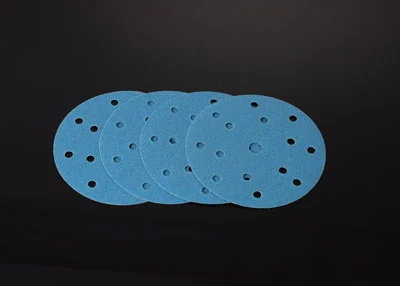
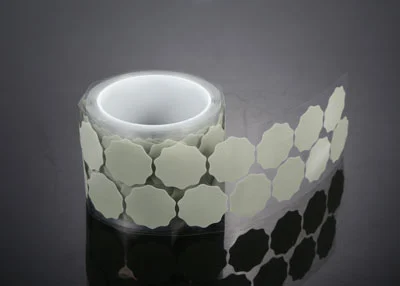
Sanding paper wood refers to abrasive paper products selected and used specifically for woodworking surface preparation — covering the full range of operations from removing machining marks on raw timber through fine pre-finish preparation before staining, sealing, or painting. The term encompasses sheets, discs, belts, and rolls used in hand sanding, orbital sanding, and wide-belt sanding applications across solid wood, veneer, MDF, and engineered panel substrates. The key performance requirements for woodworking abrasives are consistent grit distribution to prevent unexpected deep scratches, anti-loading performance on resinous species, and backing flexibility matched to the sanding method and surface geometry.
2. How does a multi-stage sanding process compare with skipping grits?
Skipping grits reduces sanding time at the abrasive stage but typically increases total production time by creating scratch defects that appear after coating and require rework. When a grit step is skipped, the finer grit that follows cannot efficiently remove the deeper scratches left by the coarser grit — those scratches survive into the coating process and become visible under the finished surface. A disciplined multi-stage progression with no skipped steps takes longer at the sanding stage but delivers more predictable results, lower rework rates, and lower total cost per finished door or panel.
3. What is the ROI of upgrading to higher-consistency abrasives for cabinetry production?
ROI comes from three primary sources: fewer rework cycles on finished doors and panels, lower scrap risk on expensive veneer and premium hardwood, and faster time-to-ready-for-finish through more predictable grit progression. The financial impact of a single rework event on a figured hardwood door — including labor, material, and schedule delay — typically exceeds the cost difference between standard and premium abrasives for an entire month's production. For high-value cabinetry, the ROI calculation strongly favors consistent abrasives even at a higher unit price.
4. Do we need to modify our equipment to improve sanding quality?
Not always. Many of the most significant improvements in cabinetry sanding quality come from process changes rather than equipment changes: standardizing the grit ladder by wood species and coating system, improving dust extraction to reduce loading, tightening the abrasive change criteria to replace sheets before they glaze, and qualifying abrasive suppliers on grit distribution consistency. Equipment upgrades — such as switching from orbital to wide-belt sanding for large flat panels — can deliver additional improvements, but the process and supplier qualification steps typically deliver the fastest return.
5. What parameters should we provide to select the right abrasives and grit ladder?
Provide the following: wood species and whether the substrate is solid wood, veneer, or MDF; the coating system and gloss level (stain, matte lacquer, satin lacquer, or high-gloss paint); the sanding method (hand, orbital, or wide-belt); the required surface standard (visual scratch standard under inspection lighting or a defined Ra value); the current grit sequence in use; and the specific defect you are trying to eliminate — scratch print-through after coating, swirl marks under gloss finish, loading on resinous species, or sand-through on veneer. This information allows the supplier to recommend the correct grit ladder, backing type, and anti-loading specification for your specific production requirements.