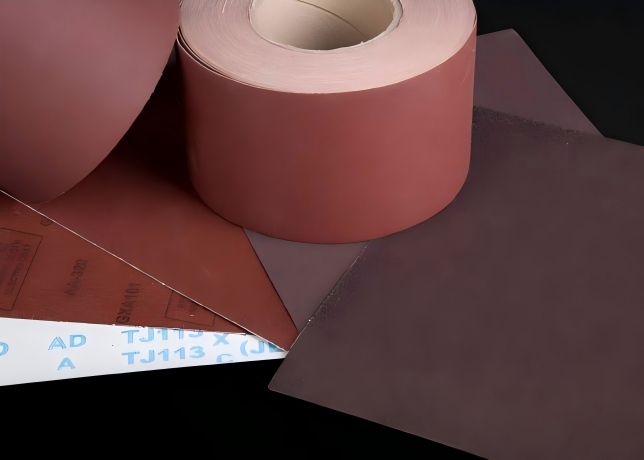
In 2026, manufacturing floors are running a more diverse mix of equipment than ever before. Standard production lines share space with custom pneumatic sanders, narrow-belt tools, jig-mounted strip sanding stations, and hand fixtures that were designed around specific part geometries rather than standard abrasive sizes. The productivity logic behind these specialized setups is sound — a tool built for a specific part produces better results than a general-purpose tool adapted to fit. The sourcing problem that follows is equally predictable: the abrasive market is built around standard sizes, and the specialized tool often has no matching off-the-shelf product.
The workaround that most shops default to is cutting standard sheets into strips. It looks like a simple solution, but the hidden costs accumulate quickly. Sheets cut by hand produce strips with inconsistent widths and ragged edges that do not tension correctly in clamps. The strips slip, chatter, or tear before they are worn out. The finish quality varies because the abrasive contact is not stable. Operators spend time cutting and fitting rather than sanding. And when the sheet stock runs out in an unusual size, the line stops while procurement searches for a substitute.
Sanding rolls — continuous roll stock of abrasive material that can be converted into precise strip widths and lengths — solve this problem at the source. A roll with the right backing strength and grain specification can be slit and cut to the exact dimensions that a custom tool requires, producing strips with consistent geometry, correct tension fit, and the durability to survive the mechanical demands of the application. For factories running specialized machinery, abrasive sanding rolls are not a niche product — they are the practical sourcing strategy that eliminates the downtime and waste that standard-size workarounds create.
The working principle of sanding rolls as a custom abrasive solution is straightforward, but the operational implications are significant for any shop running non-standard tooling.
Standard abrasive products — sheets, discs, and pre-cut belts — are manufactured to dimensions that match the most common tool configurations. For the majority of production sanding applications, that match is adequate. For specialized pneumatic file sanders, custom clamp tools, narrow-belt detail sanders, and jig-mounted strip sanding stations, the standard dimensions do not match the tool's clamping geometry, tension requirements, or working width.
The consequences of that mismatch are not limited to the inconvenience of cutting sheets. A strip that is slightly too wide for the clamp cannot be tensioned correctly and will slip during sanding, producing an inconsistent scratch pattern. A strip that is slightly too narrow leaves gaps in the abrasive coverage that create uneven material removal. A strip cut from a sheet with a paper backing may tear at the cut edge when subjected to the tension and vibration of a pneumatic tool, ending its useful life before the grain is worn out. Each of these failure modes adds downtime, waste, and finish inconsistency that the specialized tool was designed to avoid.
A sanding roll provides the raw material for producing strips with consistent, controlled dimensions. When the roll is slit to the correct width and cut to the correct length for a specific tool, every strip produced from that roll is identical in geometry. The clamping fit is consistent, the tension is consistent, and the abrasive contact with the workpiece is consistent from one strip to the next and from one operator to the next.
That consistency is the operational value of roll-based abrasive sourcing for custom tooling. It removes the variability that hand-cutting from sheets introduces — variability in strip width, edge quality, and length — and replaces it with a standardized consumable that behaves predictably in the tool. Operators spend less time fitting and adjusting, changeover timing becomes predictable, and the finish quality is more consistent across a shift because the abrasive contact geometry is stable.
Selecting the right sanding roll specification for a custom tooling application requires matching the backing, grain, and dimensional characteristics to the mechanical demands of the tool and the finishing requirements of the application.
Backing strength is the most important specification variable for sanding rolls used in narrow-strip applications. When a strip is narrow — ten to thirty millimeters wide, for example — the full tension load of the tool's clamping and drive system is concentrated across a small cross-section of backing material. A backing that is adequate for a full-width sheet may not have sufficient tensile strength to survive that concentrated load without snapping or tearing at the edges.
For high-speed pneumatic tools, the backing must also resist the vibration and cyclic stress that the tool generates during operation. A backing that fatigues under cyclic loading will develop edge cracks that propagate across the strip width, causing premature failure that is not related to grain wear. Specifying a backing with sufficient tensile strength and fatigue resistance for the tool's operating conditions is the prerequisite for achieving the strip life that makes roll-based sourcing cost-effective.
The GWP53 series abrasive sandpaper rolls are designed with backing strength appropriate for narrow-strip conversion and pneumatic tool applications. The backing specification supports the tension and vibration loads of specialized tooling while maintaining the flexibility needed for detail sanding on profiles and contoured surfaces. For operations evaluating roll specifications for custom tooling, the GWP53 abrasive sandpaper roll is a reference product for this application category.
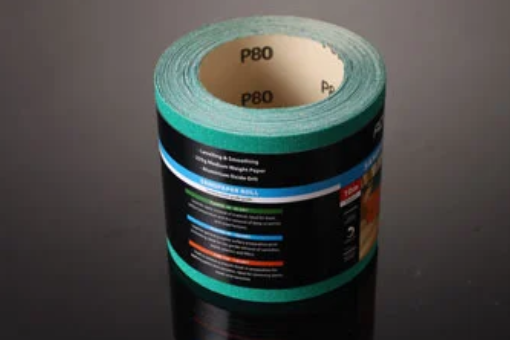
The grain specification determines the balance between material removal rate and surface finish quality at each stage of the sanding process. For defect removal and leveling — removing machining marks, weld seams, or surface contamination — a coarser grit with higher cut rate is appropriate. For blending and pre-finish preparation — refining the scratch pattern before coating or polishing — a medium to fine grit is appropriate.
Defining the sanding objective for each roll specification before purchasing allows the grit sequence to be matched to the process requirements. A roll that is specified for leveling work should not be used for pre-finish preparation, and vice versa. Using the correct grit for each step minimizes the number of steps required to reach the acceptance standard, which reduces strip consumption and cycle time.
The roll width determines how many strips of the required width can be slit from a single roll and how much waste is generated by the slitting process. Specifying a roll width that is a whole-number multiple of the required strip width minimizes waste. For example, a roll that is 100 millimeters wide slit into 25-millimeter strips produces four strips per roll width with no waste. A roll that is 110 millimeters wide slit into 25-millimeter strips produces four strips with a 10-millimeter waste strip.
Cut length tolerance is the specification that determines whether the strip fits correctly in the tool's clamping system. Most clamp-type tools have a defined range of strip lengths that tension correctly — strips that are too long cannot be tensioned without folding, and strips that are too short cannot be clamped securely. Defining the cut length tolerance for the specific tool before specifying the roll ensures that the converted strips fit correctly and perform as designed.
The applications where sanding rolls create the most significant operational advantage are those where standard abrasive sizes do not match the tool geometry and where the cost of the mismatch — downtime, waste, and finish inconsistency — is highest.
Many finishing operations involve features that require narrow abrasive contact — grooves, rebates, inside corners, narrow profiles, and edge details where a full-width sheet cannot be positioned correctly. For these features, a narrow strip cut from a sanding roll provides the precise abrasive contact width that the feature requires, without the excess material that a wider sheet would waste and without the edge irregularity that hand-cutting from a sheet produces.
Narrow strips cut from a roll with consistent width and clean edges maintain stable contact with the feature geometry throughout the sanding pass. The abrasive action is concentrated where it is needed, the scratch pattern is consistent across the feature, and the strip life is predictable because the backing is not subjected to the edge stress that irregular hand-cut strips experience.
Pneumatic file sanders and custom shoe sanders require strips that are long enough to wrap around the tool's shoe and clamp at both ends with correct tension. The required length is specific to the tool model and the shoe geometry — it is not a standard dimension that pre-cut sheet products are manufactured to.
A sanding roll cut to the exact length required by the tool produces strips that tension correctly, track straight during operation, and do not slip or chatter. The consistent length also standardizes the changeover process — operators know exactly how long each strip should be and can cut replacements quickly without measuring each time. That standardization reduces changeover time and eliminates the variation in strip length that causes inconsistent tension and finish quality when operators cut strips by eye from a sheet.
In workcells that process multiple part types with different sanding requirements, the ability to cut strips to different widths and lengths from a single roll SKU reduces the number of abrasive SKUs that need to be stocked. Instead of maintaining separate inventories of pre-cut strips in multiple sizes, the workcell stocks one or two roll specifications and cuts the required strip dimensions as needed.
This inventory consolidation reduces the risk of stockouts for specific strip sizes, simplifies the purchasing process, and reduces the storage space required for abrasive inventory. For operations that run frequent size changeovers, the flexibility of roll-based sourcing is a practical advantage that pre-cut products cannot match.
Specifying the right sanding roll configuration for a custom tooling application requires a structured approach that connects the tool's mechanical requirements to the roll's backing, grain, and dimensional specifications.
Start by identifying the tool type and its clamping and drive mechanism. A pneumatic file sander with a clamp-and-tension system has different strip dimension requirements than a custom jig-mounted station with a fixed-width channel. The tool's clamping geometry defines the strip width and length tolerances that the roll conversion must meet.
Define the required strip dimensions — width, length, and any thickness constraints — before selecting the roll width and length. Confirm that the roll width can be slit to the required strip width with acceptable waste. Confirm that the roll length is sufficient to produce the required number of strips per roll without excessive joins or waste at the end of the roll.
Select the backing specification based on the tool's operating conditions. For high-speed pneumatic tools with significant tension and vibration, a stronger backing is required. For manual fixtures and low-speed tools, a more flexible backing may be appropriate to allow the strip to conform to the tool's shoe geometry.
Define the grit plan based on the sanding objective — defect removal, blending, or pre-finish preparation — and the number of steps required to reach the acceptance standard. Minimizing the number of grit steps reduces strip consumption and cycle time without compromising surface quality when the grit sequence is correctly matched to the application.
Use clean, consistent clamping surfaces when installing strips. Debris on the clamping surface — abrasive particles, metal chips, or dried lubricant — creates localized high-pressure points that cause edge tearing at the clamp contact zone. Cleaning the clamping surfaces before each strip installation is a simple step that significantly extends strip life.
Maintain correct tension when installing strips. Over-tensioning increases the stress on the backing and accelerates fatigue cracking at the edges. Under-tensioning allows the strip to slip on the tool's shoe, which produces chatter and an inconsistent scratch pattern. The correct tension for a specific tool is typically defined in the tool's operating manual — standardizing the tensioning procedure in the work instruction ensures that all operators install strips at the correct tension.
Standardize cut lengths to stabilize changeovers and part quality. When all operators cut strips to the same length from the same roll specification, the changeover process is predictable and the strip performance is consistent. Providing a simple cutting guide — a marked template or a stop on the cutting surface — eliminates the length variation that occurs when operators cut strips by eye.
The cost argument for sanding rolls in custom tooling applications is built on downtime reduction, waste reduction, and finish consistency — not on abrasive unit price.
The hidden cost of using standard sheets as a substitute for custom-size strips is the sum of the time spent cutting, the waste from irregular cuts and torn edges, the downtime from strips that slip or tear prematurely, and the rework from finish inconsistency caused by unstable abrasive contact. Each of these costs is small in isolation, but they accumulate across a shift into a total that is often larger than the cost difference between standard sheets and a roll specification matched to the tool.
A sanding roll matched to the tool's strip dimensions eliminates the cutting time by standardizing the conversion process. It reduces waste by allowing the roll width to be matched to the strip width with minimal offcut. It reduces premature tearing by providing a backing with sufficient strength for the tool's operating conditions. And it improves finish consistency by ensuring that every strip installed in the tool has the same geometry and the same tension fit.
Track strips consumed per shift and average strip life — the number of parts or the amount of time each strip lasts before it is changed. Track changeover time — the time required to cut and install a replacement strip — before and after standardizing the roll-based conversion process. Track the defect rate from poor abrasive fit — uneven scratch patterns, chatter marks, and slipping-related finish defects — before and after the switch.
These three metrics, measured over one to two weeks of production, give a clear picture of the cost savings that the roll specification delivers in the specific application. The changeover time saving and the defect rate reduction are typically the largest contributors to the total cost difference, because they affect labor cost and rework cost rather than just abrasive consumable cost.
Bulk roll procurement for custom tooling applications reduces the risk of stockouts for specific strip sizes. A roll that can be converted into multiple strip dimensions provides a buffer against the supply disruptions that affect pre-cut specialty products. For operations running multiple lines with similar strip dimension requirements, a single roll specification can serve multiple tools, reducing the number of SKUs in the abrasive inventory and simplifying the purchasing process.
When specialized machinery does not match standard abrasive sizes, the cost is not the sandpaper — it is the downtime, waste, and finish inconsistency that result from forcing a standard product into a non-standard application. Sanding rolls provide the flexible foundation for a custom abrasive solution: roll stock with the right backing strength and grain specification can be converted into precise strip dimensions that fit the tool correctly, tension consistently, and last long enough to make the conversion process cost-effective.
For pneumatic file sanders, custom clamp tools, narrow-belt detail stations, and jig-mounted strip sanding workcells, abrasive sanding rolls — including the GWP53 series for applications requiring strong backing and consistent convertibility — are the sourcing strategy that eliminates the hidden costs of standard-size workarounds and replaces them with a standardized, predictable consumable that supports stable process performance.
To receive a recommended roll specification, conversion plan, and quotation, visit the sanding rolls product page and submit the following details:
Operating conditions: material being sanded (wood, metal, or composite), dry versus wet sanding, tool type (pneumatic file sander, custom clamp fixture, or manual jig), operating speed and pressure, dust extraction availability
Quantity: monthly roll usage estimate, strips consumed per shift, trial quantity versus bulk order
Size and specs: required strip width and length with tolerances, roll width and length preference, backing strength requirement, grit range and sequence
Target metrics: strip life target, time-to-finish target, defect rate goal for chatter and scratch uniformity, downtime reduction goal
Current problems: no matching standard abrasive size available, strips tearing or snapping in the tool, slipping in clamps, inconsistent finish quality, high waste from cutting standard sheets
Q1: What are sanding rolls?
Sanding rolls are continuous rolls of abrasive material — abrasive grain bonded to a backing substrate — that can be cut into custom lengths and widths for hand sanding, strip sanding tools, and specialized machinery. Unlike pre-cut sheets and discs, which are manufactured to fixed standard dimensions, sanding rolls provide the raw material for producing strips in any width and length required by a specific tool or application. They are used in applications where standard abrasive sizes do not match the tool geometry, including pneumatic file sanders, custom clamp fixtures, narrow-belt detail sanders, and jig-mounted strip sanding stations.
Q2: What is the advantage of sanding rolls over pre-cut sheets or discs for custom tooling?
Pre-cut sheets and discs are convenient for standard tools but do not match the strip dimensions required by custom and specialized machinery. Cutting sheets into strips by hand produces inconsistent widths and ragged edges that do not tension correctly in clamps, leading to slipping, chatter, and premature tearing. Sanding rolls allow strips to be cut to the exact dimensions required by the tool, producing consistent geometry, correct tension fit, and predictable strip life. The result is less downtime from strip failures, less waste from irregular cuts, and more consistent finish quality from stable abrasive contact.
Q3: What is the ROI of switching to abrasive sanding rolls for custom tooling applications?
The return on investment comes from three sources: reduced downtime from eliminating the need to search for non-standard sizes and from fewer strip failures due to tearing and slipping, reduced waste from matching the roll width to the strip width with minimal offcut, and improved finish consistency from stable abrasive contact that reduces rework. A one-to-two week trial measuring strips consumed per shift, changeover time, and defect rate before and after the switch provides the data needed to calculate the cost-per-part saving for the specific application.
Q4: Do we need to modify equipment to use sanding rolls for custom strip applications?
No major equipment changes are required for most applications. The main process change is standardizing the strip cutting procedure — defining the correct width and length for each tool and providing a cutting guide or template to ensure consistent dimensions. For high-volume applications where strips are cut frequently, a simple slitting and cutting setup improves consistency and reduces the time required for strip preparation. The tool itself typically does not require modification — the roll-converted strip is installed in the same clamp system that the current strips use.
Q5: What parameters should we provide for accurate roll selection and quoting?
For the most useful recommendation, provide the tool type and clamping mechanism, the required strip width and length with dimensional tolerances, the material being sanded and the sanding objective (defect removal, blending, or pre-finish preparation), the operating pressure and speed, whether the application is dry or wet, the target finish requirement, the monthly usage volume expressed as rolls or strips per shift, and the primary failure mode currently being experienced — tearing, slipping in clamps, chatter, inconsistent finish, or inability to source the required size from standard products.