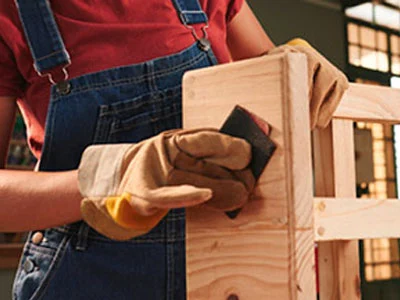
Abrasive performance is often judged by how well a sheet or disc cuts when it is first put into use. In practice, however, the more important question is how consistently it continues to work after repeated contact with the workpiece. When sanding debris begins to accumulate on the abrasive surface, cutting can become slower, the scratch pattern may become less uniform, and operators may need to replace the abrasive more frequently.
This is a common challenge when working with coatings, fillers, primers, paint, and other materials that generate fine sanding particles. The abrasive may still have plenty of usable grain, yet its performance can decline because the cutting surface has become partially covered by accumulated debris. Managing this type of loading is therefore an important part of maintaining efficient sanding operations.
The design of the abrasive can make a significant difference. Stearate coated sandpaper is developed to help reduce the tendency of sanding debris to adhere to the abrasive surface, allowing the grains to remain more exposed during use. This article looks at how stearate treatment influences clog resistance, cutting consistency, and abrasive service life, as well as the process factors that determine how effectively it performs.
Abrasive loading occurs when material removed from the workpiece accumulates on the active surface of the sandpaper. Instead of remaining available to cut, some of the abrasive grains become surrounded or covered by sanding debris. As this build-up increases, the abrasive can lose its ability to cut efficiently.
The problem is particularly noticeable when sanding soft, coated, or relatively sticky materials. Paint, primer, body filler, varnish, and similar surfaces can produce fine particles that tend to adhere to the abrasive rather than falling away from it. Once these particles accumulate between the grains, the usable cutting surface becomes progressively less effective.
Several conditions can make loading happen faster:
Material characteristics: Soft coatings and fillers often produce fine debris with a greater tendency to adhere to abrasive surfaces.
Excessive pressure: Heavy pressure increases contact between the abrasive and workpiece and can push debris into the abrasive structure.
Heat generation: Higher friction can increase surface temperature and may make some coating materials more likely to stick.
Poor dust removal: If sanding particles are not removed efficiently, they can remain around the active sanding area.
Incorrect grit selection: A grit that is too fine for the sanding stage may become loaded more quickly when used for heavy material removal.
Improper sanding technique: Concentrating pressure or holding the abrasive in one area for too long can increase localized loading and wear.
Loading can create a chain reaction. As the abrasive becomes less effective, the operator may apply more pressure to compensate. This increases friction and heat, which can further accelerate loading and abrasive wear.
For that reason, preventing clogging is not simply about making an abrasive last longer. It is also about maintaining the cutting characteristics that allow the abrasive to perform its intended job without requiring excessive force.
The defining feature of stearate coated sandpaper is the use of a stearate treatment on the abrasive surface. This treatment is intended to reduce the tendency of sanding debris to adhere to the abrasive and accumulate around the cutting grains.
To understand the benefit, consider what happens during a typical sanding operation. The abrasive grains contact the workpiece and fracture or remove small particles from the surface. These particles then need to leave the cutting zone. If they remain attached to the abrasive, they can fill the spaces around the grains and gradually cover the active surface.
A stearate-treated abrasive is designed to make this accumulation less likely. The coating helps reduce the adhesion of fine sanding debris, which can allow the abrasive grains to remain more exposed during continued use.
This does not mean that stearate coated sandpaper is completely immune to loading. No abrasive can eliminate all clogging under every sanding condition. Material type, pressure, heat, machine settings, dust extraction, grit, and abrasive construction continue to influence the result.
Instead, the value of stearate treatment lies in improving the abrasive's resistance to one of the common causes of performance loss. When loading is a major limitation in an application, a clog-resistant abrasive can provide a more stable sanding response than a conventional abrasive that becomes covered with debris more quickly.
Stearate treatment should therefore be viewed as part of the overall abrasive design rather than as an isolated feature. Grain type, backing, coating structure, and manufacturing quality still need to be matched with the intended application.
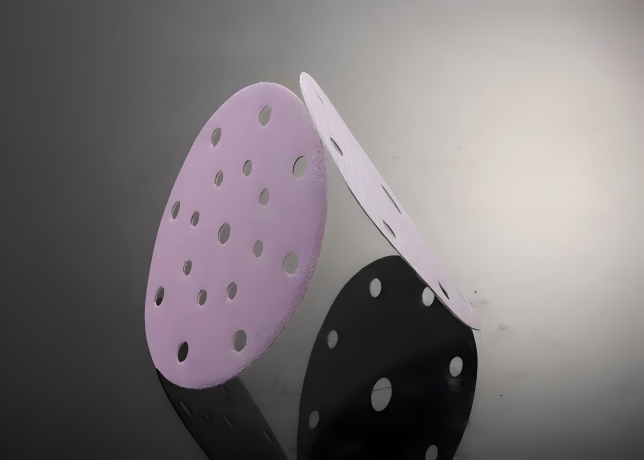
There is an important difference between initial cutting speed and maintained cutting performance. A newly opened abrasive may cut aggressively, but its practical value depends on how well that performance is maintained throughout the sanding process.
When an abrasive becomes loaded, fewer grain edges remain available to contact the workpiece effectively. The operator may notice that sanding takes longer, material removal becomes less predictable, or additional pressure is required to achieve the same result.
Stearate coated sandpaper helps address this problem by reducing the accumulation of debris on the abrasive surface. With less material interfering with the cutting area, the abrasive can maintain a more consistent interaction with the workpiece.
This can be particularly useful when the desired result depends on maintaining a uniform scratch pattern. In surface preparation, inconsistent sanding can create additional finishing work, especially when the surface will later receive another coating or finishing treatment.
The potential performance benefits include:
More stable cutting action during use
Reduced tendency toward rapid abrasive loading
More consistent scratch patterns
Less need to compensate with excessive pressure
Better utilization of the abrasive's working surface
More predictable abrasive replacement intervals
For professional sanding operations, consistency can be more valuable than maximum aggression. An abrasive that maintains useful cutting characteristics over a longer period can help operators work with fewer interruptions and reduce the variability that comes from frequent abrasive changes.
This is why evaluating stearate coated sandpaper should involve more than comparing how quickly different products cut when new. A better assessment considers cutting behavior throughout the usable life of the abrasive.
The benefits of stearate treatment are most relevant in applications where abrasive loading is a recurring concern. The exact performance depends on the abrasive construction and operating conditions, but materials that generate fine, adhesive, or coating-related dust can be good candidates for clog-resistant abrasive technology.
| Material or Application | Typical Loading Challenge | Potential Benefit of Stearate Treatment | Important Selection Factor |
|---|---|---|---|
| Automotive primer | Fine sanding dust can accumulate around abrasive grains | Helps reduce debris build-up during surface preparation | Grit and backing should match the preparation stage |
| Automotive paint | Coating particles may adhere to the abrasive | Supports more consistent cutting performance | Surface condition and required finish should be considered |
| Body filler | Fine particles can cause rapid loading | Improves resistance to premature clogging | Choose an abrasive suitable for the filler and sanding process |
| Painted or coated wood | Finish residues can cover abrasive grains | Helps keep the sanding surface more open | Backing flexibility and grit selection remain important |
| Other soft or coated materials | Fine or adhesive debris may reduce cutting efficiency | May extend useful sanding performance | Application testing may be needed for specialized materials |
Automotive refinishing is a particularly relevant example. Sanding may involve primer, paint, filler, or existing coatings, and each layer can generate a different type of sanding debris. When abrasive loading becomes a recurring problem, using a suitable stearate coated sandpaper can help maintain a cleaner cutting surface.
The same principle can apply to woodworking and other finishing applications where coatings generate fine dust. However, product selection should always be based on the actual workpiece and process. A stearate-treated abrasive that performs well on one coating does not automatically provide the same result on every material.
Fujistar Abrasives provides abrasive solutions for different sanding requirements. For buyers comparing abrasive constructions, grit options, and application suitability, it can be useful to explore abrasive products for different sanding applications before selecting a product for production use.
Even a clog-resistant abrasive can become overloaded when sanding conditions are poorly controlled. The abrasive and the sanding process work together, so changes in pressure, machine operation, or dust extraction can directly affect loading behavior.
Pressure is one of the easiest variables to overlook. More pressure does not necessarily mean more efficient cutting. Excessive force can increase friction, generate additional heat, and press sanding debris into the abrasive surface. It may also cause uneven wear because some areas of the disc or sheet experience greater contact than others.
In many applications, controlled pressure allows the abrasive grains to perform their intended cutting action without unnecessary friction. This can help maintain both surface consistency and abrasive life.
Machine speed also needs to be appropriate for the abrasive and equipment. Higher speed should not automatically be interpreted as higher productivity. Depending on the material and process, excessive operating conditions can increase heat generation and influence how debris accumulates on the abrasive.
Users should follow the operating recommendations supplied for the specific abrasive and machine rather than applying a universal speed setting to every sanding operation.
Dust extraction is another important part of clog control. Effective extraction removes loose sanding particles from the work area and reduces the amount of debris that can remain around the abrasive. In machine sanding operations, a suitable extraction system can complement the loading-resistant characteristics of the abrasive.
For best results, clog resistance should be treated as one part of a complete sanding strategy:
Select the appropriate abrasive for the material.
Choose a grit suitable for the required material removal.
Use controlled and even sanding pressure.
Operate the equipment within the recommended conditions.
Maintain effective dust extraction.
Avoid allowing excessive heat to build up during sanding.
Replace the abrasive when useful cutting performance has declined.
This approach allows the advantages of stearate coated sandpaper to work together with appropriate sanding practices rather than relying on the coating alone.
Sandpaper service life should be evaluated by useful performance rather than simply by physical appearance. An abrasive may still have visible abrasive grains but provide limited cutting action because those grains have become heavily loaded.
When loading happens quickly, users may replace the abrasive before its cutting grains have reached the end of their potential working life. This increases abrasive consumption and creates additional interruptions in the sanding process.
By helping reduce debris accumulation, stearate coated sandpaper can extend the period during which the abrasive remains effective. The practical benefit is not necessarily that the abrasive will always last a specific number of hours or sanding cycles, but that more of its usable life can be spent performing the intended cutting operation.
This distinction is important because abrasive service life varies considerably with material, grit, pressure, machine conditions, surface area, and sanding objectives. Providing an unsupported fixed service-life figure would therefore be misleading. Instead, users should compare abrasives under their actual working conditions.
Longer useful life can contribute to improved efficiency in several ways:
Fewer abrasive changes: Operators can spend more time sanding and less time replacing loaded abrasives.
More consistent results: Stable cutting performance makes it easier to maintain a predictable sanding process.
Lower unnecessary consumption: Abrasives are used for their intended cutting life rather than being discarded mainly because of premature loading.
Reduced process interruptions: Fewer replacements can simplify workflow in repetitive sanding operations.
Better cost evaluation: Users can assess abrasive value based on useful performance rather than purchase price alone.
Nevertheless, longer service life should never be the only purchasing criterion. If an abrasive lasts longer but produces an unacceptable finish, creates excessive heat, or requires too much operator effort, it may not provide the best overall value.
The most useful comparison considers cutting efficiency, clog resistance, surface quality, abrasive consumption, and ease of use together. This broader perspective is particularly important when selecting automotive abrasives or other coated abrasives for professional applications.
When a sanding application involves unusual materials, demanding coating systems, or specific production requirements, abrasive selection may require a more detailed evaluation. Buyers can discuss their abrasive requirements with the Fujistar Abrasives team and provide information about the workpiece, sanding stage, equipment, grit requirement, and expected finish.
Abrasive loading can undermine sanding performance long before the abrasive grains are completely worn. Fine particles from paint, primer, filler, coatings, and other materials can accumulate around the grains, reducing the effective cutting surface and forcing operators to change abrasives more frequently.
Stearate coated sandpaper is designed to address this challenge by reducing the tendency of sanding debris to adhere to the abrasive surface. By helping limit abrasive build-up, it can support more consistent cutting, better resistance to clogging, and more effective use of the abrasive's working life.
However, coating technology is only one part of the equation. Grit, abrasive construction, backing, sanding pressure, machine speed, heat, dust extraction, and workpiece characteristics all influence clogging and overall sanding performance.
For professional users, the best approach is to evaluate stearate coated sandpaper as part of the complete sanding process. When the abrasive is properly matched to the material and operating conditions, improved clog resistance can contribute to a more stable workflow, fewer unnecessary abrasive changes, and more predictable surface preparation.
Stearate coated sandpaper is abrasive paper treated with a stearate coating designed to reduce the adhesion and accumulation of sanding debris on the abrasive surface.
It helps reduce the tendency of fine sanding particles to adhere to and build up around the abrasive grains, allowing more of the cutting surface to remain active during use.
It can be useful for sanding primer, paint, filler, and other automotive coatings where fine debris and abrasive loading are common concerns.
No. It improves resistance to loading, but grit, material type, sanding pressure, heat, machine conditions, and dust extraction can still affect clogging.
It can extend useful abrasive life in applications where loading is a major cause of premature performance loss. Actual service life depends on the sanding conditions.
Consider the workpiece, coating type, required grit, sanding equipment, backing requirements, pressure, dust-control conditions, and desired surface finish. Application-specific guidance can help identify the appropriate abrasive construction.