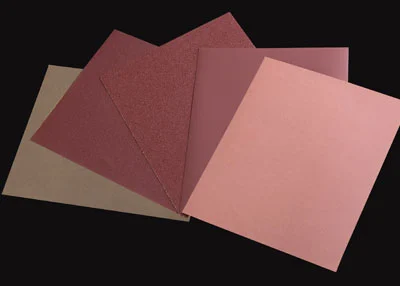
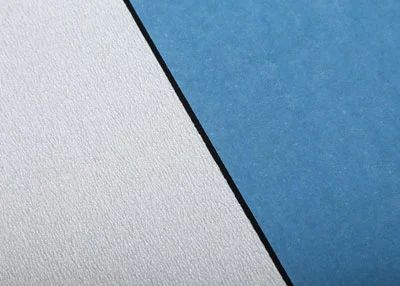
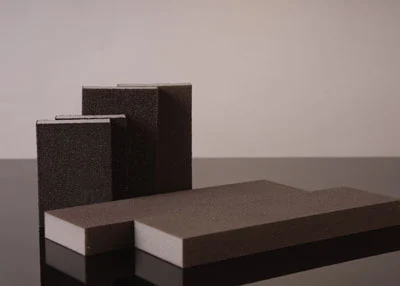
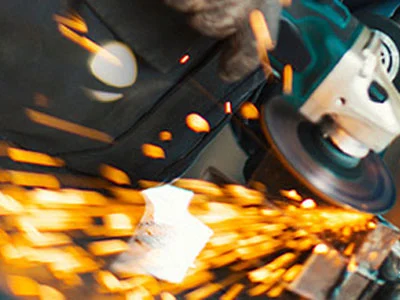
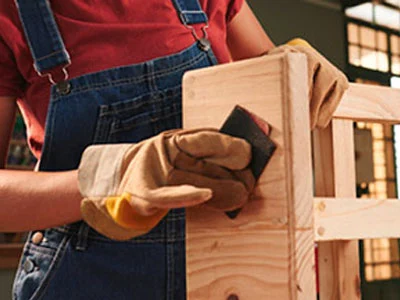
Dust is one of the biggest challenges during sanding. It reduces visibility, shortens abrasive life, contaminates finished surfaces, and creates health risks for operators. As dust-control requirements become stricter across industries, net abrasives have become a preferred solution for professionals seeking cleaner, faster, and more efficient sanding.
Unlike conventional abrasive paper with limited dust holes, net abrasives feature a fully open mesh structure that allows dust to pass through almost the entire sanding surface. The result is significantly improved dust extraction, more consistent cutting performance, and a longer service life.
Whether you're working in automotive refinishing, woodworking, composite manufacturing, or metal fabrication, understanding how net abrasives work can help improve productivity and finish quality.
Net abrasives are sanding products built on a woven mesh backing instead of traditional paper or film.
The abrasive grains are bonded directly onto the mesh, creating thousands of tiny openings across the entire surface. These openings allow sanding dust to be extracted continuously by a vacuum system rather than accumulating between the abrasive and the workpiece.
Compared with conventional sanding discs, net abrasives provide:
Superior dust extraction
Reduced clogging
Longer abrasive life
More consistent cutting performance
Cleaner working environments
Improved surface quality
This innovative structure has made net abrasives increasingly popular in professional finishing applications.
Traditional sanding discs rely on several pre-punched holes to remove dust. Once these holes become blocked, dust builds up on the abrasive surface.
Net abrasives work differently.
Because nearly the entire backing consists of an open mesh, dust can be extracted from every point on the sanding surface.
The process is straightforward:
Abrasive grains remove material.
Dust immediately passes through the mesh.
A vacuum system removes the particles.
The abrasive surface remains clean.
Cutting efficiency stays consistent throughout the sanding process.
This continuous dust removal minimizes heat buildup and helps prevent premature abrasive wear.
The most significant advantage is highly efficient dust removal.
Many professional dust extraction systems can remove over 95% of sanding dust when paired with quality net abrasives, creating a cleaner and healthier workspace.
Dust accumulation is one of the primary causes of abrasive failure.
By preventing clogging, net abrasives maintain sharp cutting edges longer, extending the usable life of each sanding disc.
This reduces:
Abrasive consumption
Machine downtime
Replacement frequency
Operating costs
Dust trapped beneath traditional sandpaper often causes scratches and swirl marks.
Continuous dust extraction helps produce:
More uniform sanding patterns
Reduced rework
Improved coating adhesion
Higher-quality finishes
This is especially valuable before painting, powder coating, or polishing.
Clean abrasives cut more efficiently.
Since operators spend less time changing clogged discs or cleaning surfaces, overall productivity improves significantly.
Fine sanding dust can affect respiratory health and contaminate production areas.
Net abrasives help reduce airborne dust, making them an excellent choice for workshops focused on worker safety and environmental compliance.
Net abrasives are widely used throughout vehicle repair and refinishing, including:
Primer sanding
Putty sanding
Paint preparation
Clear coat finishing
Spot repair
Blending operations
Dust-free sanding also reduces contamination before painting.
Professional woodworkers use net abrasives for:
Furniture manufacturing
Cabinet production
Hardwood flooring
Veneer preparation
MDF processing
Solid wood finishing
Cleaner sanding means less dust settling into wood grain before staining or coating.
Metal fabrication shops use net abrasives for:
Surface preparation
Weld blending
Stainless steel finishing
Aluminum finishing
Rust removal
Deburring
Consistent cutting performance helps maintain surface quality.
Net abrasives are ideal for:
Fiberglass
Carbon fiber
Marine components
Wind turbine blades
Aerospace composites
Effective dust extraction is particularly important when sanding composite materials.
| Feature | Net Abrasives | Traditional Sandpaper |
|---|---|---|
| Dust Removal | Excellent | Limited |
| Clogging Resistance | High | Moderate |
| Abrasive Life | Longer | Shorter |
| Surface Finish | More Consistent | May Scratch |
| Productivity | Higher | Lower |
| Dust Exposure | Lower | Higher |
Although net abrasives may have a higher initial purchase price, their longer lifespan and increased efficiency often result in a lower total sanding cost.
Selecting the appropriate product depends on several factors.
Common grit ranges include:
P40–P80 for aggressive stock removal
P100–P180 for intermediate sanding
P220–P320 for surface preparation
P400–P800 for finishing
P1000 and above for ultra-fine finishing
Different abrasive minerals suit different materials:
Aluminum Oxide – General-purpose sanding
Silicon Carbide – Fine finishing and harder materials
Ceramic Grain – Heavy-duty industrial applications
Ceramic Blend – High productivity and long life
Net abrasives are available as:
Sanding discs
Sanding sheets
Sanding rolls
Delta sheets
Orbital sanding discs
Hook & Loop discs
Choose the format that matches your sanding equipment.
To achieve the best results:
Use an efficient vacuum dust extraction system.
Match grit progression correctly.
Avoid excessive sanding pressure.
Replace worn discs before cutting performance declines.
Keep sanding pads clean and flat.
Store abrasives in a dry environment.
Proper operating practices can significantly extend abrasive life.
As manufacturers seek higher productivity, improved workplace safety, and superior finishing quality, net abrasives continue to replace conventional sanding products across many industries.
The combination of cleaner operation, longer service life, and consistent performance helps reduce operating costs while improving overall production efficiency.
For companies focused on delivering high-quality finishes with less dust and less downtime, net abrasives represent a practical long-term investment.
At Fujistar Abrasives, we manufacture high-performance net abrasives engineered for demanding industrial applications. Our products are designed to deliver efficient dust extraction, durable cutting performance, and consistent surface finishing across automotive, woodworking, metalworking, and composite industries.
Our advantages include:
High-quality abrasive grain for fast and stable cutting
Durable mesh backing with excellent tear resistance
Efficient compatibility with vacuum dust extraction systems
Wide grit range to suit coarse grinding through fine finishing
Multiple sizes and specifications available for different sanding machines
OEM and private label services for global distributors and brand owners
Whether you are looking for reliable abrasives for large-scale production or customized solutions for your market, Fujistar can provide products that meet your performance and quality requirements.
For applications requiring effective dust control and consistent surface quality, yes. Net abrasives generally last longer, clog less frequently, and provide cleaner sanding.
They can, but their main advantage comes from pairing them with a dust extraction system. Without vacuum assistance, dust removal efficiency is greatly reduced.
Automotive refinishing, woodworking, metal fabrication, composite manufacturing, marine, aerospace, and industrial maintenance all benefit from net abrasives.
Service life depends on the material, grit size, operating pressure, and dust extraction efficiency. Under proper conditions, net abrasives typically last significantly longer than conventional sanding discs.