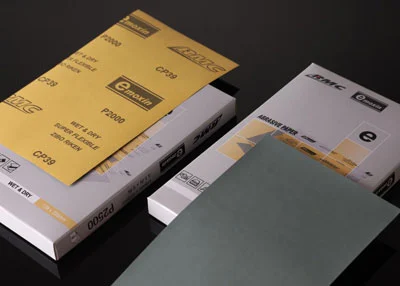
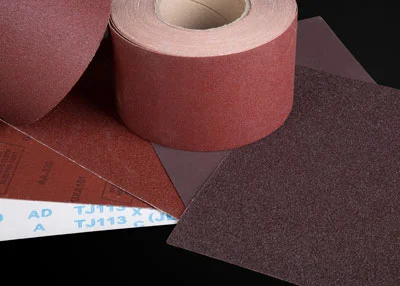
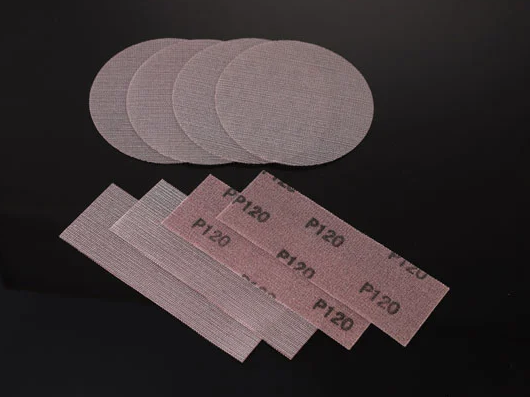
In 2026, finishing operations are being asked to do more with less margin for error. Quality audits are tighter, rework penalties are real, and labor costs make every unplanned line stoppage expensive. For procurement teams and shop floor supervisors, the challenge is rarely finding sandpaper — it is choosing the right velcro sandpaper rolls for the specific substrate and process stage without creating new problems downstream.
The confusion that comes up most often in industrial and automotive finishing environments is this: when does AP82 aluminum oxide make sense, and when does GWP53 justify its position in the workflow? The two products are not interchangeable. AP82 is built around tear-resistant backing for demanding woodworking applications. GWP53 is built around anti-clogging performance for primer leveling, body filler, and paint surface prep. Using the wrong one does not just waste money on rolls — it wastes labor, creates inconsistent finishes, and slows throughput in ways that are hard to trace back to the abrasive choice.
This guide gives you a direct comparison, a material-to-product selection matrix, and a practical framework for specifying the right roll for your process.
Before comparing AP82 and GWP53, it helps to understand what actually drives performance differences between velcro sandpaper rolls — because the hook-and-loop format is only the delivery mechanism. The real performance variables are underneath.
The velcro backing system solves a workflow problem. Quick attachment and release means changeovers on DA sanders, sanding blocks, and finishing stations take seconds rather than minutes. On a line running mixed part sizes, roll format adds another advantage: you cut to the length you need, which reduces scrap and simplifies inventory compared to managing multiple pre-cut sheet sizes.
These are real operational benefits, but they are format benefits. They apply equally to AP82 and GWP53. The performance differences between the two products come from what is on the abrasive face and how the backing is constructed.
Abrasive grain type and quality determine cut rate and how the grain behaves as it wears. Aluminum oxide is the standard choice for both wood and coating applications because it fractures in a controlled way, exposing fresh cutting edges as the grain wears down. The quality of the grain — its consistency, hardness, and how it is bonded to the backing — determines how long that cutting behavior lasts.
Backing strength and flexibility determine how the roll handles mechanical stress. Heavy woodworking involves significant downforce, edge contact, and lateral movement. A backing that cannot handle that stress tears at the edges or delaminates, ending the roll's useful life prematurely regardless of how much abrasive grain remains.
Surface treatments and coatings determine how the roll handles dust loading. This is the variable that separates wood sanding from primer and coating work. Sanding joint compound, automotive putty, body filler, and primer generates a fine, sticky dust that packs into the spaces between abrasive grains rapidly. An anti-clogging coating — a stearate or similar release agent applied over the abrasive surface — reduces the adhesion of that dust, allowing it to shed rather than accumulate. Without it, cut rate drops sharply within the first few minutes of use on coated surfaces.
The specification differences between AP82 and GWP53 are not subtle. They reflect genuinely different design priorities, and understanding those priorities is the fastest way to make the right procurement decision.
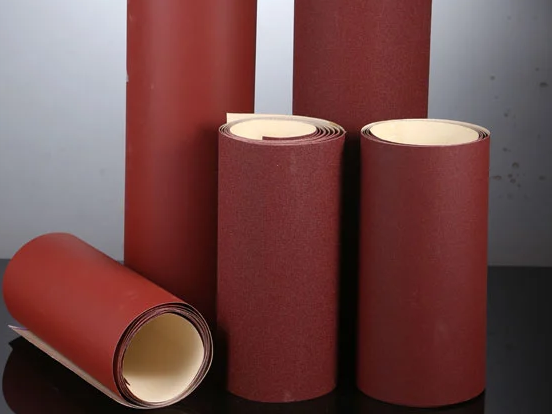
AP82 is built for applications where mechanical stress on the backing is the primary failure mode. The tear-resistant backing construction handles the downforce and edge contact that come with hardwood sizing, leveling, and general woodworking. Oak, maple, and similar dense hardwoods require consistent pressure to cut efficiently, and a backing that cannot hold up under that pressure fails before the abrasive grain is spent.
For general-purpose shop sanding on wood substrates — softwood, MDF, plywood, and hardwood — AP82 delivers a stable, predictable cut at a cost point that makes sense for daily volume use. The aluminum oxide grain provides reliable stock removal and a consistent scratch pattern across the grit range.
Where AP82 is not the right choice: any application where dust loading from primers, putty, or paint is the primary failure mode. The backing will hold up, but the abrasive surface will clog, and the effective cutting life will be short.
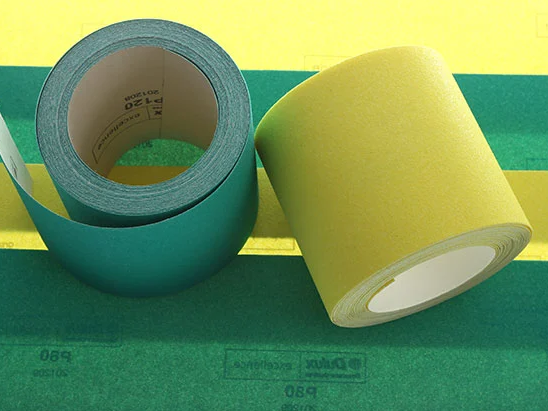
GWP53 is built for applications where clogging is the primary failure mode. The anti-clogging coating on the abrasive surface is the defining feature. When sanding automotive primer, body filler, industrial coating layers, or paint between coats, the dust generated is fine, soft, and adhesive. It loads abrasive surfaces quickly and causes cut rate to drop well before the grain is actually worn.
The anti-clogging treatment on GWP53 reduces that loading behavior, keeping the abrasive cutting longer and more consistently. The practical result is fewer roll changes per shift, more consistent surface quality across a part, and less labor time spent managing abrasive performance rather than finishing parts.
GWP53 also delivers a more stable scratch pattern on coated surfaces, which matters when the next step is a topcoat or clear. Inconsistent scratch depth from a loading abrasive creates uneven adhesion and visible texture variation under paint.
Where GWP53 is not the optimal choice: heavy hardwood stock removal where tear resistance is the limiting factor. The anti-clogging coating adds cost that does not return value when the application does not generate the loading conditions it is designed to address.
Before placing an order for either product, confirm the following:
What substrate are you sanding, and what is the primary dust type generated?
What is the grit range required across your process stages?
What is the tear resistance requirement based on tool type and applied pressure?
What finish standard does the surface need to meet, and what scratch pattern tolerance does that imply?
What is your expected consumption volume per week or month, and do you need a trial quantity before committing to a larger order?
These five questions will resolve most AP82 versus GWP53 decisions before you need to run a trial.
The matrix below is designed as a buying shortcut. Match your substrate and task to the recommended product and the reasoning behind it.
| Material / Task | Primary Failure Mode | Recommended Product | Reason |
|---|---|---|---|
| Hardwood (oak, maple) sizing and leveling | Tearing, edge breakdown under pressure | AP82 | Tear-resistant backing handles heavy downforce and edge contact in dense wood applications |
| Softwood general sanding | Fast consumption, inconsistent pressure | AP82 | Balanced cost and durability for daily volume use on lower-density wood |
| Primer leveling (automotive or industrial coating) | Clogging, rapid cut rate drop | GWP53 | Anti-clogging coating keeps abrasive cutting longer on fine, adhesive primer dust |
| Body filler and putty shaping and blending | Loading, heat buildup, fast dulling | GWP53 | Better resistance to loading extends usable life and reduces changeover frequency |
| Paint scuff and surface prep between coats | Loading, uneven scratch pattern | GWP53 | More stable performance on coated surfaces produces consistent scratch depth for topcoat adhesion |
The two most common mismatches in practice: using AP82 on primer leveling because it is already in stock, and using GWP53 on heavy hardwood stock removal because it is the premium option. Both decisions cost more than the right choice. The matrix above is the fastest way to avoid them.
Knowing which product fits which substrate is the first step. Specifying it correctly for your tools and process is the second.
Start by identifying the substrate. Wood versus primer, putty, or paint is the primary fork in the decision. If you are working across both in the same facility, you likely need both products in your inventory — and the goal is to make sure each crew is using the right one for their station.
Define the sanding goal for each stage. Stock removal, leveling, blending, and finish prep each have different cut rate and scratch pattern requirements. Trying to cover too many stages with a single grit wastes either time or surface quality.
Choose a grit plan with no more than two or three steps per process. More steps add complexity and changeover time without proportional quality improvement in most industrial finishing workflows.
Confirm tool compatibility. Pad hardness, orbit size, and dust extraction setup all affect how a roll performs. A soft pad on a DA sander with good extraction will behave differently than a firm block with no extraction, even with the same roll. If you are switching products, run a short trial under your actual conditions before committing to volume.
Set a replacement trigger based on performance, not time. Replace the roll when cut rate drops noticeably and the surface quality begins to vary — not on a fixed interval that may be too early or too late for your specific conditions.
Using a wood-optimized roll on primer leveling is the most common and most expensive mistake. The backing holds up, but the abrasive loads within minutes, cut rate drops, and the operator either pushes harder (accelerating grain damage) or changes the roll early. Either outcome increases cost per finished part.
Using a premium anti-clogging roll for heavy hardwood stock removal is the opposite error. The anti-clogging coating does not add value when the dust is wood-based and the failure mode is tearing, not loading. You pay for a feature you do not need while potentially underinvesting in the backing strength that actually matters for the application.
The right way to evaluate velcro sandpaper rolls is not unit price. It is cost per finished surface area at your required quality level. That calculation includes roll price, but it also includes changeover time, rework rate, and line delays caused by loading or tearing.
Total cost equals roll price plus the labor cost of changeovers plus the cost of rework plus the cost of line delays. A roll that costs 20% more per unit but lasts twice as long and generates half the rework is significantly cheaper in total cost terms. The challenge is that most procurement decisions are made on unit price because that is the number that is easy to compare. The numbers that are harder to measure — changeover frequency, rework rate, throughput impact — are where the real cost difference lives.
For primer and coating applications, GWP53's anti-clogging performance typically reduces changeover frequency enough to offset the unit price difference. For heavy hardwood work, AP82's tear resistance reduces the rate of premature roll failure that drives up consumption. In both cases, the right product for the application is the lower-cost option when measured correctly.
Match dust extraction to the application. On primer and putty work especially, good extraction reduces the dust load reaching the abrasive surface and extends effective cutting time. On wood work, extraction keeps the workspace clean and reduces the risk of dust contamination affecting finish quality.
Use correct pressure. Overpressure is the single most common cause of premature roll failure across both product types. It accelerates grain damage on wood applications and increases heat and loading on coating applications. Train operators on appropriate pressure for each stage and tool type.
Standardize cutting lengths. Cutting rolls to a consistent length per application reduces waste, simplifies inventory tracking, and makes consumption data more meaningful for procurement planning.
Choosing between velcro sandpaper rolls comes down to one question: what fails first in your process? If the answer is tearing under pressure on dense wood substrates, AP82's tear-resistant backing is the right foundation. If the answer is clogging and loading on primer, putty, or paint, GWP53's anti-clogging coating is what protects your throughput and finish quality.
The material-to-product matrix in this guide gives you a fast, repeatable decision framework. The TCO model gives you the right way to evaluate the cost difference. Together, they replace the guesswork that leads to the wrong roll on the wrong application — and the downstream costs that follow.
To receive a recommended AP82 versus GWP53 configuration and a quotation, visit the AP82 product page and send the following details:
Operating conditions: substrate type (hardwood, primer, putty, paint), dry sanding versus dust extraction, typical pressure and tool type
Quantity: monthly usage volume, trial order size, annual forecast
Size and specs: roll width and length, cut length per piece, grit range, hook-and-loop requirement
Target metrics: finish grade, defect and rework threshold, lifetime target per roll, throughput target
Current problems: clogging on primer, tearing on wood edges, fast dulling, inconsistent scratch pattern, high changeover frequency
If you are specifically evaluating GWP53 for coating and primer applications, the GWP53 product page provides full specification details.
Q1: What are velcro sandpaper rolls?
Velcro sandpaper rolls are hook-and-loop backed abrasive rolls that attach quickly to compatible sanding pads on DA sanders, sanding blocks, and finishing stations. The roll format allows operators to cut to the length needed for each application, reducing waste compared to fixed-size sheets. The hook-and-loop attachment system speeds up changeovers and reduces downtime between grit stages or when replacing a worn roll.
Q2: How does AP82 compare to generic aluminum oxide rolls?
AP82 is designed with a specific focus on backing strength and tear resistance for heavier-duty sanding applications. Generic aluminum oxide rolls often trade backing durability for a lower unit price, which can increase consumption rate and changeover frequency in demanding woodworking environments. The relevant comparison is not unit price but cost per square meter of finished surface, accounting for how many rolls are consumed and how much labor time is spent on changeovers.
Q3: What is the ROI of choosing GWP53 over a standard roll for primer work?
The return on investment for GWP53 in primer and coating applications comes from three sources: fewer roll changes per shift, faster time-to-finish per part, and fewer surface defects requiring rework. In workflows where a standard roll clogs within the first few minutes of use on primer or putty, the effective cutting time per roll is very short. GWP53's anti-clogging coating extends that effective cutting time, which reduces the number of rolls consumed per unit of finished area and reduces the labor cost of changeovers. In most primer leveling workflows, the unit price premium is recovered quickly through reduced consumption and rework.
Q4: Do we need to modify tools or processes to switch between AP82 and GWP53?
No major equipment changes are required if your sanding pads are already hook-and-loop compatible. The practical adjustments when switching are procedural: confirm that the grit sequence is appropriate for the new application, adjust dust extraction settings if moving from wood to coating work, and standardize cutting lengths for the new roll dimensions. Running a short trial before committing to volume is the best way to confirm that the roll performs as expected under your specific conditions.
Q5: What parameters should we provide for accurate product selection and quoting?
For the most useful recommendation, provide the following: substrate type and coating details, the sanding stage and goal for each step in your process, grit range required, roll width and length, tool type and pad hardness, dust extraction setup, finish quality requirement and scratch pattern tolerance, expected usage volume per month, and the primary failure mode you are currently experiencing — clogging, tearing, fast dulling, inconsistent scratch pattern, or high changeover frequency. The more specific the inputs, the more accurate the product recommendation and the more relevant the quotation.